Archive for June, 2012

There is electricity here, satellite television and mobile phones.

Day 9, June 24. It’s 50 degrees Celsius and in the shade, it’s 43 degrees.  We make our way when we have [...]

“Can it – the GPS – tell me where water is?”

Day 1 June 16, 2012 – in the middle of nowhere waiting to see if we have camel.  We have camel. Day [...]

There is electricity here, satellite television and mobile phones

Day 9 June 24

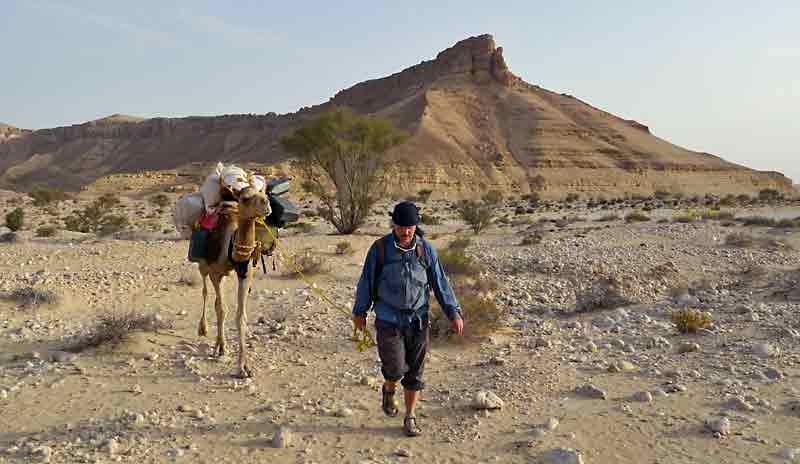
It’s 50 degrees Celsius and in the shade, it’s 43 degrees. We make our way when we have the moon. This desert sun is always unbearable. Before the heat gets too excruciating, we walk for 2 – 4 hours in this grueling desert. There is nothing physically pleasurable about it. Yet the beauty is like the gorge of the Grand Canyon. Instead of waiting for a sounding echo, we tend to Kensington, who demands our every attention. At night we hardly sleep from the heat and just hope our body revives before we have to tend to Kensington again. He is run down, we are run down. In hindsight, having Mahout was our godsend. Mahout was not just our ‘guide’, he had enthusiasm, spirit and energy that rubbed off on us. To not be met with hostility, Mahout knew when it was time he return to his village. Every tribesperson, every villager, every Bedu, has their own mental boundary. Without a ‘guide’, we are slower, and our progress is slow. By ‘guide’, I also mean ‘protector’.

As we walk on Day 8, straight ahead, we see a village. Just before the village, we are met by Mohammed who is our newest ‘guide’. We see in the distance stone houses that rise from the desert landscape. Surrounding the flat roof houses are camels and goats. The women and the men offer us camel’s milk, bread and tea. Their hospitality was indeed welcomed.

The sight of colourful clothed women, unveiled faces and curious, adds to the misrepresentations of women from this area. The women’s faces were painted, possibly of sandalwood and spices. Since Tanya is privy to spend time with them, she would have the privilege to write about them. The men wore clothed skirts similar to the futa from the towns. The people in the village were extremely kind and hospitable but after a day, suspicion was in the air. We began with entering the village with a camel, and Mohamed as our ‘guide’, yet we are to be distrusted. It seems the history of foreigners to this area is all but favorable.

I had the privilege to get Kensington out of the mosque. Interestingly, the mosque is of a white color with a flat roof and no minaret. When I hear shrieks and a crowd gathering, I’m sure it is due to Kensington. This time he was found drinking water from the area where men cleanse before entering the mosque.

It must be said that the language spoken here is not Arabic. It is a dialect of Mahrah, akin to the Socotra Islands. With links to the Gulf, particularly Oman for economic reasons, Arabic terms are used in the villages. There is electricity here, satellite television and mobile phones. They do not bear arms or chew qāt. They are country dwellers living in stone houses. In many ways they are not nomadic, just as our friend Mohammed who never found a need for a local seasonal tour of two or three kilometer up or down from his village. They do however see themselves as Bedu, as Bedu is not only migratory tribes but also country dwellers.

There is no internet and again this report is from my ghostwriter

Day9camel

“Can it – the GPS – tell me where water is?”

Day 1 June 16, 2012 – in the middle of nowhere waiting to see if we have camel. We have camel.

Day 2 June 17 – Tanya, Mohammed and I, with camel.

Day 3 June 18 – I’ve written an interesting piece of Day 2 but I can’t send it off – in this heat, the bloody internet doesn’t work.

Day 4 June 19 “Can it [GPS] tell me where water is?”

When we first came to the town Al Ghayday, by nature as an Explorer, I wanted to set off, go, negotiate for camels, and find people who were willing to help Tanya and I. In many ways, I wanted them to listen to us and see our role as guests, but on my terms, not theirs. The expedition, as all of you know, started much earlier with camel negotiations. This experience weighed down like quicksand; not to travel by camel may have ended our expedition. But we got ourselves out of it with patience and re-focused. On Saturday morning, June 16, we were driven by Mohammed and local Bedouins to the middle of nowhere and in the heat of things, literally, we bot a camel.

From 6 days ago, we have now advanced.

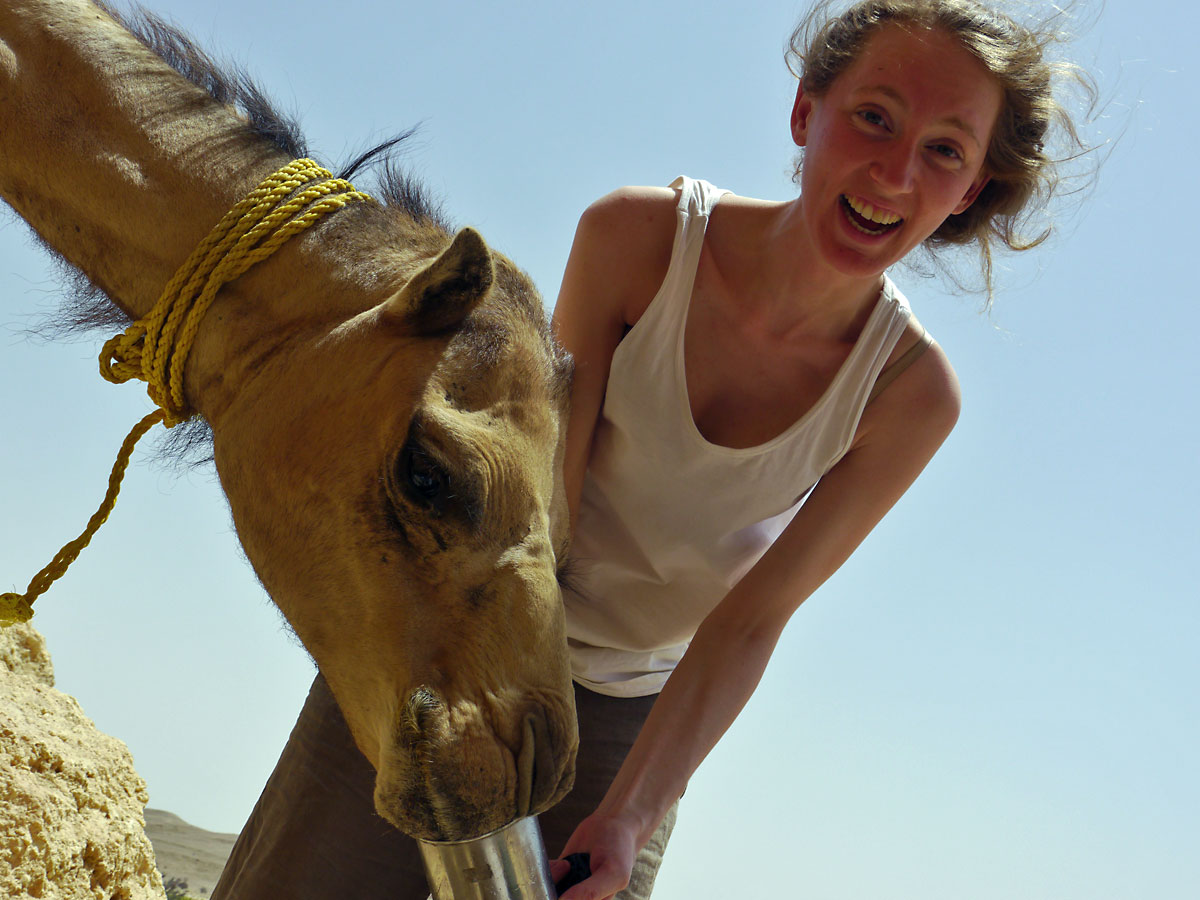
Coming from the Bedu breed, our young, calm, and easy camel was a beauty. He is four years in age but in personality, cocky! We’ve named him Kensington, for one reason, in honor of a good friend who wanted to meet in Yemen. So in spirit, Jeff, owner of Kensington tours, joins us.

The first couple of days, Mohammed joined us but in the 45 degree Celsius heat, he fell into a heat stroke and returned home. Although he had never crossed areas of his country, knowing he made it as far as he did, I hope he is able to take something from his journey. From having experienced the harshness of the desert, there is an appreciation for the simple things missed. Mohammed felt it best to feel the ground his feet was most familiar.

Speaking from a lifetime of exploring extreme climates, let’s hope, in hours of smoldering heat, the sand, the terrain underlying our soles, at the end will be physical pampering. We are up at 4 A.M making our way for 6 hours. In this heat, we break around 9. By midday around 13:00 to 15:00, we set off again. The heat makes it very difficult to sleep but with nature, there is comfort to know it is always on your side. When the suns sets and the stars appear, the nomadic, wandering life stops, and for that moment you root your thoughts. I called Pamela the night of June 18, starring up at the amazing galaxy, an island universe and told her I’ve changed my attitude. As an explorer, ambitions and setting goals can often blind what really matters which in this instance is trying to understand the Bedu ways of the desert. This is our change of tactic – we are only here for a little time, and it’s time to experience the desert.

“Can it tell me where water is?”

Adjusting to the heat of 36 to 46 degrees Celsius heat, we head north. We, Kensington, Tanya, and I, meet Mahout, a Bedu from this area curious about who we were. Also curious about our equipment. I showed him the GPS which if handled correctly, it will show our exact location by satellite. It is an astonishing piece of technology. But to Mahout, what use is this “astonishing” power; “can it tell me where water is?” If he cannot find water, his survival, all the other material things we in the western world find useful, to Mahout is useless. There is no need for internet, no need for technology. What makes the camel vital for Mahout is that it is a source for survival. Mahout, like many Bedu while in the desert, drink the camel’s milk when water is hard to find.

The expedition now is of Kensington, Tanya, myself and our Bedu friend, Mahout. Yet it’s hard to conceive at the start of this expedition, if my GPS will find water, or will Mahout be a better resource.

I did plan, again a professional hazard of being an explorer, to send a report every 3 days using internet powered by solar energy, but my first try was not as successful. This report is from my ghostwriter.

Expedition Yemen By Camel; Frustrations and understanding

“We are muslims and we have no fears for the future” , Mohammed said during the interview and continued; “God is great”. [...]

Expedition Yemen By Camel; Frustrations and understanding

Remember proper layout at www.mikaelstrandberg.com

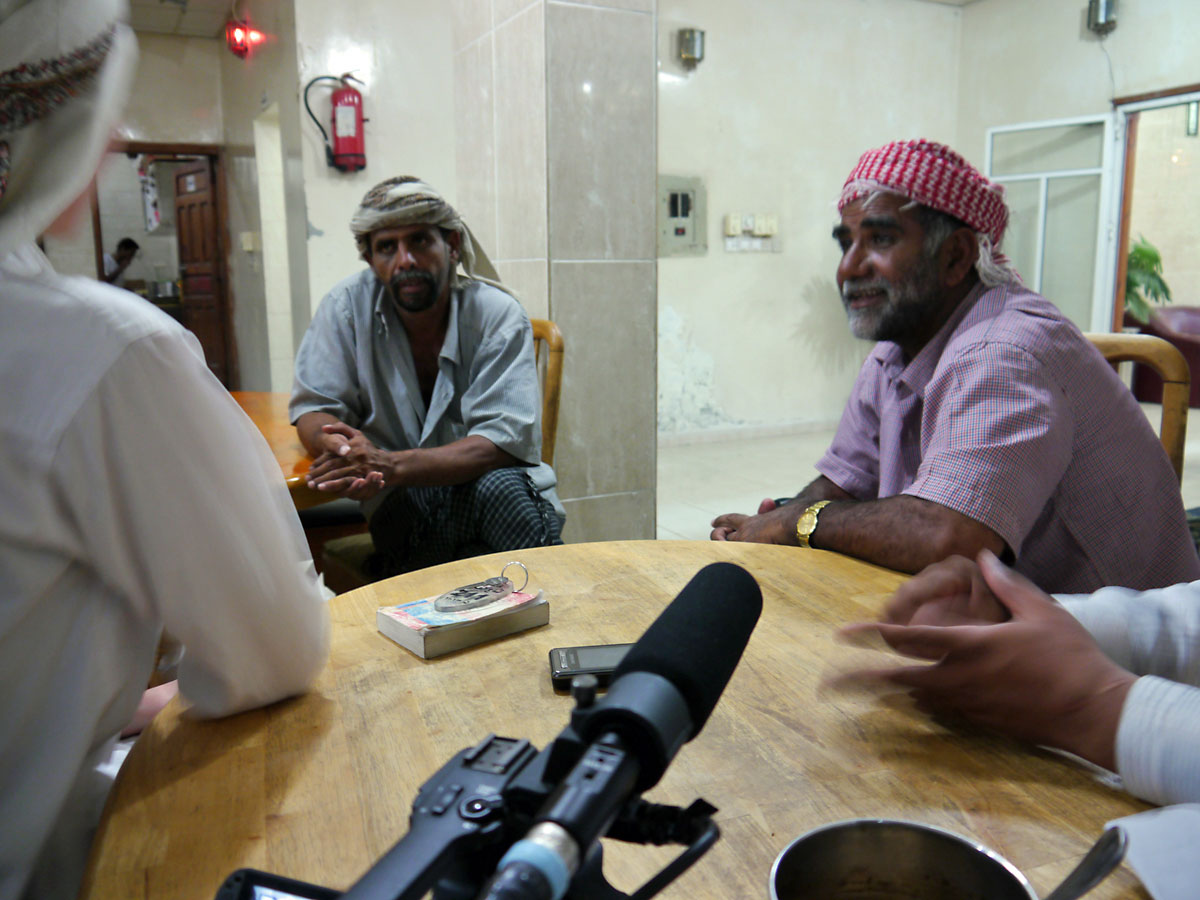
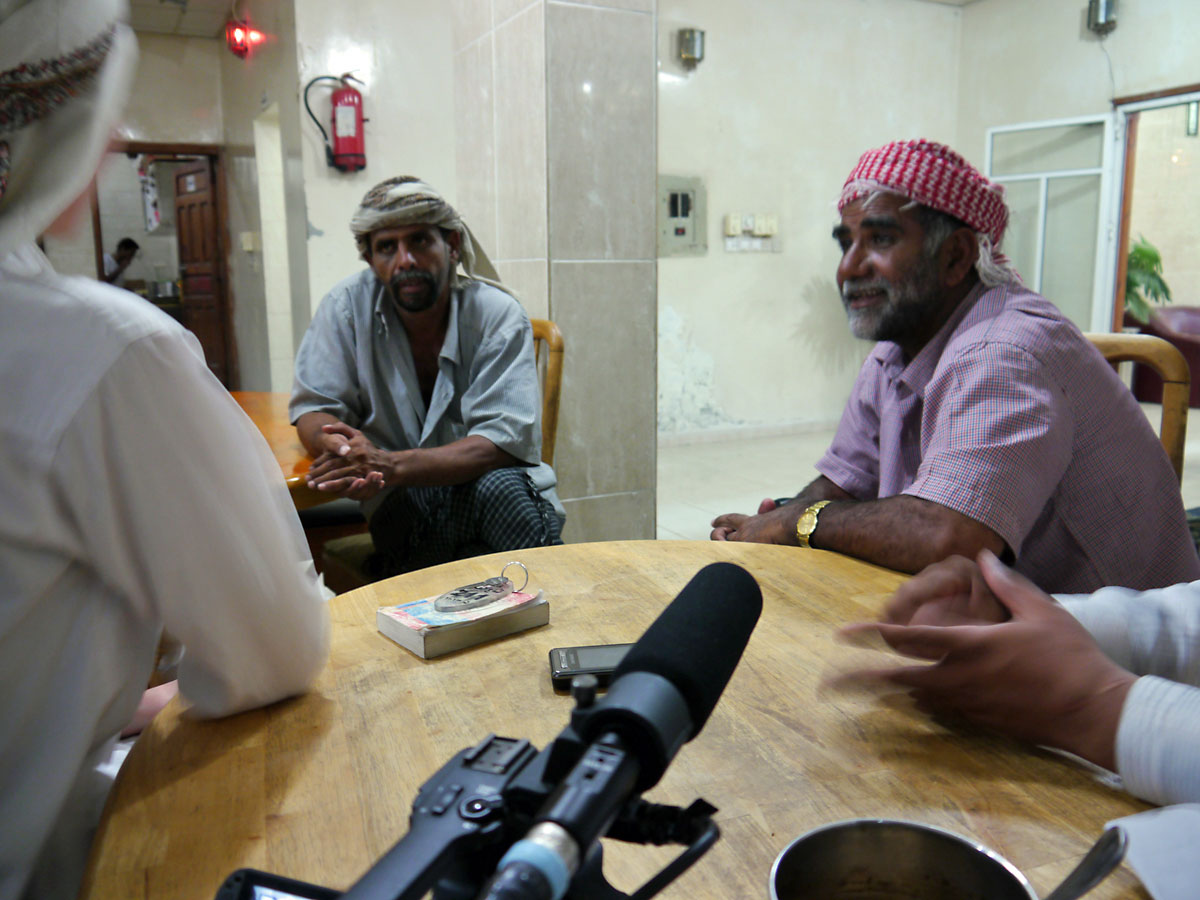
“We are muslims and we have no fears for the future” , Mohammed said during the interview and continued; “God is great”.

Minutes before, off camera, he had told us about his worries for his childrens future.

“One of my biggest fears is that my children will become as greedy as many people have become here in Al Ghaydah and that they will only help if paid. This is the problem since all these foreign aid agency´s have arrived here. They over pay and after awhile, nobody wants to be a good human being and help. They wanna get payed for everything. And this is the problem we are facing all of us now, you included, they are used to getting paid redicolous sums of money for doing almost nothing.”

Doing interviews in this part of the world isn´t easy. People are afraid of any kind of repercussions if they say the wrong thing. At all times it has to be an Islamic theme to the answers. Which is ok if it would be the truth, but when people say other things off camera, we know it is not. official edited answers will only cause further misunderstandings. What is wrong with being afraid and worried? We all are. How can that be bad to say? I will tell you.

“I am worried right now!”

we are still in Al Ghaydah. The same story repeats itself. We meet camel owners and end up in frustration. We feel tricked, irritated and overwhelmed by their economic demands. We have been able to find one camel for a reasonable price we can afford. That´s if the camel is as good as they say. This is impossible to know. We don´t trust the camel owners at all. Zilch. But there´s a possible camel. And we have also found a bedu who will come with us for 3 days to teach us the commands in the local tongue and where to find water and grass. We pay him more than I have ever paid for help in any country all over the world that I have visited. Including my own. But it has all failed on the issue of transport. The camel is less than an hour away and nobody will take us there for under 500 US dollars. This is really irritating us, so we are seriously thinking about walking there. Carrying our 60 kg:s of weight.

All this have put us in serious problems. We just can´t afford two camels. Our time in Al Ghaydah, all this waiting has eaten up a lot of money. We invite people, pay their lunches, every transport everywhere, and this eats the budget quickly. So I don´t have that money to buy 2 camels, which is more than one pays for a very good car. So we have to, if it happens, we still don´t know this, set off with just one camel and we have to cut down on weight to half what we wanted, but we have no other choice. These people selling the camels, very wealthy ones, don´t care about us or if it goes wrong. Their only interest is money. There´s definitely signs of them disliking all foreigners. We have talked to other Yemenis coming from the north, like Taizz, Sanaa, Dammar and Ibb and they all say the same;

“These bedus want nothing to do with anyone except themselves. They´re uncultured, unfriendly, wants to be by themselves and it is very difficult doing business with them.”

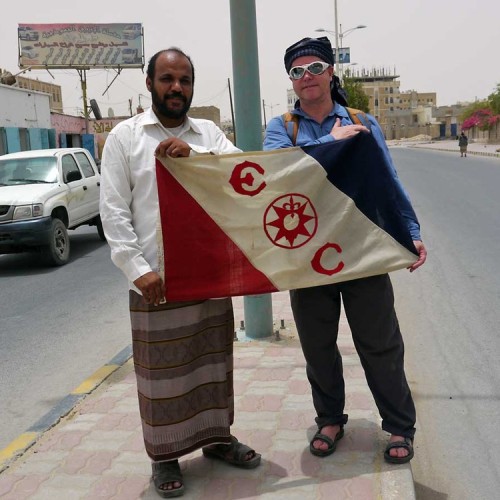
Mohammed is ashamed in front of us and feel as frustrated and irritated as we do. He is Bedu himself, but his father left the village is a young man, went in to the tailor guild and wanted to give his oldest son an opportunity to get a good education. Which he got and this makes a difference. Education is the most important aspect on earth according to me. The lack of it creates poverty, stupidity, unequality, xenophobia, dangerous gossip, hatred and war. And even though most people we meet, many from other areas of Al Mahra, are really kind, there´s definitely a feeling of not being welcome here. Hopefully it is just a case in a “big” city like Al Ghaydah and once we get out of this noisy oven, it will be different. But this feeling seaps through to the highest levels. Yesterday Mohammed took us to the governor to introduce us, due to the spook rumour and to tell you the truth, he immediately asked us if we had permits from Sanaa to be here.

Now, this is something I have gotten used to lately in Yemen, nobody wants to deal with us just in case something bad will happen to us and somebody will have to take the responsability. I can understand this, But you just don´t start a conversation on a negative note. At least not in the northern part of Yemen, the one I know a bit. However, the meeting ended on a more positive note. Mainly due to Tanya working her charms as an translator. At least he didn´t stop our possible journey. But Mohammed was hoping maybe the government could assist us with transport, but he offered nothing, but demanded a copy of the film when finished. This will not happen. But he was just not interested, which I once again can understand, since he has more serious issues to work with. And this has really been the general feeling as regards to this visit in Yemen, this time, they´re just not interested. They have other much more important things to tend to. Fair enough.

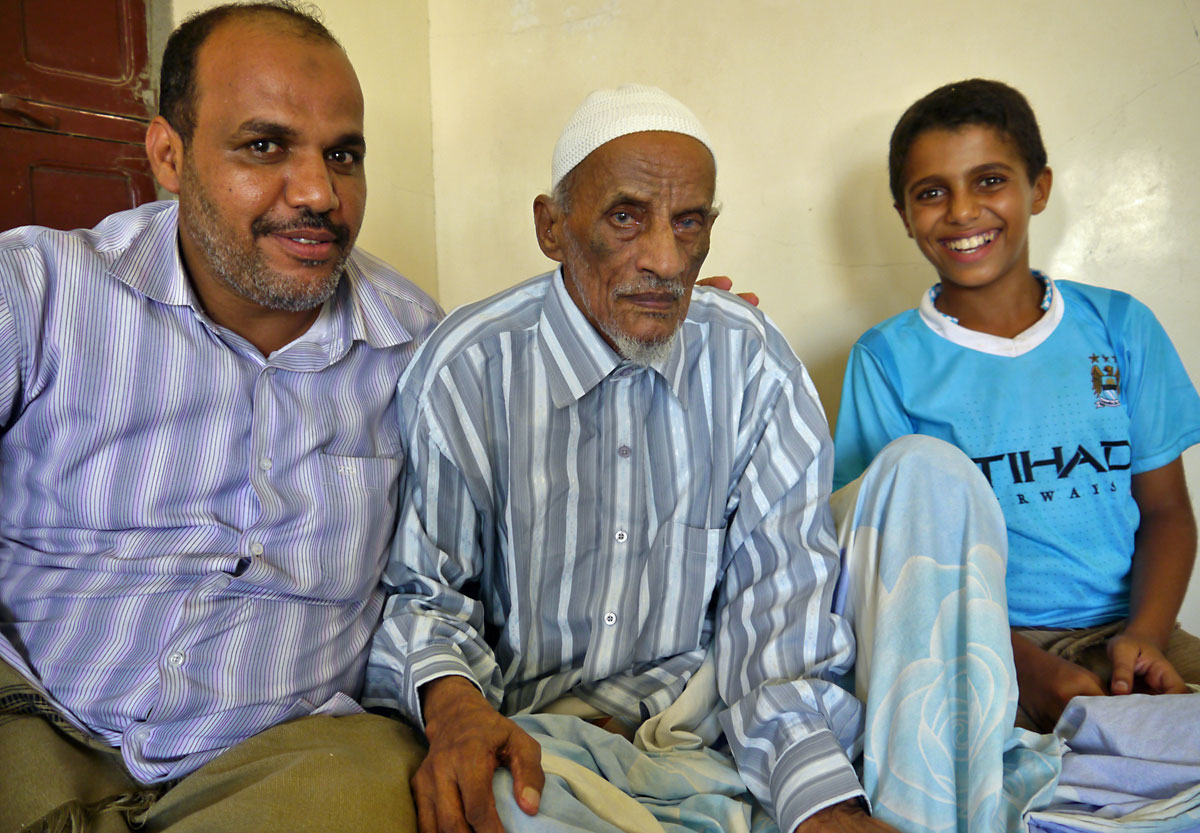
We went to Mohammed´s house for lunch, happy to be invited by somebody. He lives with his great family, 20 of them, in a four room flat he hires and pays about 70 dollars a month for this, barely covered by his wages. We pay him 25 a day for helping us. He didn´t ask for it, it was offered and agreed eventually when all his neighbours had been on him that he had to get well payed by us. That is all they talk about, Mohammed said, What do we pay him?

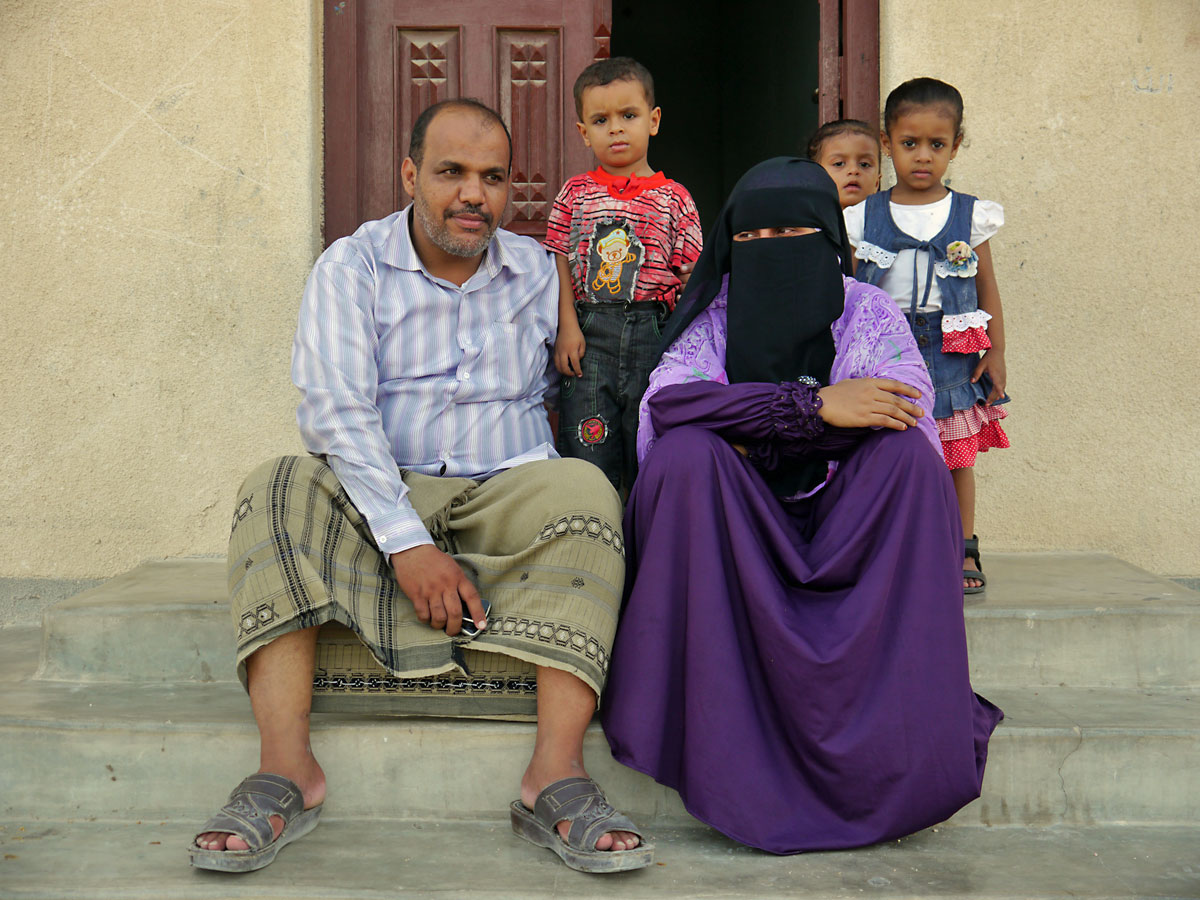
For the first time during my time in Yemen, outside Sanaa, I was able to interview a Yemeni woman. His wife Ummi Abdullah wa Khadeejah was a really nice person, which of course isn´t surprising with a husband like Mohammed. She was really tender and loving to everyone around her, especially her children (5 great kids), shared her love for her husband and was the leader of a local feminist group.

“I am happy to be married to Mohammed, because he understands that women need to be as educated as men and I am doing my first year on my bachelor degree at the university. I hope we can afford another two.”

And this is what makes us really, really irritated. instead of being able to help Mohammed and his family, we have to use our funds to pay off these obese camel owners with their gold watches and brand new Landcruisers. It just goes against everything I believe in. That is also a reason why we are fighting back all the time. We want to show them that all foreigners are not as gullable and rich as these tax funded aid agencies. Being Swedish we pay at least 33% of what we make in taxes, which i don´t mind, some of which goes to fund these aid agencies and when i realize what some of the money goes to, well, it doesn´t make me feel good, does it? I work my butt off, pay my tax and some of it goes to paying the gold watch and Landcruiser of an arrogant bedu? Naw, no good.

Sorry for being negative. But we are children of our time and culture and time is of essence where we originate from. We can´t change this overnight. We wanna get going. Do what we came here to do. Enjoy, describe this area and its culture. But I guess that is what we are doing by the minute. We are experiencing some aspects of the culture and ways of Al Mahra and the bedus. And, let me tell you that if you read others who have been in this area, Wilfried thesiger, The Ingrams, Freya Stark and so on, it seems like the Bedus hasn´t changed a lot since those days. They pretty much shared the same frustrations. And their trips ended on a positive note, so did mine I did on the other side of the border 4 years ago with some mountain bedus from the Al Mahra, Omani side. I fell in love with Rub Al khali and have longed for the desert since than. That´s why we are here!

Mohammed just came by on his motor bike, not a 100% healthy, but saying we have a car for 200 US, which is far too much, but better than 500 US. So we will leave tomorrow. In shallah.

Expedition Yemen By Camel; Preparations whilst walking

Please go to www.mikaelstrandberg.com for more photos.

We did a test walk, Tanya and me, today. 10 km.s in the worst Midday heat. Easy. Tanya did real well, I kept up a 5 km/hour speed and she tagged a long easy, carrying 2 litres of water in her Camelbak and our lunch. She had my shoes and they worked perfectly and only her rucksack gave her some shafing, but not too bad. She is up for it with her great positive attitude and fun loving character. She even handled a few km.s in what we desert travellers call “the oven” with ease. A stretch with no winds, just dead calm and one feels baked. We walked along a paved road, so it was of course, really easy. Tomorrow we will do a 15 km stretch in the same speed. Camels normally average 3-3.5 km.s an hour carrying 50-60 kg:s. Less in intense heat. We had an easy 34-35 degrees Celsius today, but once in the desert, one of the hottest on earth, we can expect up to 50.

We took a day off negotiations. We slept almost 11 hours. We are that knackered. And the same applies to Mohammed Saaed, our great friend and as a brother too me already, he is upset with the way bedus have done their negotiations. Same for us. So we said, we will change tack and treat them as a matter of fact as they treat us. Like we don´t care. Just as their own attitude. And I called a friend, Amin Gazzim, in Sanaa and asked him to check for camels in Hadramawht. He called back to say they were strong, big and only half price to these and they could get transported to us for 500 US if we wished. I need to see them of course. The bedus turned up as quick as we started walking, asking for more money again to take us..sometimes I wonder about they´re ability to assess a situation….we just said we are not interested. Than they said they also wanted a car to come along with all the food and that they could rest in the car on and off. We said, not interested.

Walking in the Midday heat caused a sensation. Every passing car stopped and asked if they could pick us up and asked why did we wanna walk and suffer like this? Many invited us for lunch. All non-Bedu who did that. Yes, i am still upset with the attitude they show these bedus. They complain to Tanya they need all this money, 7000 dollars(!) for hospital care for themselves afterwards because walking is so hard…..they want backup cars…I just don´t like lazy moaning people. It is against every good virtue in my book. An Expedition is working hard from early morning to late night. Every day. Enjoying and understanding why one does it. Tanya is doing very, very well. she has a great attitude, always happy and positive, always works hard and helps out. She has all it takes as an Expedition partner. She is like a sister, almost a daughter to me.

When we came back to town from the walk we sat down on the counter of a duka,sipping an ice cold non-alcoholic beer from Becks (divine!), and one of the Bedu sheikhs turned up and said he had a strong, big and calm male camel for 2500. So he has gone down in price just in a day with a 1000 dollars. We said we ain´t interested. He said he will then leave town tomorrow. We said enjoy your trip. He said he will buy the camel back when the Expedition is over. How much we said. A 1000 dollars. I said, you want us to train your camel, make him one of the best desert camels in the area and you want to pay a lousy 1000 dollars for it? Not interested we said. Call me tonight he said. Have a nice trip we said. The game continues.

We are waiting for Mohammed to come back from Sanaa. We feel naked without him. He has become such a big part of our life. He is the best of the best. Lots of humor, argumentative, extremely good talker, intelligent, warm and a genuinly good human being. People here in town are really, really friendly and nice.

Tanya and myself have returned back to our original thought. We will do it ourselves, no bedus joining us, destroying the peace with their moaning about being tired, wanting more money. I know this far too well, after travelling with bedus in Oman for quite some time. We will ask Mohammed if he wants to join us. A friend of Tanya, a great guy named Assaf have supplied us with the best of maps and orientation is really easy. I just need to figure out if there´s any wells on route and where they are. and when we know this, no worries. Then it is just logistics. It would be such a joy to do it without these modern, comfortable and money hustling bedus.

Expedition Yemen By Camel; Preparations whilst waiting

We did a test walk, Tanya and me, today. 10 km.s in the worst Midday heat. Easy. Tanya did real well, I kept [...]

Expedition Yemen By Camel; Still at the negotiating table

Please go to www.mikaelstrandberg.com for full layout.

6 June 2012, humid, hot at 34 degrees Celsius at 16.12.28N, 52.1043E

Tanya Holm writes:

”One million and one hundred thousand Saudi riyals is not much money”, says Aboud, the bedouin.

Sheikh Muhammed Saat Gam-Said, more commonly known as King of Camels, has just told him the Saudi equivalent to 5000 US dollars. Aboud shakes his head while he looks at me.

”Little!”

I count to ten.

”It is a long walk and my legs will hurt” says Aboud.

I have never gotten 5000 dollars to do anything. My legs will hurt too, most likely far more than his.

”Are you a real bedouin?” I ask.

He answers. The sheikh claims Aboud walks the region since childhood. Perhaps four-wheel drive has taken his confidence. Fifty-eleven times, as we say in Sweden, and still nothing. Aboud continues:

”If you get sick I must lift you up on the camel and take you to a hospital”

”Every day I must translate for you from Mahri (South Arabian) to Arabic. My mind will be tired.”

”My body will get worn down and I might need a hospital.”

I look at Shekh Muhammed’s gold watch and his nicely ironed shirt. His head scarf is bright red and white.

”If they die I’ll be the one dealing with it” says Ahmed trying to get Muhammed on his side. When we get sick we rest a day. Our legs will hurt but not fall off, I say.

”Inshallah” adds Ahmed and points to the ceiling with a fan. Then he repeats himself.

”Little!”

For twenty-one days work, a million and one hundered thousand SAR won’t do. That we had already agreed on the price and all the details is a misplaced thing to say. So is the following.

”The majority of the stories coming out of Yemen these days are about terror. This is a chance to show another side to your country.”

The bedouins walked in Yemen long before here was a nation, or an idea of Yemen, before Islam and thousands and thousands of years before that. Aboud might feel he has nothing to prove to others. With a cultural heritage so rich there is no need to show off. He knows he can get up and walk out without that anything changes for him.When Aboud has left the room I realize it is almost empty. For days people have gathered around our table and had opinions on the plans and negotiations. They’ve engaged in every detail. Now Mikael and I are left in the restaurant. A few men pass by. I am dissapointed. And very tired from many days of hard work with little sleep. It is late, hot and humid. Of course we are sick on top of it. If Aboud would write a piece about what has just happened he’d maybe make the reader understand that the joke is on the foreigners. They thought they could fly in and settle a deal in a week. Aboud would explain that it takes generations to build up a trust. Europeans think they can buy it with dollars. So, it takes an Aboud to put them in place. And I think he’d finish off with that the misconceptions foreigners have about Yemen make them stupid, and that is their problem not his.

I don’t care who’s right and wrong. I will perhaps never understand Aboud ”qaleel!!”. But I’ll remember the first guy I know to have said no to a three week walk for thousands of dollars. He is a beduin in Yemen.

See the documentary pilot about the Expedition at https://vimeo.com/42817817

Expedition Yemen By Camel; Still at the negotiating table

6 June 2012, humid, hot at 34 degrees Celsius at 16.12.28N, 52.1043E Tanya Holm writes: ”One million and one hundred thousand Saudi riyals is [...]

Page 1 of 212»