Archive

Posts Tagged ‘long riders guild’

GUEST WRITER 1: CuChullaine O’Reilly a.k.a. Asadullah Khan

January 1st, 2010 mikael 1 comment

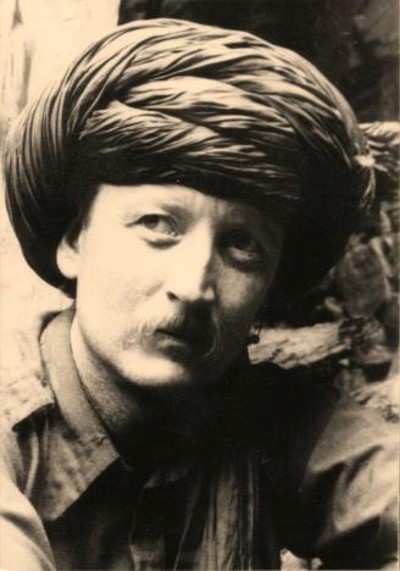
Asadullah Khan

CuChullaine O´Reilly a.k.a Asadullah Khan

My first guest writer is a very opinionated, passionate, charismatic and knowledgeable friend, the chief of the Long Riders Guild, CuChullaine O´Reilly.  He is an equestrian explorer, Fellow of the Royal Geographical Society and the Explorers’ Club, one of the Founders of The Long Riders’ Guild, Director of the LRG-AF, publisher of the LRG Press and author of Khyber Knights. He explored Afghanistan and Pakistan on horseback, took part in the jihad against the Soviet Union, and converted to Islam more than thirty years ago. He has since renounced all acts of warfare, especially those inspired by religiously misguided zealots.

New Year – New Hope

by

CuChullaine O’Reilly a.k.a. Asadullah Khan

As if we needed any reminders of what a murderous year 2009 has been, a few days ago another deluded fool attempted to destroy an airplane in flight. This time the destroyer was from Nigeria, not England, and he hid the explosives in his underpants, not his shoes. Nevertheless, both would-be assassins not only attempted to massacre their fellow man, they added to their sins by daring to cloak their crimes in the name of Islam.

Ironically, in a world full of instant news, one which rings out every few minutes with the words “Taliban” and “al-Qaeda,” it would serve mankind well to remember that there is a vast portion of the Muslim world which has gone largely unnoticed. Unlike the chilling Puritanism of some movements, which helped inspire and finance the forces of political poison currently disguised as religion which are at work today, the Indo-Islamic civilization created the most tolerant and pluralistic example of Islam ever known.

The most important example of this alternative vision of the oft-misunderstood religion was the great Mughal emperor, Akbar (1542-1605). The hallmark of his reign was the emphasis he placed upon Hindu-Muslim unity and the concept of individual religious tolerance. Because he was convinced that spiritual truth was not the monopoly of any particular religion, Akbar organized the first global congress of faiths, fostered the spirit of enquiry and allowed every man and community to develop in its own spiritual manner.

Faith has no caste, nor national origin, taught this powerful ruler who placed the love of God above the rituals of religion. When a theocracy of Sunni extremists condemned Akbar’s spirit of Sufi generosity, he transported the belligerent mullahs to Kandahar, and exchanged them for colts.

“You should not allow religious prejudice to influence your mind. The propagation of Islam will be better carried on with the faith of love and obligation than with the sword of oppression,” Akbar warned his fellow Muslims.

This flowering of Mughal religious tolerance reached its crescendo on April, 4th, 1934, when the city of Lahore witnessed the creation of the greatest literary treasure ever seen in the Indo-Islamic civilisation. That was the day upon which the scholar Abdullah Yusuf Ali released the first instalment of his English language translation of the Qur’an. For the princely sum of only one rupee, the first fifty pages of the revered work could be purchased. The resultant six-hundred plus pages were published as they were completed, in twenty-nine more sections over the next three years, thanks to a remarkable gathering of enthusiastic university students, calligraphers, printers and publishers, all of whom urged, and assisted, the Allama (most learned) Yusuf Ali to commit to paper the English language translation he had spent the majority of his life creating.

Born in India in 1872, Yusuf Ali was an extraordinary scholar, confident horseman and traveller par excellence. Thanks to his intellectual gifts, he was the first Indian to serve on Great Britain’s Indian Civil Service. A noted jurist, a devotee of Shakespeare, an expert on Alexander the Great, and a prolific author, Yusuf Ali was also an Islamic scholar of tremendous wisdom. Thanks to Yusuf Ali’s travels between England and India, he believed there was a vital need to translate the enduring message of the Qur’an into the English language, so as to offset the same forces of religious extremism which Akbar faced and which still threaten us today.

Yusuf Ali

Yusuf Ali - "Though the English language translation of the Qur'an created by the famous Indian scholar, Allama Yusuf Ali, was rightly considered to be the most beautifully written version ever seen, it was altered by unknown parties in the late 1980s so as to fall in line with the more politically rigid version of Islam as practised by the Wahhabis."

“Although I am earnestly and sincerely devoted to my own religion, I have always advocated the desirability of a better understanding between Christians and Muslims in all spheres of life. Such an understanding is likely to become a great guarantee of world peace and international understanding,” the humble scholar wrote.

Like the great Mughal, Akbar, whose religious tolerance had inspired him, Yusuf Ali believed in what he termed a “progressive Islam.” By the mid-twentieth century Muslim institutions and patterns of thinking had become moribund and obsolete. Not only should Muslims cope with the challenges of the day, he warned, they should use their faith to rise above the prejudices of race. Islam, he said, should be a way to transcend narrow political interests.

Yusuf Ali admonished the Muslims of his day, reminding them that the Prophet Muhammad (PBUH) had abolished any hereditary and privileged priesthood, while instituting the right of private judgment, personal responsibility, equality in brotherhood, removal of racial or caste barriers and the selection of rulers by democratic choice. It was these principles, Yusuf Ali said, which were the true basis of Islam.

After years of work, when Yusuf Ali’s English language Qur’an was released, it was acclaimed a masterpiece worldwide. This revered book, he said, was not the legacy of one nation, it was the heritage of mankind. “Each verse represents something immediately applicable,” he wrote, “and something eternal and independent of time and space.”

No sectarian views were propagated throughout the extensive commentary. On the contrary, Yusuf Ali’s emphasis was on the spiritual dimension of Islam and its message of a common humanity. This search for God within liberated the seeker from the restrictions of a narrowly orthodox version of Islam, encouraging the devotee instead to look beyond the letter of the law to its mystical essence.

Sadly, power is a jealous mistress who tolerates no rival. This is especially true of those who wield the sanctity of religious authority.

Though many other authors have attempted to emulate his efforts, Yusuf Ali’s English language translation of the Qur’an became the most widely respected, and trusted, version ever known. “In translating the Text I have aired no views of my own,” he wrote, then went on to hope that thanks to this version, “a new renaissance of Islam will sweep away cobwebs and let in the light of reason.”

Alas, the message of tolerance, as practised by Emperor Akbar and Allama Yusuf Ali, has been one of the unmarked victims of today’s climate of political hatred. In 1987 unnamed “editors” bowdlerized Yusuf Ali’s magnum opus, removing various appendices, revising the commentary, diluting its message of compassion and ignoring its apolitical tolerance.

“Nothing can be more damaging than the admission of rough and tumble politics into the serene atmosphere of religious peace and freedom,” Yusuf Ali wrote before his death in 1952. The result, he warned, would be the rise of leaders who promote dangerously simplistic creeds designed to promote a spirit of political vengeance and narrow self interest.

Sadly, as the bleak religious war between East and West goes on, Yusuf Ali’s prophecy has come true, with political hirelings in clergymen’s gowns from both sides mistaking the shell for the substance.

“A foundation of hatred or hostility can never support any edifice of national life and will be subject to sudden earthquakes when the forces of disorder are let loose,” Yusuf Ali predicted. Recent events demonstrate that he was right, as the venom of one side continues to provide the lifeblood of the other.

As the year 2009 and this decade come to a close, what a cruel mockery it is then to dispute, on the religious plane, national ambitions, tribal allegiances and the need for personal glory. The fruits of this tree are intolerance, rancour and uncompromising hostility, nestled among the leaves of barren and bigoted sectarianism.

A Sufi once remarked, “Everyone lives on the same Earth. One reads the Vedas, the second the Qur’an. One is called a pandit, the other a mullah. They style themselves separately, though they are pots of the same earth. Neither have found God and both live in futile disputes.”

Yusuf Ali, who spent his life attempting to reconcile East and West, counselled that counting beads or wearing a hermit’s gown is no sure sign of faith. Service to our brethren is the only worship that counts. Likewise it is folly to believe that war can end war.

Before his death, this remarkable man of two worlds wrote, “Many new streams of wisdom were poured through the crucibles of noble minds and thinking men of action.”

I like to think that Yusuf Ali, the scholar and traveller, would have supported Mikael Strandberg’s idealistic goal of travelling on camelback, from one distant ocean to another, so as to draw attention to what we all share in common.

I know I do.

CuChullaine O’Reilly, a.k.a. Asadullah Khan, along with his wife, the Swiss equestrian explorer, Sayeeda Ayesha Khan, will be re-publishing Yusuf Ali’s 1934 Qur’an, complete with its original translation and unedited commentary, in early 2010. The royalties will be donated to victims of suicide bombings in Pakistan.

How to become an explorer?

November 1st, 2009 mikael No comments
The true image of an explorer. Icecicles, extreme cold, male, white, eyes looking into horizon....the image which has to be changed.

The true image of an explorer. Icecicles, extreme cold, male, white, eyes looking into horizon....the image which has to be changed.

I got this email a few days ago. One of many readers asking the same question:

Hello, to wherever you might be at this moment :)

I stumbled recently on your online blog.. and.. well I know you must have heard this question a thousand times already, but I simply have to ask. How does one becomes a professional traveler? I would consider myself honored if you could drop me a few words about this :)
Blue skies and many more miles,
Gustáv Kyselica Jr. (a would-be-explorer :) (at least in heart for sure)

How to become an explorer? What does it take?

It is quite easy to answer. It takes passion, more passion than others, hard work, harder than all the others, a vision, bigger visions than all the others and an enormous amount of curiosity!

Every day I read about people, mainly young men, who do more or less spectacular adventures, get a lot of attention for a few years, they live on lectures and book sales, then they are gone from the scene of exploration. they just didn´t have what it took to stay in the business for a long time. Some of them have great jobs within the adventure industry, others, on paper some of them do “Expeditions” for a few months every five years and get the media with them due to earlier recognition, but they definitely doesn´t make any difference in the main reason to explore as I see it. Open horizons to other worlds, building bridges between cultures, creating a bigger understanding of this magnificent world we live in and explore the meaning of life. To survive as an explorer you need to have a personality which differs, have a clear vision reaching until the end of ones life and never stop exploring and always continue to be curious. On top of that, I think, there´s an issue to it which never can be taught or trained, either you have what it takes or not. And that has nothing to do with background, possibilities or environment. It is just there.

Just as an illustration to what I mean. If you walk up to the top of a building, walk out on to the edge when you reach the top looking down, do you want to jump? I have asked all my friends who are in the same line of work as me and we all say….yes.

How to become an explorer? Enough curiosity makes a difference!

How to become an explorer? Enough curiosity makes a difference!

These are earlier entries that I have written on this very important subject:

Explorer encourages others to “lead from the saddle”

October 14th, 2009 admin No comments


Equestrian Exploration Program Developed Leading Explorer Oversees Historic Effort
Mikael Strandberg isn’t very tall but his name carries a lot of weight in the international exploration community.

He started his professional career as an explorer two decades ago by bicycling 27,500 kilometres from Patagonia to Alaska, via the infamous Darien Gap jungle. Then he pedaled another 90,000 kilometres from New Zealand to Cairo.
After that he parked the bike and explored Latin America on horseback, which won him admittance into the Long Riders’ Guild, the world’s first international association of equestrian explorers. When he hung up his saddle, he spent a year living among the Masai in Kenya.

Then in 2004 Strandberg made an astonishing winter crossing through Siberia. During this five month sledge journey, mainly done in utter darkness, he experienced a terrifying cold with average temperatures around -50°F, day and night. This trip through the coldest inhabited place on earth caused the King of Sweden to award his intrepid subject a silver medal for courage.
Strandberg has produced three internationally renowned television documentaries, written six books, lectured around the world and been deemed “the best contemporary explorer in the world” by the Explorers Club in London.
Now he’s preparing to begin the Great Desert Expedition – a camel journey that will take him from Oman to Morocco.

But before departing on that adventure, the Swedish Long Rider will tackle a unique educational challenge. He has agreed to assume responsibility for developing a new Equestrian Exploration Department for the Long Riders’ Guild Academic Foundation.

“With Mongolia having become the fortieth country to field Long Riders and join the Guild, there is ample evidence to demonstrate that interest in equestrian exploration is exploding,” said Basha O’Reilly, one of the Guild’s Founding Members. “Earlier this year an impassioned debate was held regarding the fact that a London-based geographic society hadn’t fielded a single expedition in more than a decade. While other organizations vote themselves into obscurity, the Guild has sponsored, mentored or encouraged more than a hundred equestrian expeditions on every continent except Antarctica in less than ten years.”

Yet while enthusiasm runs high, O’Reilly reported, leaders of the equestrian exploration movement remain concerned that this mounted renaissance must adhere to the highest principled standards. As Director of Exploration for the Guild, Strandberg will help the LRGAF promote and develop ethical, safe and responsible equestrian exploration and long distance travel.

“This is an honour that I accept with dignity. I am looking forward to using my experience in organizing different types of expeditions so as to encourage and educate would-be Long Riders around the world,” Strandberg said.

Skeptics may argue that Strandberg and his fellow Long Riders stand little chance of encouraging a generation to take to the saddle and explore Earth. Yet history demonstrates that one person’s passion for exploration and education can indeed change the course of events. This occurred in the fifteenth century when Prince Henry of Portugal established the world’s first school for explorers. At Sagres, on the southwestern tip of Europe, he brought together geographers, cartographers, instrument-makers, astronomers, and mathematicians. The institute was designed to teach navigation, to collect geographical data, invent seafaring equipment and to sponsor expeditions.
The sturdy Swedish explorer is a modern day graduate of that school of thought who has already shared his expertise with the first team of Afghan mountain climbers and a Scandinavian camel expedition crossing the Sahara, not to mention dozens of young adventurers eager for more generalized advice. Strandberg now believes he can help inspire others to explore the world as their forefathers did.

“Although Prince Henry never sailed on any of his expeditions, he is credited with instigating the Age of Discovery. Unlike Henry, who inspired but did not travel, we modern Long Riders’ Guild are determined to lead from the saddle.”

In Strandberg’s case, this means a camel saddle, not an equestrian one.
Though the intrepid Swede has more than twenty years of experience surviving in dangerous places, overcoming tropical diseases, etc., he is about to venture deep into a remote part of the Muslim world on a desert expedition which will certainly require him to deal with cultural and religious challenges, as well as the everyday dangers of trying to survive a trip that would cause Ibn Battuta to have second thoughts.

“I’ve just returned from studying Arabic and Islam in Yemen. The wonderful experiences I enjoyed there have convinced me that this trip will allow me to build a bridge of exploration which runs between the Islamic world and the West,” the enthusiastic explorer explained.

While the Long Riders’ Guild is famous for having protected the ancient art of equestrian travel from going extinct, the organization has spent the last two years quietly working to create a new camel travel division as well. The world’s leading camel travel experts, such as Arita Baaijens who travelled across the Sahara with her dromedary camels and John Hare who journeyed across the Gobi with Bactrian camels, have agreed to lend their academic support to this unique educational effort.

Because of the length and significance of Strandberg’s journey, the Guild has honoured him by presenting the explorer with the first LRG flag to accompany a camel expedition.

Insh’Allah, we’re going to make exploration history of an unexpected and unprecedented nature,” Strandberg said.

When asked to explain what prompted the equestrian organization to include Strandberg and his camels, Basha O’Reilly of the Guild replied, “What we envision is an organization that grows out of the original Long Riders’ Guild, and goes on to publish books, sponsor new research, and provide funds and equipment to Long Riders. This is a new type of exploration foundation, one that preserves mankind’s ancient methods of travelling safely and successfully with horses, and now camels. Regardless of what he is riding, Mikael is a perfect example of this blending of mounted courage.”

To learn more about Sweden’s most celebrated explorer and Long Rider, please visit Mikael’s exploration blog –

For an interview with Mikael Strandberg regarding his career as an explorer –

Read article in Horsetalk! and in ExplorersWebNews! and in Voices for horses!

A major reason to choose a life as an explorer

March 21st, 2009 admin No comments

It is of course a very privileged life to be an explorer, to have in your mind that everything is possible and fulfil dreams most people never even get close to realising. Not even in mind or thought.

For me, proper exploration today has to do with connecting cultures, opening up horizons in other peoples mind, with the help of a camera, written words with the all mighty pen and by simple and genuine travel, e.g. not using a motorised vehicle. If an explorer turns up in a motorised vehicle, he or she has closed a door before it is even on the way to open up another horizon. By that way you build a new wall, not a bridge over the existing one. A true explorer shows other human beings first of all, this is the way, for example, that the great people along the Kolyma River in Siberia live. Exploration is about building bridges between people, not that ridiculous male theme, I am strongest and I can do this and that. Very tiring indeed.

Another important issue of today’s exploration, is to try through science to open up other peoples eyes about the realities we live in. And help to put together this eternal puzzle, concerning the meaning of life, our globe and why are we here.

Hmmm, lost a bit of my train of thought there….what I want to write, is to tell you readers, that one of the most fulfilling aspects of having chosen this life, is all the great people you come across, not only whilst travelling, but people doing what you are doing, exploring!

Two of my best friends, even though I have so far never met them in person, is CuChullaine and Basha O´Reilly. (See photo)These are some of the most intelligent, warm hearted and generous people I have ever come across. Everything they do is to make this a better world to live in. Two grand personalities and human beings who run one of the most prestigious Societies in the world, The Long Riders Guild. I have communicated with them a lot the last two years and they have in many ways done my life a lot of good. Some of the most inspiring people I have ever come across and CuChullaine has also written one of the best books I have ever read. They´re ready for one of the most compelling challenges in history really, a four year global ride! See http://www.theworldride.org/

They are exactly what a world full of copies need, two original thinkers and genuine human beings! I am honoured in many ways to be part in their team of advisers.

Basha as asked me to quote her, because she has a very important job to do and need help:

“Because you have travelled from the Pampas of Patagonia to the frozen tundra of Siberia, we are urging all of your friends throughout the world to check the master breeds list on the World Ride website. If their horse’s breed is not represented, I would ask them to print off the DNA form, complete it and send it to The Long Riders’ Guild with some mane or tail hairs. In this way, everybody who contributes will become part of the largest collection of equine DNA in history. Horse owners are rushing to represent their favourite breed, including White River horses from Mongolia, Manga Largas from Brazil and Marawaris from India. Yet there are still hundreds left unaccounted for, and we particularly anxious to obtain DNA from the fabled horses of Yakutia.”

Mikael, here’s the link to the Breeds page: www.theworldride.org/breeds/breeds.htm