Archive

Posts Tagged ‘Quran’

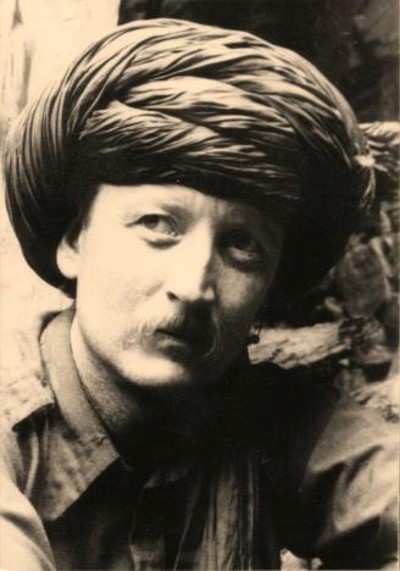
GUEST WRITER 1: CuChullaine O’Reilly a.k.a. Asadullah Khan

January 1st, 2010 mikael 1 comment

Asadullah Khan

CuChullaine O´Reilly a.k.a Asadullah Khan

My first guest writer is a very opinionated, passionate, charismatic and knowledgeable friend, the chief of the Long Riders Guild, CuChullaine O´Reilly.  He is an equestrian explorer, Fellow of the Royal Geographical Society and the Explorers’ Club, one of the Founders of The Long Riders’ Guild, Director of the LRG-AF, publisher of the LRG Press and author of Khyber Knights. He explored Afghanistan and Pakistan on horseback, took part in the jihad against the Soviet Union, and converted to Islam more than thirty years ago. He has since renounced all acts of warfare, especially those inspired by religiously misguided zealots.

New Year – New Hope

by

CuChullaine O’Reilly a.k.a. Asadullah Khan

As if we needed any reminders of what a murderous year 2009 has been, a few days ago another deluded fool attempted to destroy an airplane in flight. This time the destroyer was from Nigeria, not England, and he hid the explosives in his underpants, not his shoes. Nevertheless, both would-be assassins not only attempted to massacre their fellow man, they added to their sins by daring to cloak their crimes in the name of Islam.

Ironically, in a world full of instant news, one which rings out every few minutes with the words “Taliban” and “al-Qaeda,” it would serve mankind well to remember that there is a vast portion of the Muslim world which has gone largely unnoticed. Unlike the chilling Puritanism of some movements, which helped inspire and finance the forces of political poison currently disguised as religion which are at work today, the Indo-Islamic civilization created the most tolerant and pluralistic example of Islam ever known.

The most important example of this alternative vision of the oft-misunderstood religion was the great Mughal emperor, Akbar (1542-1605). The hallmark of his reign was the emphasis he placed upon Hindu-Muslim unity and the concept of individual religious tolerance. Because he was convinced that spiritual truth was not the monopoly of any particular religion, Akbar organized the first global congress of faiths, fostered the spirit of enquiry and allowed every man and community to develop in its own spiritual manner.

Faith has no caste, nor national origin, taught this powerful ruler who placed the love of God above the rituals of religion. When a theocracy of Sunni extremists condemned Akbar’s spirit of Sufi generosity, he transported the belligerent mullahs to Kandahar, and exchanged them for colts.

“You should not allow religious prejudice to influence your mind. The propagation of Islam will be better carried on with the faith of love and obligation than with the sword of oppression,” Akbar warned his fellow Muslims.

This flowering of Mughal religious tolerance reached its crescendo on April, 4th, 1934, when the city of Lahore witnessed the creation of the greatest literary treasure ever seen in the Indo-Islamic civilisation. That was the day upon which the scholar Abdullah Yusuf Ali released the first instalment of his English language translation of the Qur’an. For the princely sum of only one rupee, the first fifty pages of the revered work could be purchased. The resultant six-hundred plus pages were published as they were completed, in twenty-nine more sections over the next three years, thanks to a remarkable gathering of enthusiastic university students, calligraphers, printers and publishers, all of whom urged, and assisted, the Allama (most learned) Yusuf Ali to commit to paper the English language translation he had spent the majority of his life creating.

Born in India in 1872, Yusuf Ali was an extraordinary scholar, confident horseman and traveller par excellence. Thanks to his intellectual gifts, he was the first Indian to serve on Great Britain’s Indian Civil Service. A noted jurist, a devotee of Shakespeare, an expert on Alexander the Great, and a prolific author, Yusuf Ali was also an Islamic scholar of tremendous wisdom. Thanks to Yusuf Ali’s travels between England and India, he believed there was a vital need to translate the enduring message of the Qur’an into the English language, so as to offset the same forces of religious extremism which Akbar faced and which still threaten us today.

Yusuf Ali

Yusuf Ali - "Though the English language translation of the Qur'an created by the famous Indian scholar, Allama Yusuf Ali, was rightly considered to be the most beautifully written version ever seen, it was altered by unknown parties in the late 1980s so as to fall in line with the more politically rigid version of Islam as practised by the Wahhabis."

“Although I am earnestly and sincerely devoted to my own religion, I have always advocated the desirability of a better understanding between Christians and Muslims in all spheres of life. Such an understanding is likely to become a great guarantee of world peace and international understanding,” the humble scholar wrote.

Like the great Mughal, Akbar, whose religious tolerance had inspired him, Yusuf Ali believed in what he termed a “progressive Islam.” By the mid-twentieth century Muslim institutions and patterns of thinking had become moribund and obsolete. Not only should Muslims cope with the challenges of the day, he warned, they should use their faith to rise above the prejudices of race. Islam, he said, should be a way to transcend narrow political interests.

Yusuf Ali admonished the Muslims of his day, reminding them that the Prophet Muhammad (PBUH) had abolished any hereditary and privileged priesthood, while instituting the right of private judgment, personal responsibility, equality in brotherhood, removal of racial or caste barriers and the selection of rulers by democratic choice. It was these principles, Yusuf Ali said, which were the true basis of Islam.

After years of work, when Yusuf Ali’s English language Qur’an was released, it was acclaimed a masterpiece worldwide. This revered book, he said, was not the legacy of one nation, it was the heritage of mankind. “Each verse represents something immediately applicable,” he wrote, “and something eternal and independent of time and space.”

No sectarian views were propagated throughout the extensive commentary. On the contrary, Yusuf Ali’s emphasis was on the spiritual dimension of Islam and its message of a common humanity. This search for God within liberated the seeker from the restrictions of a narrowly orthodox version of Islam, encouraging the devotee instead to look beyond the letter of the law to its mystical essence.

Sadly, power is a jealous mistress who tolerates no rival. This is especially true of those who wield the sanctity of religious authority.

Though many other authors have attempted to emulate his efforts, Yusuf Ali’s English language translation of the Qur’an became the most widely respected, and trusted, version ever known. “In translating the Text I have aired no views of my own,” he wrote, then went on to hope that thanks to this version, “a new renaissance of Islam will sweep away cobwebs and let in the light of reason.”

Alas, the message of tolerance, as practised by Emperor Akbar and Allama Yusuf Ali, has been one of the unmarked victims of today’s climate of political hatred. In 1987 unnamed “editors” bowdlerized Yusuf Ali’s magnum opus, removing various appendices, revising the commentary, diluting its message of compassion and ignoring its apolitical tolerance.

“Nothing can be more damaging than the admission of rough and tumble politics into the serene atmosphere of religious peace and freedom,” Yusuf Ali wrote before his death in 1952. The result, he warned, would be the rise of leaders who promote dangerously simplistic creeds designed to promote a spirit of political vengeance and narrow self interest.

Sadly, as the bleak religious war between East and West goes on, Yusuf Ali’s prophecy has come true, with political hirelings in clergymen’s gowns from both sides mistaking the shell for the substance.

“A foundation of hatred or hostility can never support any edifice of national life and will be subject to sudden earthquakes when the forces of disorder are let loose,” Yusuf Ali predicted. Recent events demonstrate that he was right, as the venom of one side continues to provide the lifeblood of the other.

As the year 2009 and this decade come to a close, what a cruel mockery it is then to dispute, on the religious plane, national ambitions, tribal allegiances and the need for personal glory. The fruits of this tree are intolerance, rancour and uncompromising hostility, nestled among the leaves of barren and bigoted sectarianism.

A Sufi once remarked, “Everyone lives on the same Earth. One reads the Vedas, the second the Qur’an. One is called a pandit, the other a mullah. They style themselves separately, though they are pots of the same earth. Neither have found God and both live in futile disputes.”

Yusuf Ali, who spent his life attempting to reconcile East and West, counselled that counting beads or wearing a hermit’s gown is no sure sign of faith. Service to our brethren is the only worship that counts. Likewise it is folly to believe that war can end war.

Before his death, this remarkable man of two worlds wrote, “Many new streams of wisdom were poured through the crucibles of noble minds and thinking men of action.”

I like to think that Yusuf Ali, the scholar and traveller, would have supported Mikael Strandberg’s idealistic goal of travelling on camelback, from one distant ocean to another, so as to draw attention to what we all share in common.

I know I do.

CuChullaine O’Reilly, a.k.a. Asadullah Khan, along with his wife, the Swiss equestrian explorer, Sayeeda Ayesha Khan, will be re-publishing Yusuf Ali’s 1934 Qur’an, complete with its original translation and unedited commentary, in early 2010. The royalties will be donated to victims of suicide bombings in Pakistan.

Understanding the traditional ways of the Bedouin….

December 12th, 2009 mikael 2 comments
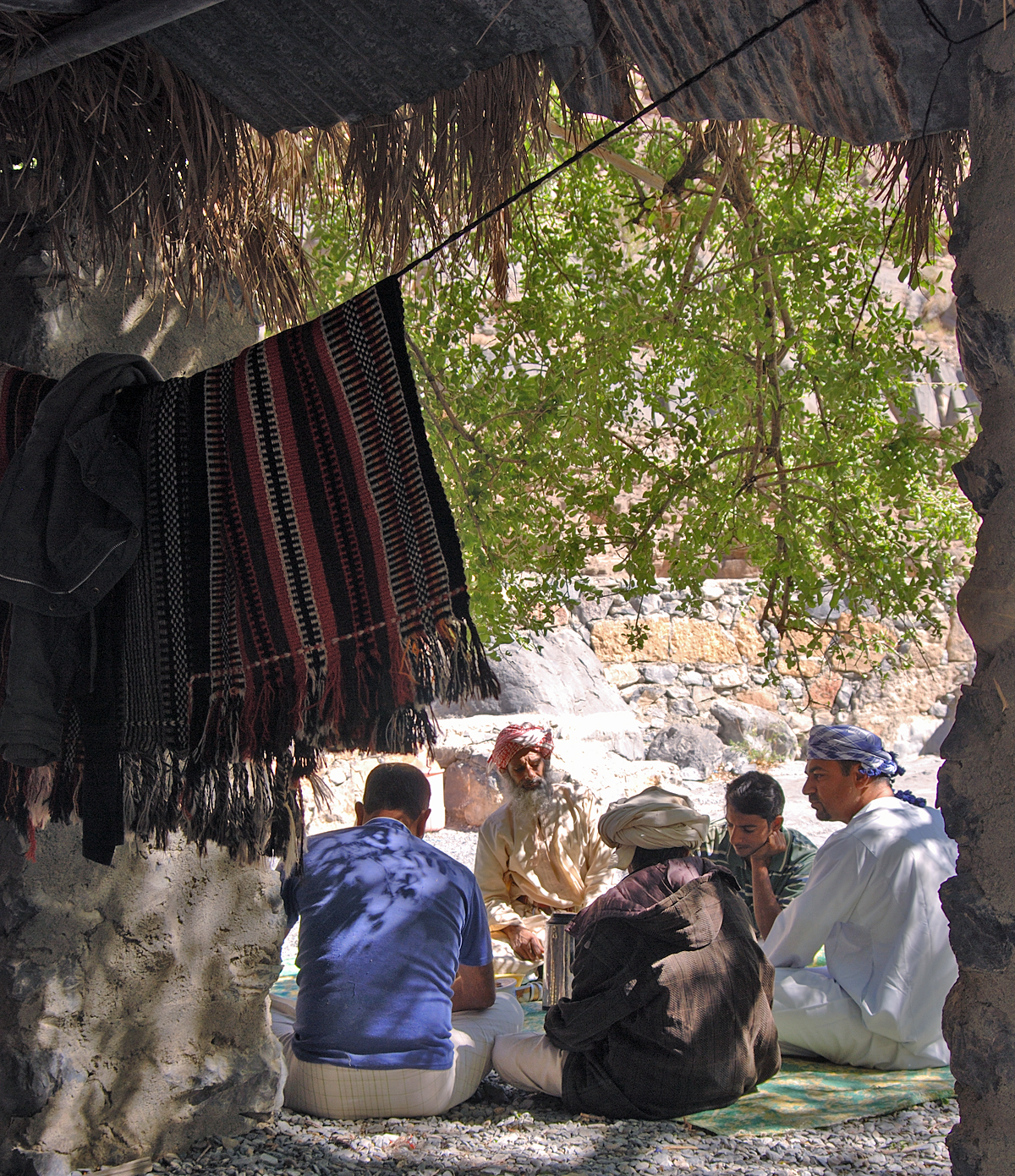
kaffepaus_wadi ghul

Bedu democracy has to do with understanding the power of relationships, meaning that every subject is discussed in detail and meeting on top of meetings essential....

….is understanding the many times confusing ways to get things done in Oman. And, I am sure, in quite a few other Gulf countries as well, where the principle of Bedu democracy is alive. It is easy to forget that Oman, just in a mere 40 years, have kind of exploded out of profound tribalism in the desert to becoming a well to do modern society and one has to understand that changes take time. Every day, travelling through the bustling Muscat traffic, I am stunned at the fact that before Sultan Qaboos kicked his father out, 1970, in a peaceful coup, the country only had a few kilometers of paved road, a couple of hospitals run by American Missions, one primary school and no electricity! And there was a civil war going on at the time! What the Sultan has done for his country since than, no matter what in regards to the lack of Western democracy, (if, as we in the West sees it, our democracy is the only way to enlightenment) it is truly fantastic and couldn´t be better. Truly impressive and the Sultan should be seen as a role model in any civilization.

However, the traditional way of the Bedus is still strongly in place and that is what makes it very frustrating for somebody like myself who wants things to get done. In the way I am brought up, the Western way. Fast. Things are just not happening as fast as I would like and that is not only due to my mistakes and impatience, but also to the fact that I still don´t fully understand the power of relationships and the time (in the Western eye) it takes before one can go ahead. I am still to frustrated to understand, but I am learning slowly. Let me just give you an example what I mean, which in the Western eye, is not only frustrating, but also quite entertaining.

The other day I went to the University in Nizwa to hold a lecture….

First of all, it was set to be today the 12th, so for this reason I was kind of surprised when Talib called me 08.30 in the morning four days ago, whilst I was swimming in the ocean, saying that the lecture was due at 13.00 that day. We, P and me, ran like mad to get back to the flat, have a shower, check the lecture to its full plus the technique, so all was perfect and than zoomed off to Talib, who had initiated the contact and was seen as part of the show. We traveled with Talib in his Porsche to Nizwa, 130 km:s west of Muscat, and we didn´t even stop for lunch to get there in time.

Halwa from Oman...read more here http://www.omanet.om/english/culture/halwa.asp?cat=cult&subcat=cult2

Halwa from Oman...

The Nizwa University compound is large and have more than 6000 talibs (pupils in Arabic). We were met by an assistant at 12.45. He was the assistant to the assistant to the chancellor. He brought us through the compound into the assistant to the chancellor, an old pal of Talib. Mohammed Abdullah Said Al-Adawi greeted us heartily and we sat down on his couch nervously. I wanted to set up my lap top, check the sound and prepare. On top of that I was starving. Talib had said we would get a bite to eat before the lecture.

The University is just a stones throw away from the oasis of Berkat Al Mauz

The University is just a stones throw away from the oasis of Berkat Al Mauz

“Don´t worry” , the assistant to the Chancellor said, “We have moved the lecture till two o´clock. And students have exams today, so I don´t think many will come.”

Then he winked for an assistant to them all, a coffee server, who with great dignity poured Arabic coffe in the traditional small cups and served us sweet halwa. At that moment a female student came in. She was there to show us around the compound before the start of the lecture. Or maybe as an assistance to P, so she wouldn´t roam around the camp in an inappropriate fashion. After about half an hour, it was 30 minutes remaining before the start of the lecture and by now I knew the students had waited for an hour. In my book that was close to a disaster. They would be very edgy. Those few who were apparently there. My hunger pains got worse. I just have to eat to get energy before a lecture.

“We are waiting for you to meet the chancellor!” Mohammed Abdullah suddenly said, then we kind of moved through the campus in procession, whilst more assistants joined us….I have always wondered, whilst meeting a lot of powerful people in Oman, what do these assistants do except sit on a coach and look like the world is passing by?…..They don´t say a lot.

Bedu boy in the Sharquiya, continuing many thousands of years of Bedu traditions and democracy.

Bedu boy in the Sharquiya, continuing many thousands of years of Bedu traditions and democracy.

Due to the high amount of assistant’s in His Excellency´s room, the Chancellor, we had no idea initially who was who since Omanis all dress in the national costume, a dishdasha and turban, but eventually it turned out to be the oldest fellow. Like all His Excellency´s in Oman he was very dignified, interested and opinionated. I brought up the story about Wilfred Thesiger and his visit to the area, when he wasn´t allowed to come into Nizwa in the end of 1940, because it was such a conservative place and they didn´t like nasranis. (Christians in Arabic) Maybe I was the first explorer they had seen than? I asked.  Not the best choice of conversation… However a lot of photos was taken on all of us together in a handshaking manner. We had some more coffee and sweet halwa.

2.30 p.m, one and a half hour late we arrived in the auditorium,which was packed with students, maybe 350 of them. Talib, who was suffering from the flu and severe hunger, said we would get food after the lecture. I had absolutely no energy left. And of course, nothing worked technically so that took an additional 20 minutes, so just before 15.00 hours it all started….. with a student reading from the Quran illustrated with pictures and quatations. All hell and fire. This is one thing with promoting religion I do just not understand. Why scare, like most religions can do, of fire and hell, instead of bringing up the positive aspects of the religion? I do know that much about the Quran and its suras and hadiths to know, that there are so many other, much better choices of readings and quotations which will inspire not scare.  Being brought up myself in a society where baptists where part of life, I just dislike the selling issue of, if you don´t do as the book says, you will end up in hell.

This young, smiling man was follwed by a young lady reading my full CV, which isn´t that short, see it here. When she was over, a film done by a student followed and that point was followed by another young lady reading a poem. At 3.30 it was my turn and it started off with the professor of cultural studies, a Sudanese, who once again read my full CV…

Once it was my turn, at 3.45, I was hungry, totally free of energy and the students, they had waited for two hours and 45 minutes, they had no energy left either. Or patience. It was the worst lecture in my life. The students talked, screamed, sent text messages, slept, walked in and out and when it was time for questions somebody shouted, a group of female students at the back, that they wanted to leave….it seems like these quotations of hell and fire doesn´t work too much…..well, it was the worst lecture of my life!

The lecture was finished with the assistant to the Chancellor presenting me first, than Talib, with a painting with a quotation from the Quran. Very nice gift! Many official photos was taken. When all that was over, the assistant left us in the hands of other assistant´s and 8 hours after eating breakfast we had lunch.

The punchline? Well, I went to lecture to the students because it is my mission to try to build bridges of understanding, trying to educate these young people, not to meet a lot of dignitaries, shake hands, chat a bit, drink coffee and eat halwa. It seems like at times Omanis care more for this, than the actual mission, to inspire students. As a whole it was a good lecture for me in traditional beduism!

Sultan Qaboos Bin Said Al Said

Sultan Qaboos Bin Said Al Said

Conversations with Talib – a Muslim role model -part one

November 26th, 2009 mikael 2 comments
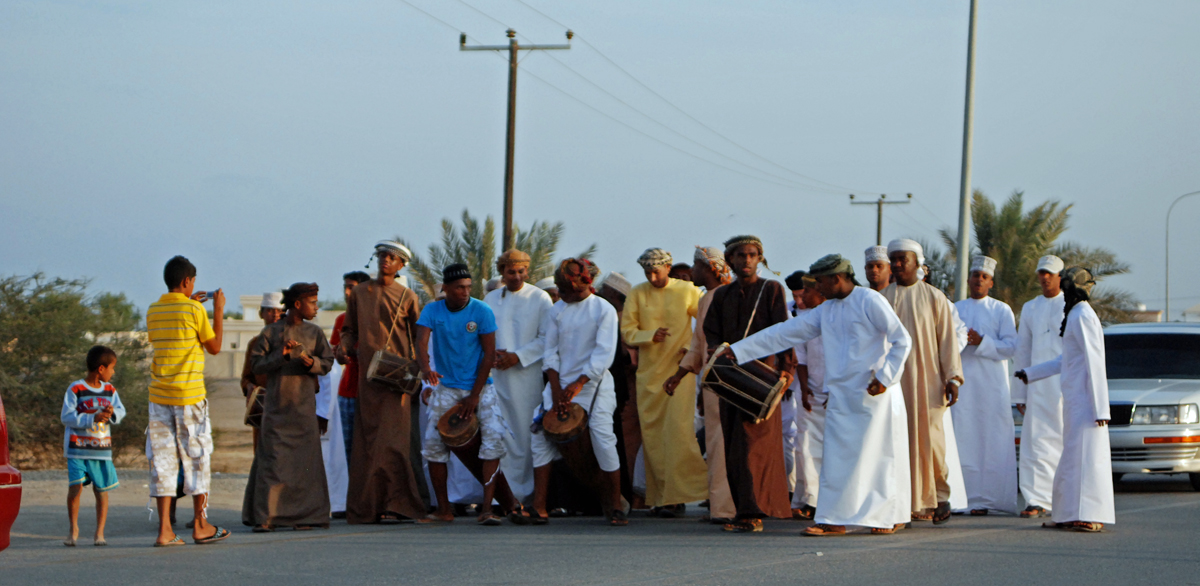
A wedding procession along the route. The bridegroom and his friends on the way to the bride to be.....

A wedding procession along the route. The bridegroom and his friends on the way to the bride to be.....

During these three days of Eid Al-Adha we did a tour to the north of the country, passing through a lot of small fishing villages along the coast dominated by a strong smell of dried fish and people on vacation. The villages where teeming with people! We really enjoyed this part of Oman and we realized what a great family gathering this important holiday is. Muscatis leave the capital en masse to visit their birthplace and their parents during Eid Al-Adha. We finally ended up in Sohar, formerly capital of the country and the birth place of two of the globally most famous Omanis, Sinbad the Sailor and Ahmed Ibn Majid. The real Oman is, of course, located outside of Muscat. During our trip we also passed through Sawaidi, the birth place of a famous Omani to be. Talib Omar, one of my best friends. I meet him every Thursday for some of the most enjoyable conversations. Last Thursday we had this talk:

“Yesterday I saw this little ant on my floor and my first thought was to kill it, but than I realized how amazing it was, this little life walking on my floor, with all its legs and body moving forward and I thought, woow, another of his great creations!” Talib said with great joy in his face and continued passionately: “Our prophet said that life is precious and that humankind shouldn´t kill anything. All life has the same value! The prophet Mohammed was fantastic!”

“Oman is mainly Ibadi?” I asked him, my very good friend Tali Omar, during this, one of our many Thursday meetings, when we discuss everything from religion to football.

Talib goes up at 4.30 every morning to go to the mosque an pray....

Talib goes up at 4.30 every morning to go to the mosque an pray....

“I don´t see myself belonging to any specific arm of Islam. I am sunni, shite, ibadi, all. I am a Muslim in all ways. It is simple really, it is just to follow the ten commandments of the Bible. I try to do as good as I can.”

Talib is one of the nicest human beings I have ever met. He has been the big difference in many ways, regarding the success or failure to put the Expedition on it feet and his wisdom is plentiful. And he never talks bad about anyone, doesn´t pass judgement without knowing, he is well read and educated in life, he speaks with a soft voice, always in a non-aggressive way and he is never pushy, but always helpful, very generous and no matter how busy, bogged down with work, he always takes time to listen and help. Lately he has spent hours in his phone trying to help me find my way through the sign-free parts of Muscat. He is a devout Muslim which prays 5 times a day, he listens often to prayers on the radio or TV and he reads a lot on the same subject.

The five pillars of Islam is: Faith or belief in the Oneness of God and the finality of the prophethood of Muhammad; Establishment of the daily prayers; Concern for and almsgiving to the needy; Self-purification through fasting; and The pilgrimage to Mecca for those who are able.

The five pillars of Islam is: Faith or belief in the Oneness of God and the finality of the prophethood of Muhammad; Establishment of the daily prayers; Concern for and almsgiving to the needy; Self-purification through fasting; and The pilgrimage to Mecca for those who are able.

“I prefer to read books by Western scholars when it comes to Islam” , he says, “They go deeper, question and are more neutral, which means you get a broader spectrum of Islam.”

“Why do you think Islam is so misunderstood in the West?”

“Well, it has become to politicized. Really from the beginning with the Ummiyads and up until today it is far to often based on political and not spiritual power. And when two Muslim sides are at war, like Iran or Iraq or like in Somalia, they blame each other for not being true believers. I guess, like Christianity, look at the catholics and protestants in Northern Ireland…..” I chip in with the former republic of Yugoslavia, “….they´re still not getting along even though they should be called educated people. Because one problem for Islam is that in many Muslim countries education is poor and if you get a bad Imam preaching in an uneducated area, we have a situation. Therefore, if it is a poor country with big divisions between rich and poor, than people will join the opposition whether they are fanatics or not! Education and a fair government is vital!”

“One thing I realized during my time in Yemen studying Arabic, was that in reality, like the Talibans in Afghanistan”  , I said, “These geezers don´t even speak or understand Arabic, how than can they than properly understand the Quran? They don´t even know what they are reading.”

“True. I haven´t thought about that.”

“What about the issue of women? I get a lot of questions from my readers about Islam and their views on women and then they, the readers, refer to some horrible article written about lashing or stoning woman. And add that some Muslims say that it is written in the Quran that the beating of women is a right.”

“The situation for women is not good. Indeed it is terrible. But that has to do with the old culture in this area, which was strong far before the arrival of Islam, and this ancient culture has unfortunately been applied to Islam. But that is not good, because it is a fact, that The Prophet loved women and he had some very strong women around himself and if people try to read his first sermon where he specifically said that society has to protect women and give them the same rights. I have a daughter myself, she plays football and I will give her every chance in life to choose what she wants to do in her life. And regarding beating woman, in Oman it is written in the law that it is forbidden, but it is still not easy to implement, because if a woman goes to court, she will pay a social prize of being evicted from the community. So we still have some time before it works perfectly.”

All throughout our conversation his mobile has rung, messages has poured in, it is Eid Al-adha, plus that Talib really never takes a day off work. Suddenly somebody very important calls and our time is up and we return in his Porsche to Al Ghubra where I live. He stops half way at a mosque for midday prayers. For me Talib is a role model of how a human being should be.

The shopping for Eid Al-Adha is hysterical right now!

Some of the most imposing mosques have elaborate design, like the Sultans Mosque in Muscat.....

Some of the most imposing mosques have elaborate design, like the Sultans Mosque in Muscat.....

Am I a taliban…..

September 9th, 2009 admin No comments

…I guess to a certain extent, since the word is Arabic and means a student, and yes, I am a student of life in Yemen at the present. The following took place yesterday:

Shopping during ramadan in the old city of Sana`a, the ladies souk....

Shopping during ramadan in the old city of Sana`a, the ladies souk....

”What is it that you specifically like with Yemen?” the young American journalist asked me, when making an interview at The Coffee Traders yesterday, “What are the positive aspects?”

Like most other foreigners in Yemen right now, like Westerners, Arabs, Asians, I was warned profoundly not to come here. By old friends, Middle East experts, governments, Arab friends in other Arab countries and global media. Basically they all said:

“You will either be kidnapped, hold to ransom or killed. Yemen is the most dangerous country in the world right now! Al Qaeda is running wild in the country! Worse than Somalia, Iraq and Afghanistan!”

The tinmarket.....

The tinmarket.....

Let me just tell you readers, not once have I been scared or felt threatened, and on top of that, please do know this important fact, that most of my time I walk the streets of Old Sana’a in darkness, finding my way through the black, winding and narrow alleys, stepping into a world on the brink of fantasy, meeting armed locals, the odd one with Kalashnikovs, most with the big jambiyya strapped on the belt in front of them. Not once have a felt uncomfortable! With a extremely few exceptions, which I will tell you about at the end of this dispatch, I have come across some of the best people I have ever met. Trust me, I have been to 113 countries, during 25 years of exploring, the Yemenis are amongst the friendliest, most generous and hospitable people I have ever met. On pair with the native Siberians, whom I love as a people more than any. I am probably one of few who’d voluntarily would like to get deported to Siberia! Luckily Yemen is still open to foreigners!

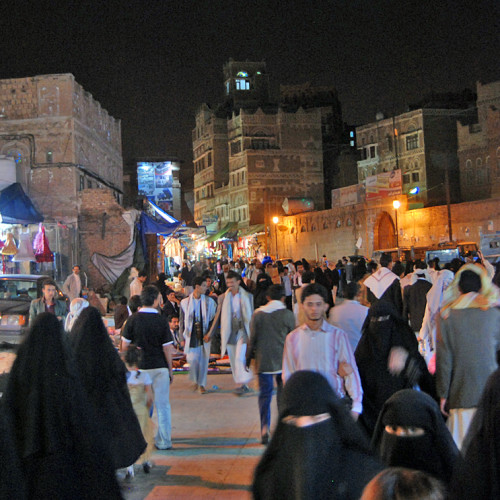
The souk at midnight.....

The souk at midnight.....

I like Yemen, or I should really say Sana’a, since I haven’t seen too much of the rest of the country, because people here always give you a smile, greet you, ask you how you are, care for your well being and often invite you to their homes for either a kat chew or food. They are very courteous, exiting, funny, full of character and extremely helpful. And we are talking Sana’a, the biggest city of Yemen. Imagine than what it will be like outside the cities, in the countryside, where people always are nicer and better. (Yes, I am born, bred and brought up and have lived most of my 47 years in the countryside….).

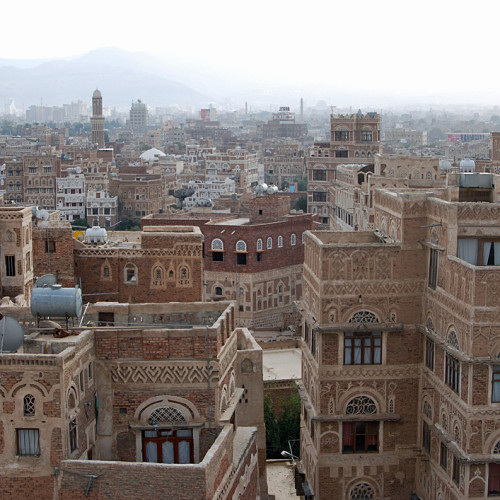
And I love the Old City of Sana’a, Sana’a Kadiima, which must be the most interesting place on earth right now. It has to be seen and experienced before things develop and it becomes a living museum, which will sooner or later happen, since Yemen will develop like the rest of the Gulf. It is after all a very rich country with great natural resources and an amazing, so far untapped, potential for tourism and development, it is just stuck in a well known limbo at the moment of mismanagement. Hence the continuing war against the north, the troubles with the south and more. War planes continue to leave and return to Sana’a in big numbers, some of them heavier airplanes filled with bodies of the many dead soldiers. Still, life goes on, as it always have in this mesmerizing country!

These two boys, of which one is the son of a sheikh, came into the souk in a new car, and wanted to sell a jambiyya to Abdullah for 200 000 rials.....about 1000 dollars

These two boys, of which one is the son of a sheikh, came into the souk in a new car, and wanted to sell a jambiyya to Abdullah for 200 000 rials.....about 1000 dollars

The souks of the Old City are teeming with people from nine in the evening to three in the morning. It is Ramadan time and people are shopping more than ever and many shop owners say that, even though it is a global economic recession right now and a war in the north, people still seem to shop in great amounts. And a lot of them are women which speed in numbers through the narrow, dark and winding alleys, looking at you with smiling eyes and lots of curiosity, heading for a sale somewhere in the darkness. It is a great time to be here. Since electricity is erratic, half of a 5 hour visit, which is a minimum to get some feel of the life in the souk, is in darkness, which makes it much easier to appreciate the sense of being in a movie, which is set in the Middle Ages. Old Sana’a has to be seen! Yemen has to be visited! The other day I saw a movie at a friends place, a film was called The Bucket List and the storyline was about two old men (Jack Nicholson and Morgan Freeman) who had cancer and made a list of things they wanted to do before they died. I would put a visit to Old Sana’a and Yemen first on that list!

Never a boring moment in the souk!

Never a boring moment in the souk!

I also love Sana’a and Yemen because there isn’t one boring moment here. It is so full of characters, impressions, noises, smells, movement, and chaos that I, after 5 hours in the souk, am more tired than ever, after having experienced the most amazing impressions, that I only thought belonged to a far bygone era. The best of all, nevertheless, is the Yemenis themselves, educated or non-educated, city or countryside people. Such friendliness! The positive aspects of this great country easily outweigh the negative ones, which are so well-known to the world.

Ladies cruising the souk

Ladies cruising the souk

Nonetheless, I know, I am a trained rational European, so I will have to ask myself, have I, on top of the well-known problems which are always highlighted in the international press, come across any nasty things or people? I have had people who read my blog asking me if all Yemenis are good….since people are my main drive in life, I will tell you this:

Visiting friends in the souk.....

Visiting friends in the souk.....

At times I have met locals who have stared at me with blankness in their eyes, always people with either a reddish beard, a sign of them being hajjis (men who have done the pilgrimage to Mecca) or bearded men with a turban indicating them being imams or religious on the brink of fanatism. No matter if I have been dressed as Ahmed Al-Hamdani or my normal self. They just don’t like or trust foreigners. Or anyone being different to them. Maybe some of them have belonged to this loosely knitted network called Al Qaeda, these fanatics which it is said there are plenty off in Yemen and Sana’a, who interpret the Quran wrongly to justify there own regretful means. But these uneducated and indoctrinated lunatics I can count on the fingers on both my hands, no more. It should be said, however, that the overwhelming number of hajjis and imams I have met in the capital greet me like all other Yemenis and Sanaanis (people from Sana’a), with a smile, a Salaam Aleikum (Peace be Upon You) followed by Kheif Halikum? (How are things with you?), and lots of curiosity. However, going back to these people who are destroying the image of Muslims and Islam not only in the West, but also in the rest of the non-Muslim world, they get far too much attention in the global media, when they’re in reality are very few in number and the worst of representatives for the Moslem world. They and their kindred the Afghani Taliban’s are mostly a bunch of spiteful, bitter, misled, uneducated men who can’t read and write, some might be able to recite a few verses from the Quran, that’s all, but still not understanding what they’re reciting, who want to keep the Moslems on the globe in the Dark Ages, isolated, scared, ignorant and spiteful of the rest of the world. I have met very few in Yemen who have anything good to say about this sad lot of people.

The exiting souk....

The exiting souk....

Another group of war planes just passed over my flat in Old Sana’a, it is almost midnight and kids are playing football on the street below my window. I can hear illegal fire crackers followed by screaming kids and there’s a row between two men regarding which one of them should reverse their car and let the other one pass in a narrow alley. I am sitting in my mafraj, reading Tahar Ben Jelloun, a French-Moroccan Muslim intellectual who wants to modernize Islam, referring to sura 13:11 in the Quran which states that Allah will not change the possibilities of humans, until they change themselves. I can hear Hussein shouting for a taxi and maybe I should go down to the souk al jambiyya, (the knife market) one of the 40 souks in the old city, and sit down at Abdullah’s store, the jambiyya maker and have a cup of tea and chat a bit about nothing really. Yeah, why not?

By the way, lately I have been thinking about my life, always breaking up, always travelling, good or bad? I just read this passage from a guy called Muhammed Asad, very much a traveller himslef, upon meeting a Beduin who said:

“If water stands motionless in pools, it becomes stale, muddy and foul, only when it moves and flows does it remain clear.”

by the way, have you seen my old blog at http://preparingforthenextexpedition.blogspot.com/

Yemen – how dangerous in reality?

July 30th, 2009 admin No comments

The seven o´clock muezzin just took tone and the prayers from the holy Koran spreads across the darkness which dominates the old city of Sanaa…it is the day before Sunday (Friday here) and I wouldn´t like to be in any other place at the moment….

The traditional jambiyya knife, can like the one you see on the photo be hundreds of yeras old and have a handle from the black rhinoceros.

The traditional jambiyya knife, can like the one you see on the photo be hundreds of yeras old and have a handle from the black rhinoceros.

On the other hand, some professional opinion makers think that Yemen is on the brink of war. That Yemen could turn into a new global tragedy like Somalia, a country dominated by violence between armed fractions belonging to different tribes and where a solution right now seems almost impossible. And there´s no doubt that the situation is dire. The local newspapers,Yemen Post, Yemen Observer and Yemen Times are full of bad news regarding the conflicts within the country and when you read the editorials, yes, it can well be said to be a slightly unstable and dangerous country. A country where kidnapping seems to be a national sport. According to the Yemen Observer there’s been more than 200 separate kidnapping incidents the last 15 years.

But if you, like me, an independent visitor walk the streets of the capital Sanaa, it is almost impossible to believe that the country is considered by many as one of the most dangerous countries in the world. If that means the traffic, yes, I would definitely agree, but just cruising the streets, it is hard to believe. I know that the conflict is in other areas of the country, but still, I see very few armed people….well, most Yemeni men in traditional dress wear the fearful jambiyya, but they feel just symbolic….and the people are so friendly and relaxed that it seems impossible. War planes pass my head a few times a day, just to remind me that there´s a conflict and people, everyone you meet, talks about the situation, but it is hard to spot with the bare eye. If you for example pass a government office or building, it is guarded, but the guards seem to spend more time chewing kat, than to be observant. They sleuth and chew and greet you with a big smile.

The souk of the Old City of Sanaa during another power break...

The souk of the Old City of Sanaa during another power break...

Nonetheless, I have before passed through areas on conflict in Baluchistan just below the Afghani border and Central America, well, I remember Nicaragua very well which I passed on a bicycle early 1987. At that time the country weren´t on the brink of war, they were fighting mercilessly from both sides, the Sandinistas against the contras. It was, I thought at that time, an exiting place to be. It was full of personalities in the shape of aid workers, nuns, mercenaries, travellers, adventurers, Russian and American soldiers and spooks and even though the military presence and the amount of security police was heavy, I managed to cycle across the country and loved that atmosphere that existed. That time I was too young to see all the overwhelmingly negative aspects of war, as violence, terror, evilness and suffering people. But I have a strong memory that local people were great but terrified.

A kat chewer taking life easy in the belt souk of the old city of Sanaa

A kat chewer taking life easy in the belt souk of the old city of Sanaa

Another two hour electricity break there…this does remind me of a war torn  Nicaragua. Really what I want to say about the situation is that I wouldn´t like to be in another place right now and I can honestly say I feel safer here than any other country I have visited. Including my native Sweden. And as everything else in life, life in Yemen presented through Western media, well in this case, global media, whom I know well, and reality is often very different. I have looked closer at these kidnappings that has happened to foreigners and if you look at it clearly, there´s only two kidnappings which has gone wrong. All other ones, the hostages have been released and spoken well about their captivators. The first time it was wrong, according to Yemen Observer, was in the south of Yemen 1999, where three Western tourists were killed in a shoot-out between kidnappers and government troops. The second time was just this past June, when two German nurses and a South-Korean teacher were found dead and six hostages are still not found. There´s a belief among many observers here that the culprits come from another country and belong to the infamous haters called al-Qaeda. It, if you look at history and have come across the Yemenis, it makes sense. For me.

alSOuk_by_night_baab_al_yemenAnd yes, there are areas which should be avoided, but some of the major tourist areas like The Old City of Sanaa and Hadramawt Wadi, Suqutra and the Haraz Mountains are still accessible.

So, I would definitely say to people who travel, Sanaa and Yemen is a paradise and has to be seen. Especially this amazing souk which has to be the most interesting place on earth. I will write more about this global giant soon!

Please visit my other blog for info about life before the old souk of Sanaa at http://preparingforthenextexpedition.blogspot.com/