Archive

Posts Tagged ‘sahara’

A vital female perspective on adventure

March 1st, 2010 mikael 1 comment

Paula Constant gives a very interesting perspective of exploring, from a female perspective. Vital and needed.

Paula Constant gives a very interesting perspective of exploring, from a female perspective. Vital and needed.

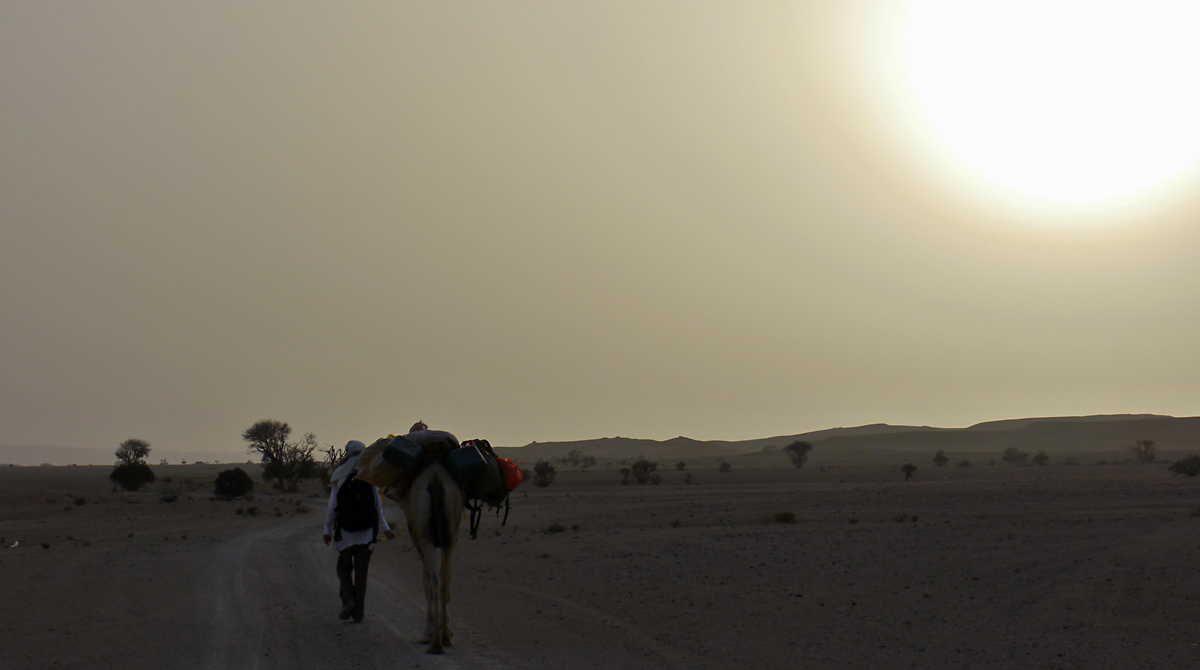
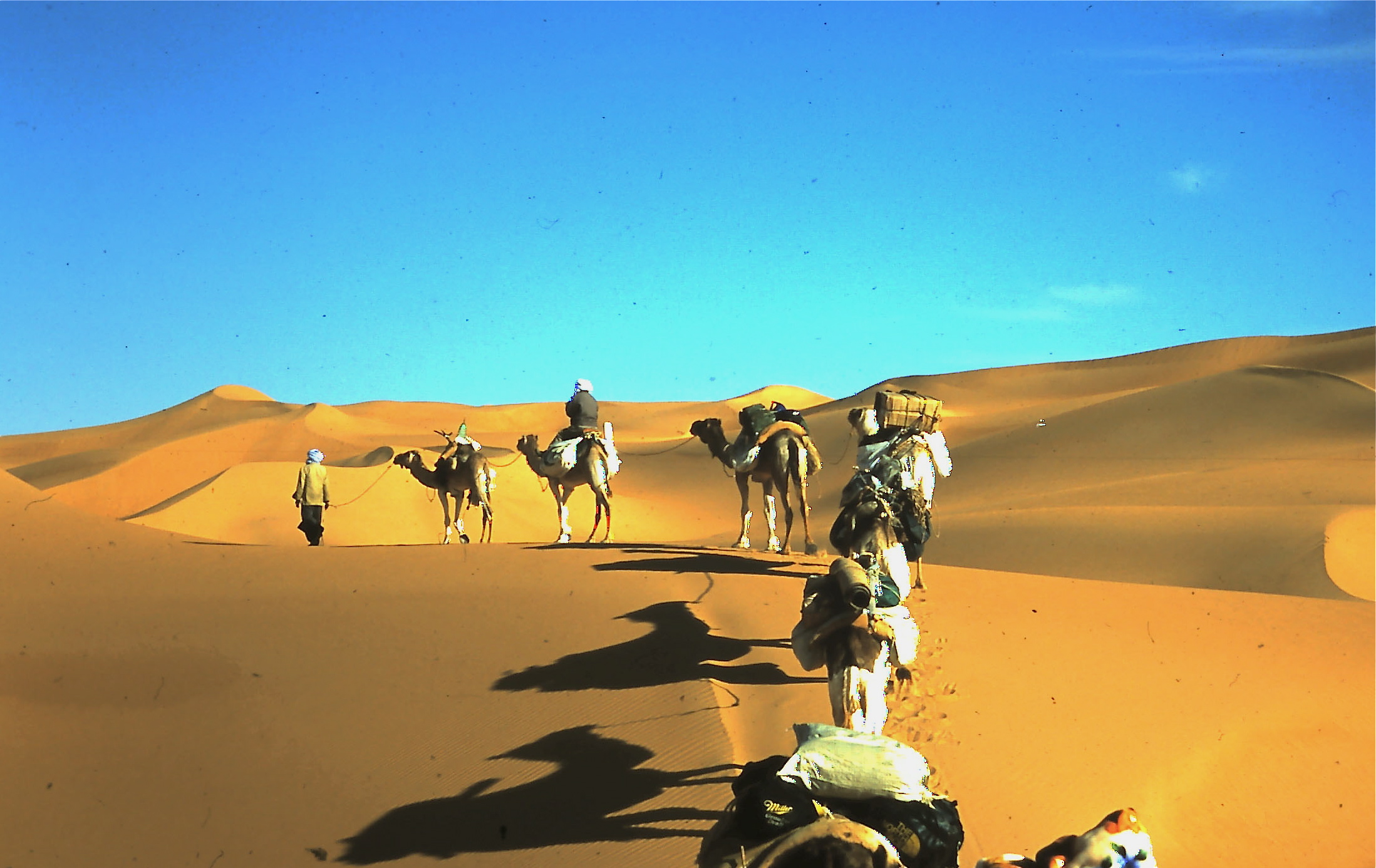
Guest writer number 7 is another impressive explorer whom I have gotten to know through my Expedition planning to come in the future, Paula Constant, from Australia. She is quite a powerful personality as well with strong views and a big heart. And she has been great help in pretty much everything, especially the emotional aspect of failing to do what you planned to do. And we have talked quite a lot about the differences between the sexes when it comes to exploring, so I asked her to write a piece about that. She has an impressive record and back in 2004, with no previous expedition experience, Paula began walking from Trafalgar Square with a backpack.  Since then, she has walked over 12000 km through eight countries, including nearly 8000km through the Sahara with her own camel train.  Married when she left Trafalgar Square, Paula’s husband left the expedition a year later, when the couple were just 1000km into their desert trek.  Paula carried on with two Arabic, nomadic guides, and went on to gain sponsorship and go over halfway across the Sahara in a bid to make a West to East crossing of the desert when she was stopped by civil war in Niger in 2007.  She is the author of two books – Slow Journey South, recounting her European walk; and Sahara, detailing the desert journey.  No female adventurer has walked so far through the Sahara alone but for local guides.

I never set out to become a ‘female adventurer’.  Actually, 5 years ago, if you had asked me exactly what a ‘female adventurer’ was, I’d have been relatively unable to answer.  I could probably name a few mountaineers who happened to be women; because I planned on walking, Ffyona Campbell also sprang to mind.  But I would have wondered why anyone actually needed to state that the adventurer was female.  What on earth does gender have to do with anything? I would have thought.

Perhaps this has its roots in my own background – growing up in rural Australia, jumping on horses and skis with as much energy as the next bloke, and always in competition and company with men, it had never really occurred to me that as a woman, my experience should or could be any different to them.  When I read the tales of adventurers of old, the only reason I saw for there being no women on the honour rolls was simply that most great exploration occurred before the Women’s Liberation movement really happened, and so it was just not feasible.  But to be honest – I never really thought about it.  Occasionally I would hear about women who were pioneers in one way or another, and I always knew we were absolutely capable of anything; I simply saw that now, the opportunities were open for us to pursue them, where before, they were not.

When I set out walking from Trafalgar Square in 2004, however, I wasn’t planning on doing anything solo.  I was married, so despite planning on heading into Muslim Northern Africa and through the Sahara with camels, it never occurred to me that I would be doing any of it solo.  It was something of a shock to find myself alone.  My marriage broke up after 6000km, and only several weeks into a 7000km desert trek.  Suddenly I was running a camp of two Arabic men and four camels, with no man beside me.

But apart from the emotional distress of a marriage breakdown, the reality was in many ways a relief.  To finally be in control of my own walk, and team, was wonderful – what I felt born to do. It was I who had spent years reading and dreaming about the region, and who felt a real connection to the place and cultures within it; this walk had always been particularly my dream.

But it most definitely was a world of men.  Week upon week of living not only immersed in another culture, but confined to the company of two men I barely knew, and neither of whom spoke my own language, was exhausting – both in those first 6 months, then when I returned for a further 8.  Was it harder than if I were a man?

"When I set out walking from Trafalgar Square in 2004, however, I wasn’t planning on doing anything solo.  I was married, so despite planning on heading into Muslim Northern Africa and through the Sahara with camels, it never occurred to me that I would be doing any of it solo.  It was something of a shock to find myself alone.  My marriage broke up after 6000km, and only several weeks into a 7000km desert trek.  Suddenly I was running a camp of two Arabic men and four camels, with no man beside me."

"When I set out walking from Trafalgar Square in 2004, however, I wasn’t planning on doing anything solo. I was married, so despite planning on heading into Muslim Northern Africa and through the Sahara with camels, it never occurred to me that I would be doing any of it solo. It was something of a shock to find myself alone. My marriage broke up after 6000km, and only several weeks into a 7000km desert trek. Suddenly I was running a camp of two Arabic men and four camels, with no man beside me."

No.  I don’t actually think so.  Travel – and especially the kind of travel expeditioners’ and adventurers do – relies chiefly on the ability of the individual to work with others.  Whilst we must lead, we must do so with empathy, humour, humility, and determination.  I had to run an expedition whilst also learning on the job; despite being the centre of attention at every nomadic tent, I must always be patient, friendly, and conversational with the women – even though all I may have wanted to do  was throw myself down by the men and talk camels and grazing.

But what an opportunity!  How many men are invited into the women’s’ tent?  An entire world virtually hidden from men was immediately open to me – but as a white woman, I had the privilege of being welcomed by the men also, mainly out of curiosity.  Perhaps even better, when it came to choosing guides, men of a certain caliber would see me in the same light as a member of their family – which meant they would lay down their life rather than see me hurt or insulted in any way.  I felt a profound gratitude and respect for such men, and found that if I conducted myself with honour, that I would meet with exactly that in return.  Only very rarely did I find behavior to the contrary.

When those situations arose, they were tiresome, and sometimes depressing.  One of the things I dealt with as a woman in a desert, Muslim environment, was being offered marriage almost daily – from pretty much every nomad I met, if they were single.  There is no offense taken in these situations – one simply declines politely, and with respect.  But I made it very clear to the men I hired that once in camp, we were family, and I was not remotely interested in marriage or any other liaison.  On a couple of occasions the guides, through ignorance or malice, made the mistake of pushing the issue, or treating me as a slave rather than an employer.  This is where it is tough as a woman; and where one treads very carefully.  Polite but firm is the starting point; sack the guide and get another if they don’t get the message; and if that is non-viable (for example when you are very isolated) be tough if you need to be.  But what I learned as the most important thing was never to lose my cool, never to show vulnerability, and to treat most scenarios with a great deal of humour.

I suspect this is the simple rule for women.  It just isn’t ok to plead weakness, to throw up your hands in despair and ask someone else to solve a problem for you.  If you have chosen to get out there in a man’s world – then you have to play by the same rules, even if you think at times it is twice as hard.  Remember, you have many advantages – women, I believe, have a natural ability to empathise and comprehend subtleties in behavior.  Where we struggle is to communicate calmly, assertively, and with authority, when things get tough and we feel boxed in. Flying off the handle, or behaving irrationally or tearfully because we feel misunderstood and bullied, helps not a jot.  Lifting out of that is what leadership is about; no less for a man than a woman.

The most common question I field from journalists is how I felt out in the desert ‘as a woman’.  The answer is fairly simple – I was out there as an adventurer, and team leader.  I felt as any leader would have done in a situation where I had to react to changing circumstances daily, often under duress.  It was hard and lonely, and at times I felt I got it wrong.  But being a woman was not something that stuck in my head as a hardship.  We all fight personal demons out in the field, no matter what our background or gender.  We all struggle with being the leader we know we should be, and performing in an honourable, courageous way in tough conditions.  At times being a woman was an advantage – and at times very tiresome.  But I suspect the same could be said of any man.

I have met men and women who journey as much for the personal journey as the external one.  I have read quite a few times recently that women do this more than men, but I would dispute that.  I think women can be just as goal oriented – in fact, sometimes, even more so – than a man.  I just think that women are happy to describe their personal journey in more detail than many men, partly because their emotional life is ever present – well, it is for me, anyway.  What intrigues me is that most men are as aware of the emotional as women – they just don’t tend to write about it in the same detail.  Yet, in my discussions with men who may appear on the surface to be the archetypal hairy adventurer, scratch the surface and there is an overwhelming need and desire to talk about how they felt out there.  It is no coincidence that throughout the history of exploration, personal feelings, group dynamics and emotional turbulence have dominated the diaries, successes, and failures of explorers both male and female.  Being in such tough circumstances brings out the best and worst in us all.   Knowing ourselves is perhaps the greatest challenge in adventure, and the only way we truly begin to succeed.

Some of the hardest times on my walk were moments when all I wanted was to sit down with a group of girlfriends and talk about how I felt, something that is rather difficult at times for nomads.  On one such occasion I was resting and watching the sunfall, at the end of a particularly tough day on a very tough stretch.  I’d been out for twenty days, supplies were running low, the heat was intense during the day, and we we’d had to walk over thirty km each day to make wells.  As I watched, the sun dropped, and the sweet cool desert breeze washed over me like a miracle, just as the first stars shone through the gloaming.

My guide – a wonderful old man who had never gone even beyond the regional boundaries of his grazing area, and prior to me had never met a white woman – smiled softly, and said in Arabic:  “the desert night is the nomad’s reward for surviving another day.”

He tapped straight into how I was feeling, and we sat in silence and watched the night grow.  Finally we ate together, and tumbled into our beds.  I never forgot those words – because in what he said I knew that he had done it tough too, and put my experience on the same level as his own.  As a person, a leader, and a woman, I could have asked no greater compliment, and the simple line conveyed a beautiful truth: whether man, woman, Christian, Muslim, Arab or Australian, on expeditions we are made equals by our ability to conduct ourselves with strength humility and patience under the toughest of conditions.  Do so, and you render questions of gender irrelevant.

Fail to do so, and it matters not what you are.

Read more about Paula here!

I wrote an article about the issue here and another female explorer added her views to it!

Paula began walking from Trafalgar Square with a backpack.  Since then, she has walked over 12000 km through eight countries, including nearly 8000km through the Sahara with her own camel train.  Married when she left Trafalgar Square, Paula's husband left the expedition a year later, when the couple were just 1000km into their desert trek.  Paula carried on with two Arabic, nomadic guides, and went on to gain sponsorship and go over halfway across the Sahara in a bid to make a West to East crossing of the desert when she was stopped by civil war in Niger in 2007.  She is the author of two books - Slow Journey South, recounting her European walk; and Sahara, detailing the desert journey.  No female adventurer has walked so far through the Sahara alone but for local guides.

Paula began walking from Trafalgar Square with a backpack. Since then, she has walked over 12000 km through eight countries, including nearly 8000km through the Sahara with her own camel train. Married when she left Trafalgar Square, Paula's husband left the expedition a year later, when the couple were just 1000km into their desert trek. Paula carried on with two Arabic, nomadic guides, and went on to gain sponsorship and go over halfway across the Sahara in a bid to make a West to East crossing of the desert when she was stopped by civil war in Niger in 2007. She is the author of two books - Slow Journey South, recounting her European walk; and Sahara, detailing the desert journey. No female adventurer has walked so far through the Sahara alone but for local guides.

Honorary member of La Rahla

October 18th, 2009 mikael No comments

Just after arriving in Parsons Green, this sunny and warm day, I turned on the computer and saw these great news :

Dear Mikael,

We made you a honorary member in La Rahla so that if you need to consult any of our members we can put you in touch with them for information on the regions of the Sahara you intend to cross. We can also facilitate you buying photocopies of maps of the Sahara as we have practically full coverage of this part of the world. We can also help you on historical events which took place in the areas you will be crossing. It will add interest for you and the people you will be describing your expedition to.

We also feel that you are intending to do something particularly difficult physically and near impossible in this day and age with all the red tape problems in crossing borders that we can but admire your optimism on being able to conclude this venture. You are going to cross a part of the world we enjoy so much visiting and reading about. It will be a pleasure for us also to follow your itinerary and telling our members how it is progressing.

Mikael, “La Rahla, Amicale des Sahariens” 116 rue Damrémont 75018 PARIS FRANCE, is an association created over 80 years ago with over 1000 members across the world. Publishing every quarter in french a review of 80 pages on the Sahara excusively, and that this month it has just published as well a booklet of over 128 pages on an epic crossing of the Tenere desert done in 1927- 1928 when this part of the world was just a blank on the map with the title “EXPLORATION DU TENERE à la recherche du Tafassasset avec Ch. Toubeau de Maisonnneuve”. To see more about this Association visit their internet site :

http://www.larahla.com

Good luck
Best regards
André Hesse, president
Categories: Europe, africa Tags: , ,

The Fear Factor

April 1st, 2009 admin No comments

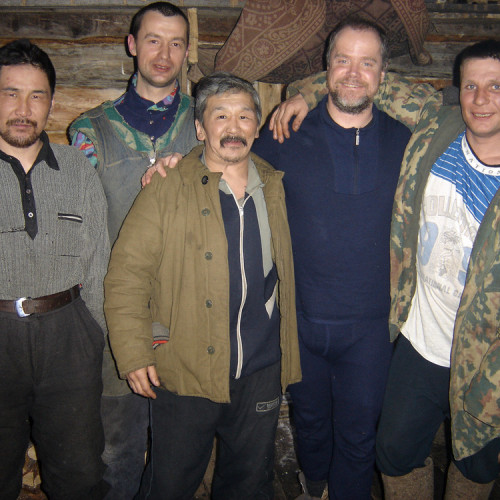
I just finished a book that I have had tucked into my bookshelves since 1988. It is called The Fearful Void written by a bloke called Geoffrey Moorhouse. It was given to me by a very good friend that I have lost touch with, unfortunately, for more than ten years, Ed Sismey. He is the one to the right on the photo, next to Steve Jewell and me, all resting whilst cycling through the Atacama Desert 1986. Ed gave it to me, because he knew I was going to pass the Sahara on a pushbike. The book scared me then, asmuch as it does today. Regarding, Ed, or Lucky Ed, as we called him, I am sorry to have lost tocuh with him. I don´t even know where Steve is at the present, even though he is one of my best friends. I believe somewhere in Africa, since he is married to a Pare woman he met during our Maasai Expedition 2000. Probably looking, as always, for food. And that brought me back to the book I have just finished, as part of my research into the upcoming Expeditions.

It is an odd feeling planning an Expedition, sitting in a comfortable environment, not realizing all the immense hardships waiting, until suddenly, most likely in the middle of the night, you wake up and feel terrified. This happened to me at four a clock this morning. I suddenly realized, soon I will suffer from the discomfort of immense heat, millions of flies, gut rot, incredible pain all over, acute tiredness, lack of hope, worries of surviving and tons of misunderstandings with people I come across or travel with. Easily forgetting to overwhelming positive experiences waiting. What I look forward to the most is getting away from the Duckpond I live in called the West, away from all gadgets and time limits. But, the book scared me, it showed everything that can go wrong. This git called Moorhouse, writes lovely, but he lacks most things an explorer should have, because everything possible, and then I mean everything, goes wrong. He sets out to become the first person ever to cross the Sahara by foot and camel, makes it half way, ending up in Tamanrasset , which I passed on a push bike and liked 1989, but the story is full of terrible mistakes and he is complaining about everything. Most of all the people, locals, he travels together with. They try to cheat him all te time. He almost perishes but still doesn´t forget what painting he has seen at Le Louvre or chapels visited. Themes he comes back to regularly. It is written in 1973. He does so many errors, because he wasn´t properly prepared and doesn´t just have what it takes.

But the book should be read by anyone attempting to cross the Sahara or doing a major Expedition. Because it shows what one should not do. And it is a good read. He reminds me a lot of Lucky Ed, who is, together with Geoffrey Moorhouse, the unluckiest guy on earth. But Ed never complained about other people. I will dive into Thesigers book Arabian Sands for awhile, to set my heart right.