Archive

Posts Tagged ‘travellers club’

What is exploration?

March 8th, 2010 mikael No comments
Why do we explore? Is there still white spots to be discovered on the global maps?

Why do we explore? Is there still white spots to be discovered on the global maps?

Lately I have had a lot of emails regarding, why do we explore? Is there anything left to explore? And who is an explorer? It has been a hotly debated issue. It is the second most read report I have written. I am also in favor of a new view on Exploration. Therefore I will republish this article below here as well, after receiving plenty of attention from Great Britain after this piece:

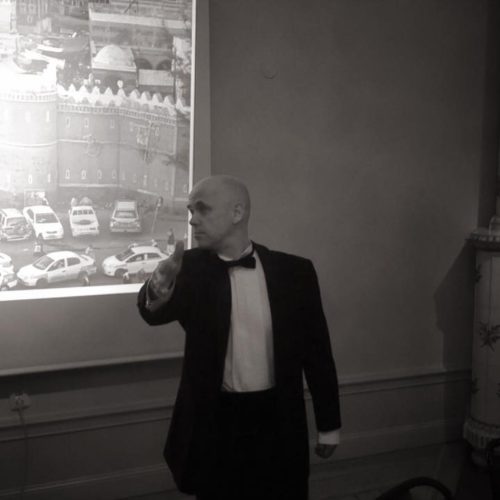
The other night I went to the monthly lecture at Travellers Club in Stockholm. I try to go there frequently. I like the surroundings at Sällskapet, the atmosphere, the lectures, but most of all the people, the members of the Travellers Club. A great lot of people with the most extra ordinary experiences from all over the world. I also go there to get inspired and maybe find an idea to what my next Expedition will be. This time it was a young fella who lectured, a great guy, very friendly and an interesting lecture. Technically. BUT, I am so fed up the attitude of todays adventurers and so called explorers. They are always the best on earth and they only talk about themselves. Incessently. And it is always the same message:

Everything is possible!

We´ve known this for the last 150 000 years, maybe even 3.2 million years back whenLucy went out for a excursion. I don´t know why it is so popular today to listen to this kind of extremely no-good-for-mankind-talk. And that lecture reminded me of the one in February 2008. Same deal. Then I remembered I did write an article about the same issue two years ago after having had the honour to lecture at Explorers Club in New York. This is what I wrote for Utemagasinet:

”…and then the mountain spoke to me, saying: ´Have faith in me, Ed, and you will reach your final 8,000-meter peak.´ And look, there I am on the mountain top!”

This is, more or less, how the famous American mountaineer Ed Viesturs closed his lecture at the Explorers Club´s 102nd Annual Dinner at the Waldorf Astoria in New York. Before him, a young guy named Andy Skurka, elected Man of the Year by Backpacker Magazine, had recounted the story of how he crossed the U.S. by foot from west to east in record time.

”Nothing is impossible! Anyone can do it!” he summarized, displaying a photo of himself posing in the sunset; his gaze fixed beyond the horizon, his muscles flexed and back held straight. An extremely traditional, male image of Adventure and Expeditions. I think I saw Buzz Aldrin, astronaut and second man on the moon, smirk. Woman kosmonaut Valentina Tereshkova simply left when the so-called adventurers entered the stage. Passionately, she had told her own story, filled with fear and amazement at the incomprehensions of life while she, as the first woman ever, rampaged round the moon 48 times.

The Annual Dinner carried the theme ”What´s Left to Explore”. And how this should be brought to an audience. I think very few of the 1,100 spectators enjoyed the adventurers´ talks. One of our neighbours at the table, the editor of a wellknown American outdoor magazine, said:

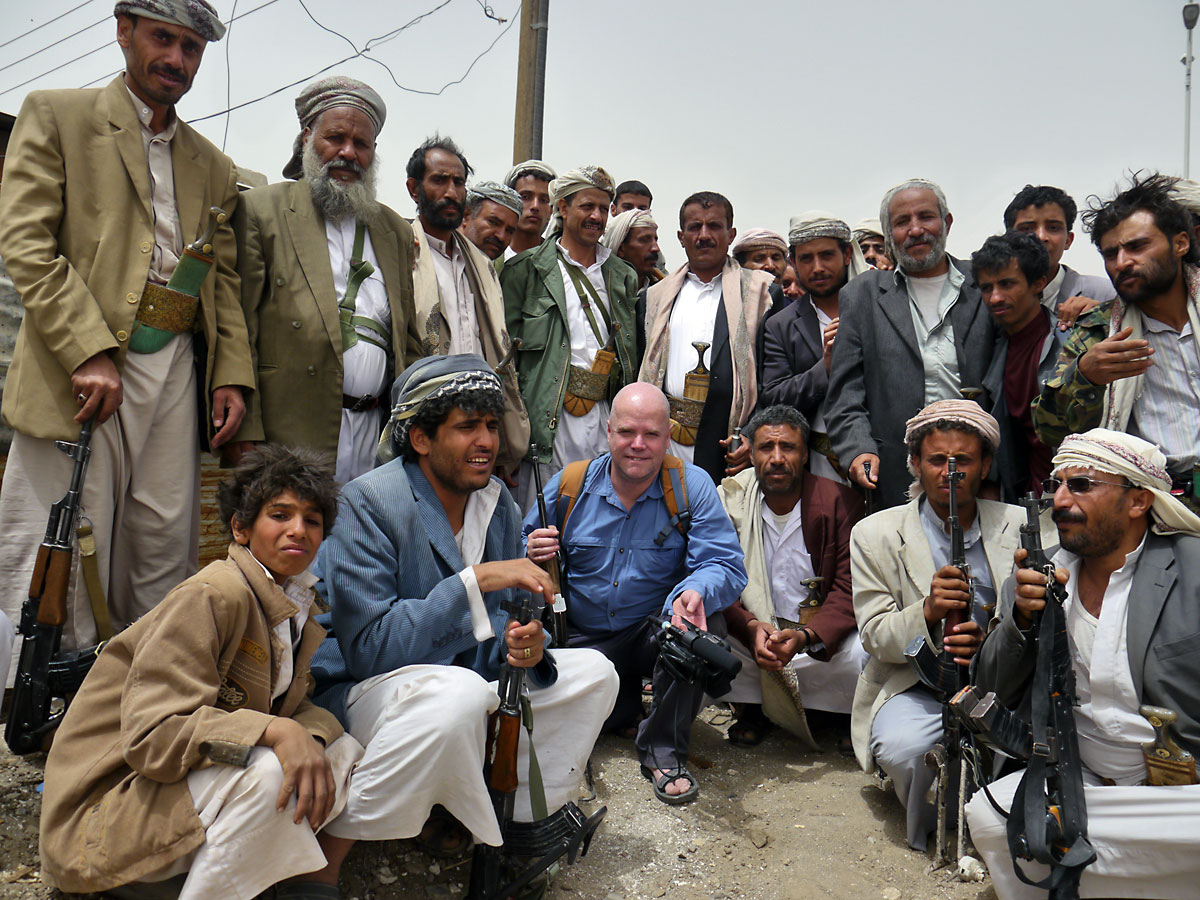
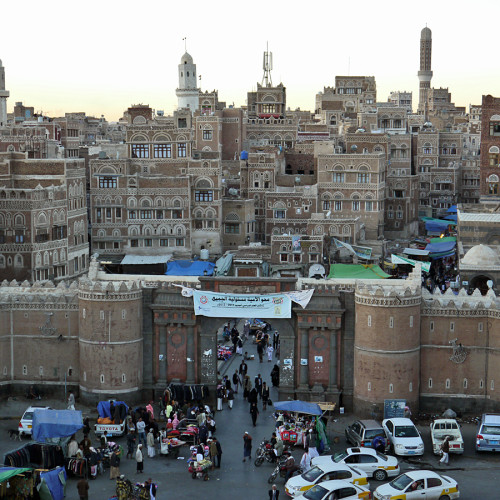
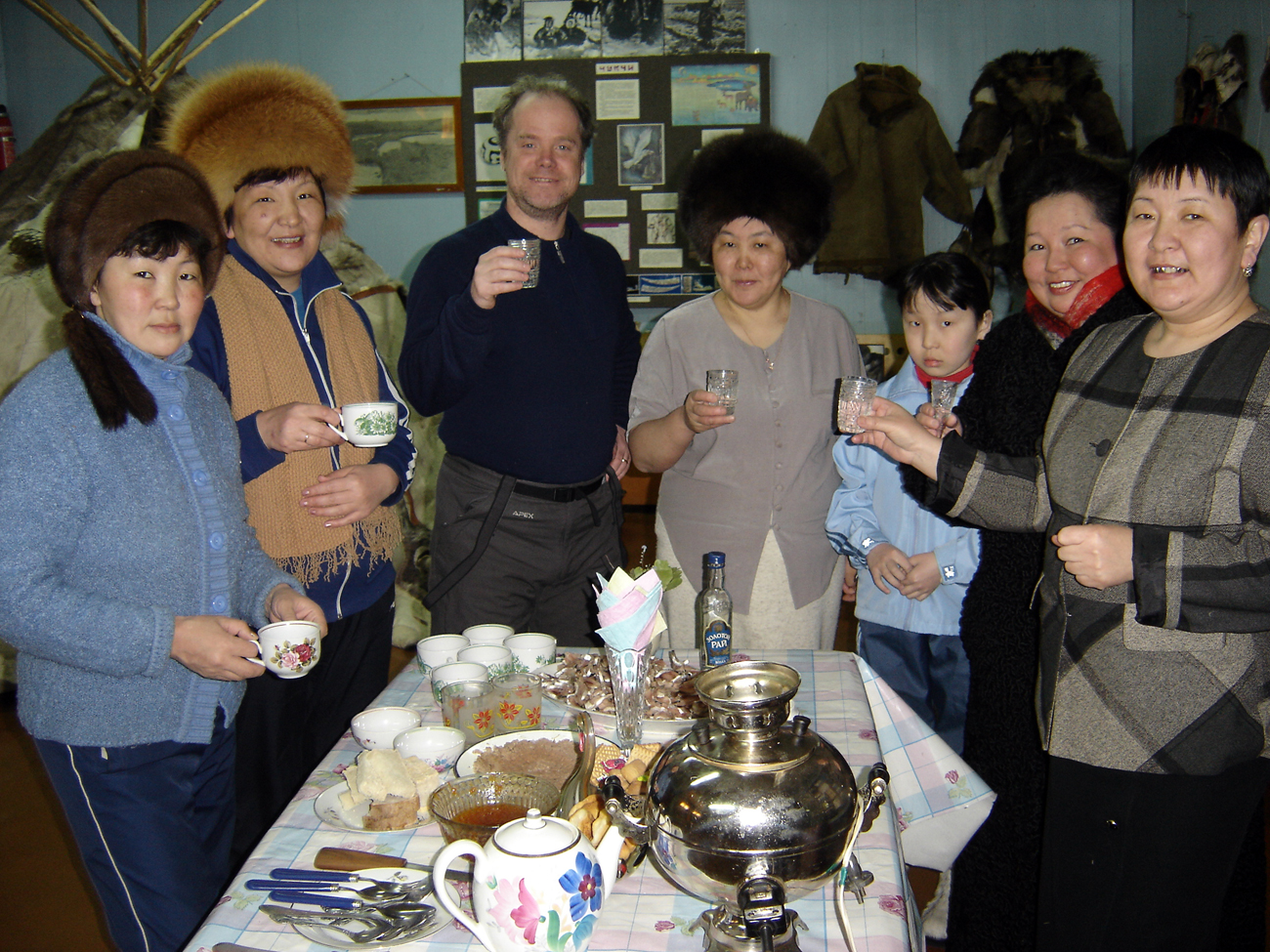
Papua New Guinea felt like one of the last places on earth I have visited, where there might at least be some white spots of discovery to be made. On the knowledge front.....

Papua New Guinea felt like one of the last places on earth I have visited, where there might at least be some white spots of discovery to be made. On the knowledge front.....

”Every day, as I receive letters and articles from people making expeditions and wanting to sell their material, I ask myself: ”Hasn´t Adventure come further than this? Is it still just white males with icicles in their beards dishing out the same old silly story?”

The reason why I´m bringing up this very important subject, is that every week I get a number of e-mails from men and women, young and old, who want to take off on an expedition or adventure. The majority want to know three things: ”What kind of equipment should I use?”, ”How do I get sponsors?” and ”How do I get the media interested in me, so I can make a living selling articles and lecturing?”

There is only one answer: Our view of Adventure and Expeditions must be renewed. Firstly, there has to be an interesting story. The times are gone when a spectator finds it interesting to listen to the hackneyed theme of ”anything is possible”; a story centered around dirty underwear, heroic struggle and white men with icicles in their beards who have managed to reach the North Pole, using a shopping cart and an oar as their only means of transport. Secondly, we need more women narrators. We need a female perspective. Men have to start thinking like women. I think this is crucial to whether the public will continue being interested in expeditions at all.

There are still considerable differences in how a story can be told. For example, I was searching the internet for stories about Swedish expeditions in the Himalayas. A couple of men report as follows:

“It´s been tough and troublesome. Our backpacks weigh about 15 kilos, but all has turned out well. Today we struggled for six hours. Tomorrow we will continue, and then we will use our final camp at 7,500 meters. We will rise at about 12 o´clock local time, put our tents up and melt snow for water. We won´t sleep much, but we are feeling all right.”

Incredibly boring for everyone except the storyteller´s closest relatives or someone else in the know. To be compared with another account from an expedition on the same mountain, at the same time, written by a woman in the same situation:

“Why am I never satisfied? I´m thinking I should have exercised more. Actually, I´ve been exercising at least five days a week. I think I should have been more mentally prepared. Actually, I´ve been preparing for five years. I don´t think I´m a good enough climber. But that´s the way I am in everyday life as well. I could be better at cooking, decorating, fashion, my job. I could be a better wife, friend, and so on. Maybe I need the inherent power of dissatisfaction to be able to hold on and not give up my dream of climbing an 8,000-meter peak. Because it has been necessary – but now I´m going to give it a try.”

Wonderfully thrilling and dramaturgical! The fact that the men reached the top and not the woman, is utterly unimportant. What is interesting is her story. This is how tomorrow´s adventurers on expedition must think to survive. Even better is to tell a story of someone else but yourself. Which is what I did in New York. When I took the stage after Ed Viesturs, the first thing I talked about was how ridiculous all the clever white males with icicles in their beards are. I continued by informing the audience about the Siberians and their everyday life, which makes a contemporary expedition look like a school outing by comparison. The response was fairly good – a ten-minute standing ovation.

Please continue to discuss the subject here!

Please continue the denate on the meaning of exploration and how we should look at it in the future!

Please continue the debate on the meaning of exploration and how we should look at it in the future!

Lecture at The Travellers Club in London

October 21st, 2009 mikael No comments
Tired after the lecture at The Travellers Club in London. Tohether with three of my very best friends, Barry, Pamela, who will join me in the Expedition and Peter, who came all the way from Sweden to honor me. The fourth person is a British adventurer namned Neil Laughton.

Tired after the lecture at The Travellers Club in London. Together with three of my very best friends, Barry, Pamela, who will join me on the Expedition and Peter, who came all the way from Sweden to honor me. The fourth person is a British adventurer namned Neil Laughton.

“Olly!” I screamed in the phone, “I need your help! I have deleted all my photos from Siberia and I hope I have left a memory stick with the slide show in a small rucksack in your flat! Can you get it? Where are you?”

“Don´t worry”, Ollie said calmly, “Am not far from home. What time is the lecture??”

“6.30 I think” I answered in panic, “No photos, no lecture!”

Imagine yourself. As an explorer, there are 4 venues which are more important than others. It is the Royal Geographic Society in London, The Explorers Club in New York, The Travellers Club in London and the National Geographic Society in Washington. I have been honored to lecture at the first two and suddenly I had a chance to lecture at the legendary Travellers Club in London. It is a privilege for few. Imagine than when you turn up, set up your laptop and realize that before leaving Sweden for a very long time, I took away the Siberian slide show…I panicked. Ran up to my room and I phoned Ollie. He said he had just left home. In fact, he was standing outside 106 Pall Mall and the Club. He took a taxi back and an hour later returned. Just before the lecture.

I have no idea if the lecture went well or not. But it was a highlight in my life. Some of my best friends were there. Peter, he came all the way from Sweden to honor me. Barry arranged it. Sam came with his wife and Stephen just made after visiting Jeddah with his great art. One of the biggest surprises was the well-known investment banker David Chaldecott who came with special greetings from the Sultan and Sultana of Hadramawt!

The saviour -Ollie Harry- resting after his mad dash at the Travellers Club

The saviour -Ollie Harry- resting after his mad dash at the Travellers Club

The lecture? Well, Barry wrote this fantastic piece of warmth:

The Travellers Club in London’s Pall Mall is perhaps the epitome of a past
tradition of London gentleman’s clubs.  No lady members, a smoking room that
you can no longer smoke in and a good bottle of Club claret.  It was the
first commission of Sir Charles Barry, the architect best known for having
designed  the Houses of Parliament.  He did such a good job for the
Travellers that he was also commissioned to design the Reform Club next
door.

The Travellers has an eclectic mix of members comprised of diplomats,
explorers, military men and who knows who.  The common factor is that
between them they have all been around a bit and have experienced a few
things in their time.  However, following various comments made by guests
following the Library lecture last Monday evening, only a few said that they
had ever witnessed a lecture to compare with Mikael Strandberg’s journey
along the Kolyma River in North-East Siberia.

Mikael’s library lecture, given to a joint meeting of the British Chapter of
The Explorers Club and The Travellers Club was full to capacity and there
was an expectation that something unique was about to be witnessed.  The
audience of seasoned travellers seated in what had been the Queen Mother’s
favourite room in London were to be far from disappointed.

Nobody could have imagined the extreme hardship, cold and danger that
Strandberg and his companion had experienced on his last major expedition.
The beauty of the river, the friendliness of the people seemed oddly
misplaced with the horrors and evil that took place in that part of Siberia
during the Soviet era.  Many of the locals still longed for past days where
security and a social system provided for most of their basic needs and
Mikael’s lecture made it clear that many still yearned for the return of the
security and certainty that the State had provided prior to the transition
to a semi-capitalist society.

Mikael’s lecture is crafted like a nordic epic and in some ways that is
exactly what it is.  A mixture of a quest for the meaning of life, trials,
tribulations, fearce animals, spells and  signs.  It is about the search for
oneness with nature, survival, harmony and the fellowship of man.

Strandberg is an explorer of extremes.  His humour is infectious and crosses
any language barrier.  But most important, he is an astute observer of
cultures, many of which are likely to be lost in the next generation or
two.  His expeditions are not only adventurous, they are also a record of
things past that may never be eye-witnessed again.  Communication is
Mikael’s craft and long may that continue.

My great friend Barry with wife Fionnola resting after lecture...both happy I hope with the talk...

My great friend Barry with wife Fionnola resting after lecture...both happy I hope with the talk...

Barry Moss FRGS
Chairman, British Chapter of The Explorers Club and Member of The Travellers
Club

A full house of Travellers and Explorers Club members and guests enjoyed Mikael Strandberg’s talk on the Kolyma River on 19 October. Mikael was an especially entertaining speaker, fluent and witty; the Chairman tells me that he emerged from the talk being totally convinced that it is very, very cold in Siberia.

David Broadhead

Secretary

The Travellers Club 29 October 2009

Communication between humans

March 10th, 2009 admin No comments

I think communication between human beings is the most important aspect of life. If we humans would communicate better and more, we would have less wars and aggressions, there´s no doubt about that. And if I have anything, regarding my abilities to do Expeditions and making them into a success, to brag about, it is my ability to listen to people and get them to talk, to communicate. And only talk when I have to motivate other people to comprehend the necessity to understand what I am doing and why.

The same applies when you go looking for sponsors before a major expedition, because I reckon the upcoming Expeditions, both of them, or should I say, all three, they will cost a huge amount of dollars. Therefore, the last week I have started looking for partners, but it takes a lot of work. And meeting a variety of people who can help, inspire and give you ideas is extremely important and that is what I have done for a month now.

Today I went to Travellers Club of Sweden to listen to a lecture by a well-known Swedish TV-anchor, Arne Weise, and shared a table with my friend and new partner Anders Åberg and a very good friend of his, Claes Ahlin, a lawyer with a big smile. We were able to shoot some ideas around and now we have one very good idea of a possible major sponsor with international connections. See how it goes, I will keep you updated on the developments. And to give you an idea what I look for regarding the choice of sponsors, just have a look at the sponsors from the Siberian Expedition here.

Opportunities arises and a 2500 km drive from Murviel to Stockholm in a 2008 Ford Mustang convertible, with a new 425 hp V-8

March 8th, 2009 admin No comments


“It is travelling like this you really get to know people” , Anders said whilst having a short brake at a Truck Stop in Luxemburg yesterday, “And it is impossible to hide from other people who you really are.”

Anders is a great guy. Middle aged, with a bit of a pouch and an everlasting smile, once an actor who received the Swedish variety of an Oscar –Guldbaggen- who turned into an award winning scriptwriter and documentary maker. He´s extremely honest, agreeable and socially outgoing. He’s a member of Travellers Club of Sweden, just like me, and that is where I met him the first time years ago and we have on and off said that we just have to do a project together. And since we´re both soul searchers, the main project we´ve had in mind for a couple of years, is to do a documentary about people who do a pilgrimage, like the very popular one to Santiago de Compostela. A pilgrimage made famous on our time by the Brazilian writer Paul Coelho. Then we realized not long ago, that this pilgrimage has become something very popular among Westerners, as kind of another hike to add to their trekking CV and we agreed at that moment, that it then had turned into something not so interesting to document. Kind of old news. Then I introduced Anders, just by pure chance, to Facebook, which changed his life in many ways and a discovery he will make a documentary about. Anyway, when I sent out a Newsletter about me preparing for the next Expedition, which would involve deserts, he said he knew a French bloke who 30 years ago walked three times through the Sahara, and I just had to meet him in his village not far from Anders grand house in Murviel. That is how I ended up in Murviel, a picturesque village I left yesterday together with Anders and a relative of his wife, Svante, in a new 2008 Ford Mustang convertible. And quite a few bottles of local red wine in the boot. Now, this amicable bloke named Svante, is kind of an oddball in his own ways, brought up in the U.K and posh schools, meaning he speaks perfect upper class English with the odd hint of a stiff upper lip, who turned into a construction worker living in Surahammar, a kind of a back of beyond settlement in the middle of Sweden, who recently lost his job and came to Murviel to help Anders out. I just want to add that I speak cockney Essex English. All this has made Anders laugh even more than before. Together we´ve travelled three days through Europe and become great friends. That´s what happens whilst travelling in the intimacy of a Ford Mustang Convertible.

However, professionally, the most important thing is that we have realized that Anders would be a perfect partner for me at base. We don´t know how yet, but we´re making plans. It could mean a major difference in every single way, when it comes to everything that concerns the build up for a great and major Expedition. Keep your eyes open, we will know soon….the thing is, time is running fast and the Expedition is not far off and I hardly have neither any cash or sponsors ready…..but I feel very confident regarding the future.

This week has made a major difference. It could mean much more then a series of six documentaries broadcasted globally. It could mean there is a future after the Great Expedition To Come….

Meeting a Swede who dreams to cross the Sahara desert by camel

January 24th, 2009 admin No comments

Almost as quick as I dropped the news about my next Expedition, I received an email from a young Swedish bloke, who wrote that he for years have dreamt about crossing the Sahara desert from east to west. As you well can understand, a magnicificent journey, which as far as I understand, has been done only once before, by a couple. A pom namned Michael Asher and an Italian lady namned Marianetta Peru. A magnificient feat. I bought this book years ago, about their trip, called Impossible Journey from 1988. For some unknown reason, I remember their personal quarrels more than anything else from the book about their journey. Maybe because I knew this very well from my own Expeditions with my ex, which were plagued by quarrels. I don´t have any memories of the way they felt or appreciated the desert. I will read it soon again, as part of my planning. And, after having read Wilfried Thesigers book, Arabian Sands, I have to say, it is a beautiful book, one of the best I have ever read, a book I will bring with me on the Expedition. It is a book about life itself. Then again, Thesiger is a legend, a true human being. No wonder.
Which, yet, doesn´t apply to Christian Bodegren from Vingåker in the south of Sweden. I met him here in Stockholm a couple of days ago, where he was contemplating life, a break from his work in construction in Norway. He inspired me a lot and told me many valuable things about cameltravel. He had already done a small trip, a test Expedition, in Tunisia for a week and loved every bit of it. (The photo is from this trip, courtesy of Christian Bodegren) He doesn´t remember anything negative. He is definitely a true explorer in mind. He was also very laid-back, calm and probably got more worried after the meeting than before, me scaring him with my stories from my travels. I just llike scaring other Explorers, I don´t know why…Anyway, I did once cross the Sahara, 1989, north to south, by push bike. I don´t remember anything bad either, except thirst and a terrible heat midday. But, I do remember the feeling of total peace, happiness and a great sence of freedom. That is one reason I want to return. It is part a spiritual journey, to find my ways again. I haven´t been in the great outdoor for over two years now. And the call to return has come, especially after meeting Bodegren, and conversing with some great Omanis by email, who I hope can become somebody to discuss camel issues with. Christian did say he found the handling of camels easier then horses, animals which I know quite well. And that made me even happier. After meeting Christian Bodegren, I took an immediate desicion. I will leave anyday on a trip together with Bedoiuns and camels. Keep your eyes open for this testtrip, which will tell me, whether I still have what it takes.

What is the reason to explore?

October 14th, 2008 admin No comments

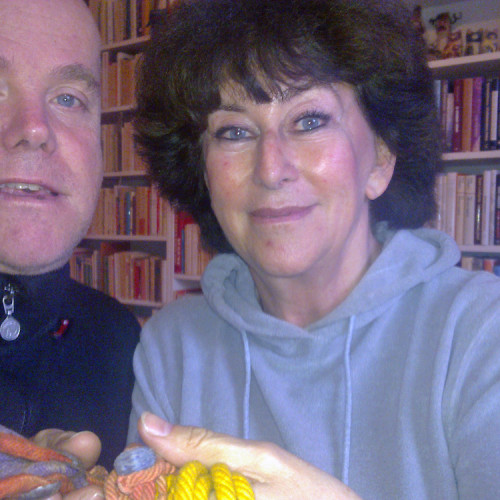
Me together with a good friend, La Baronessa Tamara, trying to figure out why anybody really explores anymore...or what one should explore....

The other night I went to the monthly lecture at Travellers Club in Stockholm. I try to go there frequently. I like the surroundings at Sällskapet, the atmosphere, the lectures, but most of all the people, the members of the Travellers Club. A great lot of people with the most extra ordinary experiences from all over the world. I also go there to get inspired and maybe find an idea to what my next Expedition will be. This time it was a young fella who lectured, a great guy, very friendly and an interesting lecture. Technically. BUT, I am so fed up the attitude of todays adventurers and so called explorers. They are always the best on earth and they only talk about themselves. Incessently. And it is always the same message:

Everything is possible!

We´ve known this for the last 150 000 years, maybe even 3.2 million years back whenLucy went out for a excursion. I don´t know why it is so popular today to listen to this kind of extremely no-good-for-mankind-talk. And that lecture reminded me of the one I witnessed together with my very good friend, La Contessa here on the photo, in February. Same deal. Then I remembered I did write an article about the same issue two years ago after having had the honour to lecture at Explorers Club in New York. This is what I wrote for Utemagasinet:

”…and then the mountain spoke to me, saying: ´Have faith in me, Ed, and you will reach your final 8,000-meter peak.´ And look, there I am on the mountain top!”

This is, more or less, how the famous American mountaineer Ed Viesturs closed his lecture at the Explorers Club´s 102nd Annual Dinner at the Waldorf Astoria in New York. Before him, a young guy named Andy Skurka, elected Man of the Year by Backpacker Magazine, had recounted the story of how he crossed the U.S. by foot from west to east in record time.

”Nothing is impossible! Anyone can do it!” he summarized, displaying a photo of himself posing in the sunset; his gaze fixed beyond the horizon, his muscles flexed and back held straight. An extremely traditional, male image of Adventure and Expeditions. I think I saw Buzz Aldrin, astronaut and second man on the moon, smirk. Woman kosmonaut Valentina Tereshkova simply left when the so-called adventurers entered the stage. Passionately, she had told her own story, filled with fear and amazement at the incomprehensions of life while she, as the first woman ever, rampaged round the moon 48 times.

The Annual Dinner carried the theme ”What´s Left to Explore”. And how this should be brought to an audience. I think very few of the 1,100 spectators enjoyed the adventurers´ talks. One of our neighbours at the table, the editor of a wellknown American outdoor magazine, said:

”Every day, as I receive letters and articles from people making expeditions and wanting to sell their material, I ask myself: ”Hasn´t Adventure come further than this? Is it still just white males with icicles in their beards dishing out the same old silly story?”

The reason why I´m bringing up this very important subject, is that every week I get a number of e-mails from men and women, young and old, who want to take off on an expedition or adventure. The majority want to know three things: ”What kind of equipment should I use?”, ”How do I get sponsors?” and ”How do I get the media interested in me, so I can make a living selling articles and lecturing?”

There is only one answer: Our view of Adventure and Expeditions must be renewed. Firstly, there has to be an interesting story. The times are gone when a spectator finds it interesting to listen to the hackneyed theme of ”anything is possible”; a story centered around dirty underwear, heroic struggle and white men with icicles in their beards who have managed to reach the North Pole, using a shopping cart and an oar as their only means of transport. Secondly, we need more women narrators. We need a female perspective. Men have to start thinking like women. I think this is crucial to whether the public will continue being interested in expeditions at all.

There are still considerable differences in how a story can be told. For example, I was searching the internet for stories about Swedish expeditions in the Himalayas. A couple of men report as follows:

“It´s been tough and troublesome. Our backpacks weigh about 15 kilos, but all has turned out well. Today we struggled for six hours. Tomorrow we will continue, and then we will use our final camp at 7,500 meters. We will rise at about 12 o´clock local time, put our tents up and melt snow for water. We won´t sleep much, but we are feeling all right.”

Incredibly boring for everyone except the storyteller´s closest relatives or someone else in the know. To be compared with another account from an expedition on the same mountain, at the same time, written by a woman in the same situation:

“Why am I never satisfied? I´m thinking I should have exercised more. Actually, I´ve been exercising at least five days a week. I think I should have been more mentally prepared. Actually, I´ve been preparing for five years. I don´t think I´m a good enough climber. But that´s the way I am in everyday life as well. I could be better at cooking, decorating, fashion, my job. I could be a better wife, friend, and so on. Maybe I need the inherent power of dissatisfaction to be able to hold on and not give up my dream of climbing an 8,000-meter peak. Because it has been necessary – but now I´m going to give it a try.”

Wonderfully thrilling and dramaturgical! The fact that the men reached the top and not the woman, is utterly unimportant. What is interesting is her story. This is how tomorrow´s adventurers on expedition must think to survive. Even better is to tell a story of someone else but yourself. Which is what I did in New York. When I took the stage after Ed Viesturs, the first thing I talked about was how ridiculous all the clever white males with icicles in their beards are. I continued by informing the audience about the Siberians and their everyday life, which makes a contemporary expedition look like a school outing by comparison. The response was fairly good – a ten-minute standing ovation.