Fakes and cheats

Fakes and cheats

“I had to lie because I had too much pressure from media and my sponsors!”

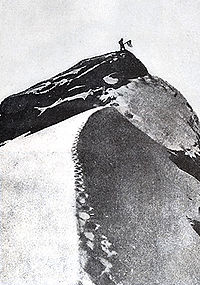
Lately there´s been a lot of movement in the media of adventurers who will do anything to gain fame.Lie and cheat about what they claim to have done. In this new world of Big Brother, where you can become famous for doing nothing, of course, even the adventure business is teeming with people who will claim anything for fame. Not that it is anything new to the genre, one of the most famous cheats, if it is true, because you never know this, is Frederick Cook. He claims to be the first to reach the North pole and the first to climb Mount McKinley (Denali). My great Russian friend, Dmitry Shparo says he could well have been. He has done research lately on the subject, something which as always, when it is Russian, goes un-noticed by the west.

I just want to touch the subject of the sponsors and media. I have during 25 years of professional adventuring dealt with a lot of sponsors and media, I have never, ever felt that pressure. Either they, the cheats and liers, have chosen the wrong sponsors or media, or they´re just moving the blame to anyone except themselves. I just want to say, people do mistakes, I know that if any, and if they take what ever punishment and get on with life, and get to be better human beings, let them. But one should than not blame others. However, I see that all of these unfortunate modern cheaters, they have all worked together with agents and PR companies, and I think that could well be the problem. People who are just not involved in the business and want to make it is big and profitable as possible for both themselves and their client. I wish all explorers could do the PR work themselves without involving people who have no idea about what it means doing adventurers. That said, I have worked with a PR-company myself, but the bloke who ran it, was into adventure himself. And did a great job. He also became a personal friend. Than of course, you have these adventurers who are really good at marketing and using PR-agents and who get a lot of fame for nothing. They could work at any farmers market on earth and become successful.

Our major sponsor in Siberia, Talarforum, they would never ever put any pressure on the Expedition as such to lie or cheat to gain attention. And I am sure such sponsors doesn´t exist. Just in the mind of the lying adventurer.

Our major sponsor in Siberia, Talarforum, they would never ever put any pressure on the Expedition as such to lie or cheat to gain attention. And I am sure such sponsors doesn´t exist. Just in the mind of the lying adventurer.

Than again, there are those explorers who have done amazing things, and just doesn´t have the marketing skills, they should use help. But take their time to find the right ones, who fits their image that they want to sell to the world. The best solution though, is for the explorer to do his own PR.work. Who better than her or him knows everything about the subject?

I also am a firm believer that most humans want to make themselves look much better than reality. I am definitely one of those who have done these mistakes, but this will not happen again. With age, I know who I am. A human full of mistakes.
I have collected a bit of reading for you to have a look at, chosen from the two sources I find the least corrupted in the business. ExplorersWeb and The Long Riders Guild.

1. Hall of Shame

2. Editorial at ExWeb

3. Amazing really…..

4. And why not read this article from the Independent regarding the movie about Aron Ralston….

Written by mikael

More posts by: mikael

12 Comments for this entry

  1. Jon Amtrup says:

    You make a lot of good points Mikael. As for the PR the natural way of doing it is almost always to do it on your own the first couple of years, because you don’t have the budgets anyway. But thats a good approach as you get an understanding of how media works. So when you end up hiring a PR professional, make sure he knows your “trade”: Rules, environment, challenges, records, media relations, competitors, nature and most of all make him understand how you would like to work.
    The best PR agents don’t only know when it’s time to push information through the right channels, but also knows when you should back down. There are at least one example from the K2 disaster that no one should try to repeat.
    Correct information is also essential. It shouldn’t be necessary to make a point of it, but in Explorersweb.com we often see examples of how explorers try to oversell their achievements. It’s not necessarily always outright lies, but often they hold back facts about what others have done before them, add a few meters to a climb, a few degrees to a sailing record, not mentioning dates that would keep them outside official record etc.
    The good thing about Internet and social media is that lies in all forms usually get exposed rather quickly. Wikipedia is a good example: it’s a user generated encyclopedia and all good PR agents makes sure that their explorers CV is up to date. But some PR agents try to cheat with incorrect information, and then some even have the nerve to serve the information they have put on Wikipedia as a reference towards journalists. All statements that include “Wikipedia says so…” should always be triple checked – and corrected on Wikipedia.
    The bottom line in all PR work, as in life itself, is stick to the truth. In these transparent times you will sooner or later be caught if you are lying. And if you make a mistake: Apologize, learn and try to move on.

  2. As you say in your piece, it is human to embellish upon our accomplishments, sometimes consciously and sometimes unconsciously. But the explorer has the added burden of expectation. There are people who are anticipating great things: sponsors, fans, PR people, and the general public. I was reading your post about the fear of failure – how hard it struck you in Siberia – and it reminded me of Robert Peary’s own experiences in the Arctic. He traveled north year after year hoping to reach the North Pole and he carried with him not only his own dreams but the dreams of his party, ships crew, family, patrons, fans, donors, and the press. In the end, I think Peary’s embellishments to his record (I don’t think that he or Cook reached 90 N) were the result of this fear – an inability to face the disappointment of people back home – rather than narcissism or delusions of grandeur (although he had some of those too). You deserve credit for writing about these feelings openly – its the kind of travel writing I like best.

  3. I just wanted to pop across a message to say I love reading your blogs. Really good read, especially about the ethics of being an adventurer and your family.

    I feel that I am very much just starting out, its good to read from someone who has spent many years on expeditions. Really helps to keep motivated.

    I’ve learnt a lot when I was trying to establish myself a few years ago, I wanted to do the Polar Grand Slam, both poles and greenland. I had little experience but thought in doing something big and bold would get the sponsors. As time has gone by I’ve learnt an important lesson, I love just being on expedition and I love sharing my experiences within schools. Getting the media attention is not what its cracked up to be, every adventurer and explorer needs to have a long hard think about why they wish to go down the path of establishing themselves.

    Your right, hold to your beliefs, do not sell yourself out or lie about your projects or make them sound more challenging then they are. Be truthful to yourself.

    I was lucky enough to get to the Geo North Pole earlier this year. I fell in love with being on sea ice but didn’t really like the idea of “save the poles” (title of the project). I’m not sure statements like that is for me, but I enjoyed the whole experience and teamed up with two great guys. Ever expedition your learn something more about yourself. One thing is for sure it will not be my last NP.

    I want to look back in 25 years, tell stories to my family and smile at my memories.

    Life is a journey after all.

    Keep the blogs coming Mikael and thank you.

    Antony

  4. Graeme Joy says:

    Mikael, great article! It’s about time adventurer/expeditioners stood up & talked about this stuff. An article you & your blog readers might find interesting on the web ‘The Man Who Invented Himself’. Just put the title in google & you’ll find it. Also I agree EXWeb is a great site which is doing very well at trying to keep things accurate. I think there are two more areas worth thinking about re faking it.

    1. Using professional guides & either not disclosing it or disclosing it on the website but never in media interviews ‘because they didn’t ask me!!’ Think specifically of Greenland, South Pole & North Pole. Using a professional guide makes a huge difference. The participants then become a fee paying client on a professionally guided adventure. Thus the skill level of the participants is often nowhere near the skill required to mount and deliver your own expedition.
    (this is not like Paula Constant who walked with camels halfway across the Sahara & mostly used a variety of local nomads as guides – you have to so you can find the waterholes because they are mostly not marked on the map – & she was always open about it)

    2. Making claims for awards given to indivuduals or expeditions which are not correct. These are often sufficiently obscure so people & media can often not research the validity.

    Cheers,
    Graeme Joy

  5. Brilliant article, Mikael. I thoroughly enjoyed reading it and could not agree more. In Australia recently we have had a couple of examples of blatant misrepresentation in adventure, and it really is appalling to note the total lack of scrutiny by the media to claims that are unsubstantiated. One wonders what the reaction would be if a politician dared make such over-exaggerated claims to the media and was caught out. I do wonder at times why there is such a lack of interest by the media – to simply report without scrutiny seems neglectful at best, and downright irresponsible at worst.

    I also loved the comment by Anthony. It resonated with me, and makes me wonder if he, along with several other subscribers to this blog, are ushering in a new age of adventure – where it really is about the journey rather than big testicle goals, outcomes, and slogans? It rings more honestly with me, I don’t mind saying.

    I admire you for continuing to engage in contentious issues, and for providing such a readable blog. Good luck with everything Mikael, and I wish you well.

    Best wishes
    Paula Constant.

  6. Very interesting piece, Mikael.

    Oh how I would love to see a Polar Hall of Shame! :-)

    D

  7. Graeme Joy says:

    Please read this:

    The man who invented himself

    19th February 2002 – The Sydney M0rning Herald
    Peter Treseder has been exposed as a liar, but is welcome in all the best places. Matthew Moore wonders whether Australia’s need for heroes means our top people and institutions don’t care about the truth. One of Australia’s best-known adventurers left for the North Pole at the weekend on his latest wilderness expedition and world record attempt. Peter Treseder, with companion Tim Jarvis, is hoping to drag his sled across the frozen Arctic Ocean and to do so in a time quicker than anyone has ever done.

    With his claims to more than 100 endurance and speed records achieved over 25 years, Treseder has carved out a reputation as the nation’s most extraordinarily versatile endurance athlete. His world-class exploits in bushwalking, cross-country skiing, sea-kayaking and climbing have secured him sponsorship support that lesser adventurers could never hope for. His claimed achievements have won him the support and admiration of numerous corporations and high-profile individuals from the Prime Minister down. He’s the assistant chief commissioner of Scouts Australia and has been heavily in demand as a speaker, even helping motivate the Australian swimming team before the Sydney Olympics.

    What’s surprising is that Treseder has retained most of this support after many of his records and achievements were exposed as fakes and inventions, an accusation that Treseder has sidestepped for nine months, even pulling out of the public launch of his North Pole trip last Thursday. Many of his influential backers have been sidestepping, too, refusing to confront the evidence that Treseder gained his reputation partly from fabricating many of his amazing “achievements”. None of his supporters contacted by the Herald even said they were concerned by the allegations. Rather, they preferred to ignore them. None said truth and honesty are values they regard as an essential precondition for their support. Few have even challenged Treseder to provide evidence his claims are true. Instead, the fact that Treseder raises substantial money for charity is cited as more important than the uncomfortable fact he’s been lying for decades.

    John Howard, who is patron of his latest trip, Scouts Australia, the Smith Family, former sponsor News Ltd and the Youth Hostel Association are just some of those who have kept up varying levels of support for Treseder since his reputation was torpedoed last May in a heavily researched article in a magazine called Inside Sport. Treseder even picked up a Queen’s Birthday gong last year to add to his Order of Australia medal even though some of his most notable claims had just been discredited. In their article, Inside Sport deputy editor Graeme Sims and researcher Lucas Trihey, said Treseder had “hoodwinked a nation all the way up to its highest office”. By deconstructing several of Treseder’s solo accounts, where it was possible to check his version against other evidence, they became convinced he’s been fabricating for years.

    It’s a view now shared by many leading Australian adventurers including two members of the first Australian team to climb Mt Everest, Greg Mortimer and Lincoln Hall, and another Everest climber, Jon Muir, who, like Treseder, is also headed to the North Pole this month.

    All of them say Treseder is a very fit and talented athlete and a very motivated adventurer whose times on trips done in the company of others are not in dispute but are also nothing out of the ordinary. And all of them have concluded he’s been making things up.

    As Jon Muir says: “In my dealings with Australia’s leading adventurers over many years, I have had a lot of comments expressing disbelief at his individual claims.” Muir has climbed Mt Cook four times and dismisses as “nonsense” Treseder’s account of completing an especially difficult climb, the grand traverse on Mt Cook, wearing pieces of plywood under his runners to which he fixed his crampons.

    Treseder came to prominence after his feats were published in the outdoors press, especially Wild magazine and Australian Geographic, the latter giving him two separate awards. He was also included as one of 200 people in the Bicentennial publication Unsung Heroes and Heroines of Australia. Treseder’s claims might never have been openly challenged were it not for the account of his exploits pulled together in his biography, written by Sydney writer Martin Long and published in 1999. “I stand by what I wrote in the book,” Long said last week, insisting he’d seen documents and other information which Inside Sport had not. He refused, however, to provide any of these documents or even reveal the nature of them or to say where Inside Sport was wrong.

    One of Treseder’s main claims in his book, also reported in Australian Geographic, was his run through the bush from the tip of Cape York down the length of the Great Dividing range to Wilson’s Promontory at the bottom of Victoria. Treseder says he did this massive run in three stages over 41 days in 1988: the first 1500-kilometre stage, from Barrington Tops, NSW, to Walhalla, in Victoria, at an average of 150 kilometres a day; the second 4000-kilometre stage, from Cape York to Barrington Tops, in 30 days or 133 kilometres a day with just a day for the last 150 kilometres from Walhalla to Wilson’s Promontory.

    Inside Sport consulted Associate Professor Martin Thompson from Sydney University who did a PhD in ultra-marathon running before concluding: “At first glance, it doesn’t look impossible: the world record for a 1000-mile run (1600 kilometres) is 10 days, 10 hours, set at Flushing Meadow, New York, in 1988. It’s a record set by the legendary Yiannis Kouros – an ultra-distance runner without historical equal, though many have tried to best his marks. Kouros ran an average of 160 kilometres a day for 10 days – but his efforts were conducted on a flat asphalt road on a 1.6-kilometre loop at sea level. There were no hills, no bumps. On this one-mile loop, he had two support staff who tended to his every need; Kouros carried nothing, and took food or water after every mile.

    “Peter Treseder claims to have almost matched Kouros’s pace while running over mountainous bush tracks, carrying his own gear and food for each 500-kilometre segment, battling inclement weather on the way, being bitten on the penis by a tree snake during one leg, and even finding his own water on the way.”

    Lincoln Hall mentioned this run in a piece on Treseder he wrote for Australian Geographic but did not challenge Treseder on any aspects of it. Having now read his biography, Hall says he does not believe many of Treseder’s claims: “There are too many ridiculous things in there.” Bush running or “tiger walking” exploits account for many of Treseder’s records, although he claims firsts in a host of sports.

    Cycling is one of the sports where Treseder has not claimed a record, but even his casual account of his trip to Camerons Corner in the north-west of NSW in June 1979 is clearly an invention. For most people it’s a two-day drive: 1169 kilometres to Broken Hill and another 340-kilometres of mainly dirt road to Tibooburra before the last 121 kilometres over tracks that lead to Camerons Corner.

    Treseder claims he rode there and back in six days – at an average of 543 kilometres a day spending up to 24 hours at a time in the saddle. Contrast his daily average with last year’s results in the gruelling annual bicycle race across the US where Andrea Clavadetscher won in 9 days and 17 minutes at an average of 533 kilometres a day.

    Clavadetscher was a professional cyclist for 17 years who won more than 50 races and had 10 years on the Swiss national team. He had a support team and vehicles including a motor home, rode a specially prepared bike, which he was off for only 27 hours all up and rode 18,000 kilometres in training. Treseder says he was alone, wore a small rucksack while riding a standard racing bike with 1-inch (3.2cm) tyres which are slow on sealed roads and completely unsuited to dirt roads. He says he turned around after seeing a house at Camerons Corner. That’s the house the NSW National Parks office says was built 10 years later in 1989.

    Then there’s his claim to have paddled a raft down the Franklin River in January 1988 in the record time of 26 hours and four minutes on his first attempt, a trip which usually takes groups 10 times as long. It’s been kayaked in 19 hours by former river guide (and author of Death of a River Guide) Richard Flanagan, but he says 26 hours is simply impossible in the slow and cumbersome inflatable rafts.

    It’s the same with his sea kayaking. According to Treseder, he drove to Wilson’s Promontory in Victoria in January 1992 and paddled across Bass Strait and back in less than four days.

    That claim stuns Graeme Joy, the first Australian to ski to the North Pole, the winner of many Australian ultra-marathon paddling titles and one of a handful of people who’ve paddled Bass Strait. Joy says the times Treseder claims for his double crossing are at speeds most top-class kayakers he knows believe are not possible. He’s also checked the weather on the dates Treseder claims to have made the trip.

    Instead of the “patch of almost perfect weather” Treseder described, he said weather records from Wilsons Prom showed a wind speed of west and south-west of 27 knots at 6am, 29 knots at 9am and 27 knots at noon, which would produce seas of four to five metres with white foam crests. In such conditions he can’t believe anyone – let alone someone like Treseder, who admits to being unable to roll his kayak – could complete a double crossing of Bass Strait in four days, virtually without sleep, and then drive back to Sydney. “If he’s still claiming to have crossed Bass Strait in those weather conditions, then I would have to call him a liar,” Joy said.

    Treseder simply said “no comment” when the Herald asked if he stood by the records claimed in his book. He gave the same answer when asked if the Inside Sport article was wrong.

    Australian Geographic offered to hold a press conference for Treseder to allow him to rebut the Inside Sport article or to help him re-enact some of his solo expeditions to prove his records. “Peter said he felt he didn’t have anything to prove to anyone and was not interested in re-enacting any expeditions,” said Australian Geographic editor Terri Cowley. Wild magazine’s managing editor, Chris Baxter, also invited a response from Treseder, who told him he wanted to take further legal advice before responding to the Inside Sport article. Wild has called on Treseder to explain the doubts raised, but stands by the accuracy of all the items it has published about Treseder.

    And while he still insists his book is accurate, Long says he just does not know if Treseder is prone to exaggeration. He too would like to see Treseder put up the evidence to prove he’s done what he says.

    Australia’s answer to Indiana Jones?

    CLAIM April 4, 1997: At night, in rain, rescues unnamed woman trapped on rope and unconscious under waterfall part way down Claustral Canyon.

    DOUBTS: Three surrounding Bureau of Meteorology stations report that it wasn’t raining for days either side of rescue. Surviving 10 hours under a torrent of water, unconscious for some of that time while suspended in a climbing harness, and then walking out is regarded by climbing experts as impossible.

    CLAIM January 1994: After losing his kayak, swam 10 kilometres at night with no lifejacket across part of Foveaux Strait in New Zealand, between Stewart Island and South Island, to Bluff harbour.

    DOUBTS: Water is 12C. Kayak expert Paul Caffyn says tidal stream is so strong you can’t paddle into Bluff harbour. No names available of support crew who Treseder claims met him.

    CLAIM 1976: Climbed extremely difficult Caroline Face of Mt Cook after introductory climbing course.

    DOUBTS: No record of his name in New Zealand National Park records.

    CLAIM June 1979: Rode a standard bike 3000 kilometres to Camerons Corner in north-west NSW and back in six days.

    DOUBTS: Average speed would put him in world champion class. House he saw there was not built for 10 years.

  8. Graeme Joy says:

    @Damien Gildea

    Damien, you are so correct mate. Some of our countrymen & women would be included – sadly!!!!!

    Cheers mate,

    Graeme Joy

  9. I recieved this today, very interesting from a reader:

    Dear Mikael,

    Here is an additional thought for your readers.

    The well known on line website Museum of Hoaxes maintains the
    beginnings of a strong collection of “Travel and Exploration
    Hoaxes.”

    Here’s the link -
    http://www.museumofhoaxes.com/hoax/archive/display/category/exploration/

    The drawback is that the most recent entry is for 1971.

    Because the topic of hoaxes is so massive, the webmaster is hard
    pressed to keep up on any one topic.

    Why not encourage your readers to add new evidence of more recent
    travel and exploration hoaxes to this valuable on line resource
    !!!

    This would not only provide the media and public with a list of
    updated travel hoaxes, it would also put the fear of God into
    travel liars.

  10. mikael says:

    I just wrote this article, which is another issue of a cheat http://explorersweb.com/trek/news.php?id=19794

  11. Mikael,

    Nice article. Just starting off in this “business”, I have faced various pressures myself – finding sponsors, etc. – but have never even considered lying. I’ve also been lucky to have amazing and ethical sponsors. What frustrates me, however, is when the media takes liberties with their writings to improve the story from their standpoint.

    Thanks for sharing your thoughts!
    Parker

Leave a comment