Archive

Posts Tagged ‘buzz aldrin’

Faces of Exploration

March 15th, 2010 mikael No comments
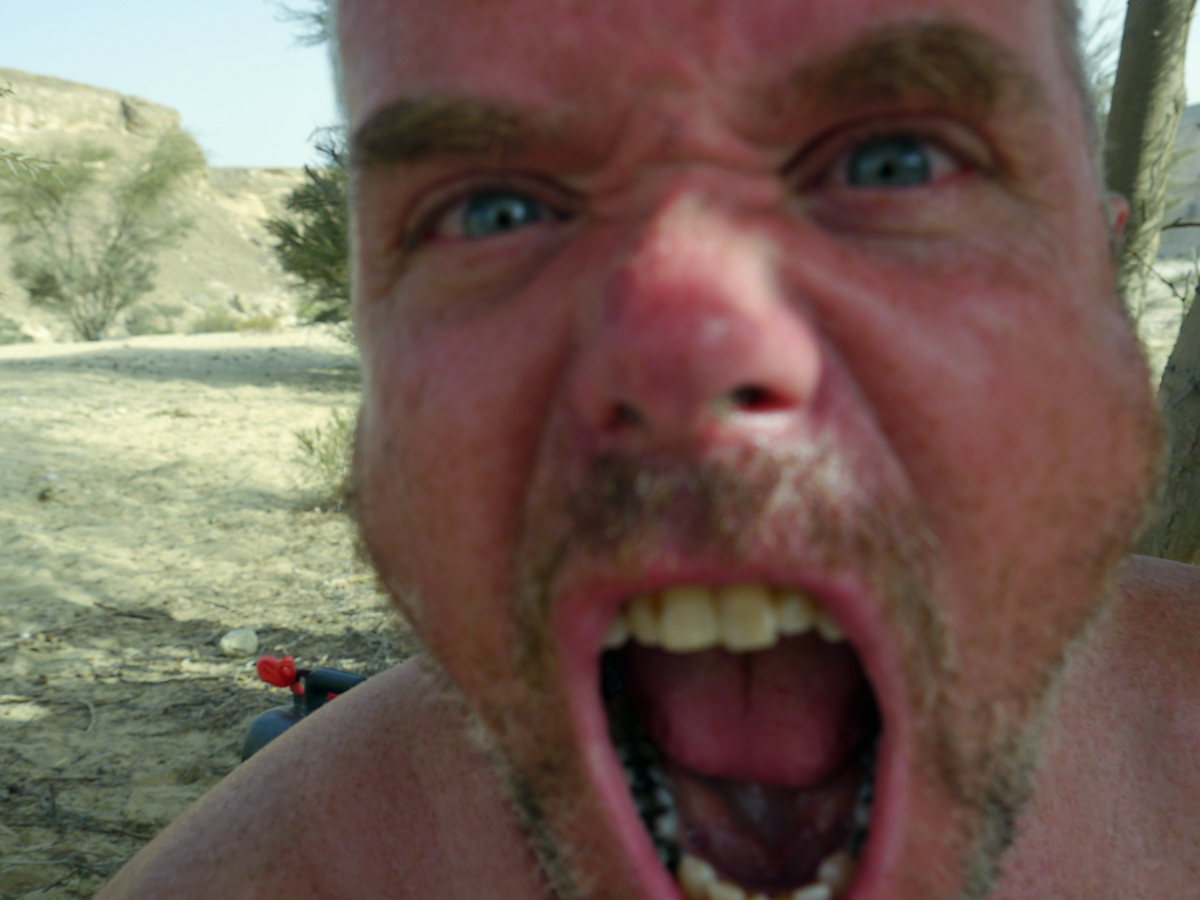
Reaching Ambarchik Bay May 2006 changed both Johans and my life. Mine, dramatically....it is very difficult to be an explorer in todays society!

Reaching Ambarchik Bay May 2006 changed both Johans and my life. Mine, dramatically....it is very difficult to be an explorer in todays society!

Saying that you are honored is kind of a dirty word in Sweden, but when I was included in the book Faces of Exploration 2007 written by Justin Marozzi and photographed by Joanne Vestey, both good friends of mine, I felt honored indeed! I don´t belong there at all amongst some of the most inspirational people on earth like Dame Jane Goodall, Sir Ed Hillery, Buzz Aldrin and so on, but I did feel honored. Anyway, I have returned to Sweden now, eventually, and I am trying to figure out life and came across this interview that Justin did for the book and thought it might be interesting for you readers to read. (I am very happy to say that there plenty of readers every day on this site, more than i could have dreamed about a few months ago. Mainly Swedes, Americans, Brits, Turks and from the Gulf countries!)

1. What does exploration mean to you?

For me, the true explorer is unselfish, curious and ready to sacrifice his life in the quest of discovering unknown areas and human limits. An explorers life is a mission to make this earth of ours a better one to live in. For everybody.

2. How did you get started in exploration, was there a decisive moment that shaped what drives you?

I was brought up in a working class environment, where the basic values of life was hard physical work, loyalty to your employer, never forget where one came from and stick to your own kind. For this reason, we only had two books at home, The Sea Wolf and White Fang by Jack London. My father had them on loan indefinitely from the local library, for the simple reason to show our neighbours that our family had ambitions beyond the village limit. I wouldn’t have touched those books if I hadn’t caught the measles as a bored ten year old and with plenty of time to kill, I started reading them. I just couldn’t stop.  Once finished, I knew I had discovered an unknown, very exiting and important world. That discovery, in combination with a mother who loved me above all, gave me a self-confidence and a sense of uniqueness, to know that my future lay beyond the limits of the village.

Consequently, as quick as I turned 16, after spending most of my time avoiding the utterly boring knowledge taught in school, I set off for India, prepared to spend a year studying Mahayana Buddhism. Those studies only gave me diarrhoea and gut pains. Instead, I ended up hiking, reading and travelling around. When my money eventually ran out, I returned home with a wish to build bridges of understanding between people by writing, lecturing, filming and through photography. I met a total lack of interest. At that moment I realized, that I had to do something that nobody else had done before. So over the next 7.5 years I cycled from Chile to Alaska, from Norway to South Africa and from New Zealand to Cairo. I pedalled a total distance of 90000 kilometres passing through difficult terrain as the Sahara Desert and the Darien Gap. Since then, I’ve been privileged to live a dream.

The Huli Whigman of Papua New Guinea impressed me a lot with there attitude to life. A lot had to do with their hair.....

The Huli Whigman of Papua New Guinea impressed me a lot with there attitude to life. A lot had to do with their hair.....

3. Why do you explore?

I explore to understand the meaning of life. I am looking for an answer regarding the eternal question, why in earth did we humans end up on earth, dominating it the way we do, but not fully understanding it. And I believe that to be able to understand fully, you have to understand the basic values of people who live very close to nature every day of their lives. And, I feel I have a mission, trying to get people in my own world to understand other people, for them unknown and often, misunderstood. Basically, a builder of bridges between cultures.

4. What do you remember as being your most exhilarating moment in the field?

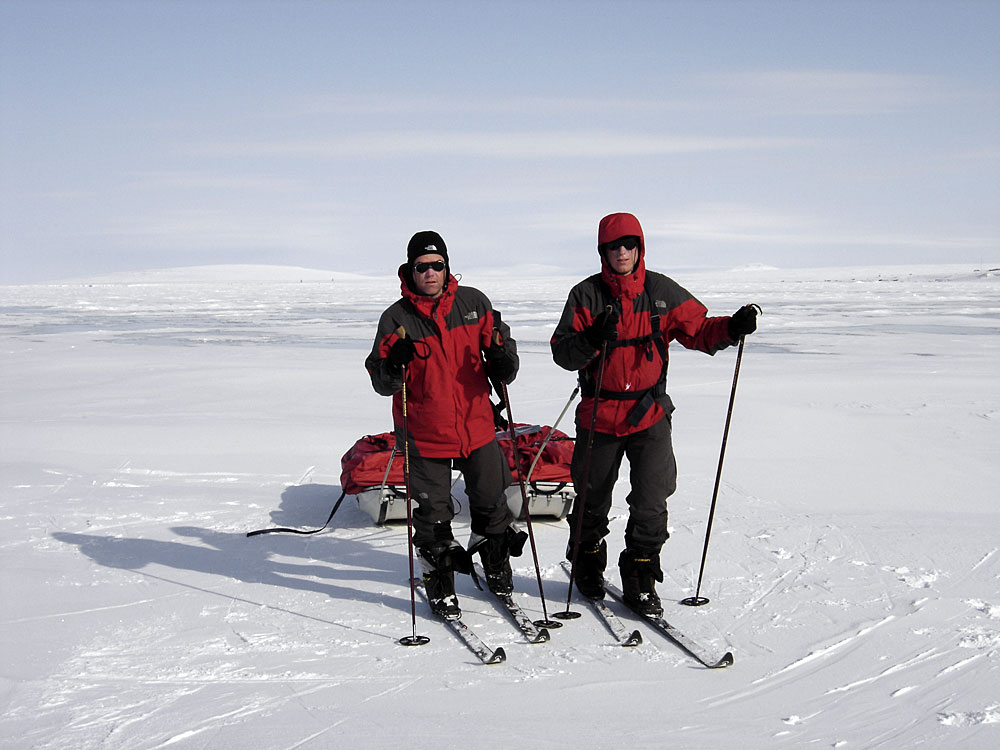
The day I arrived to the small Siberian settlement of Kolymskaya was the happiest moment of my exploring life. It was the end of the most demanding part of my Expedition along the Kolyma River, one of the coldest inhabited places on earth. I had, together with my assistant Johan, spent most of the past 5 months hauling 660 pounds of necessities, mainly in utter darkness, experiencing a terrifying cold with average temperatures around -50°F, day and night. A reality which made sleep almost impossible, giving us plenty of frostbites on both fingers and cheeks and it ruined most metal parts in our equipment. Like our ski bindings, and therefore, we arrived walking, not skiing, to the village. It seemed like every inhabitant were there to greet us with customary warmth, joy and most of them were dressed in their colourful traditional dress. We saw Chukchis, Even, Yakuts, Yugahirs and Russians. After the traditional welcoming offerings to the spirits, we were brought into the local museum, where more cheerful and hugging villagers awaited us, around a table full of local delicacies. After having survived mainly on moose meat and raw, frozen fish during most of the winter, we nearly cried when we came across big plates of fried reindeer brain and cooked bone marrow. At that stage, I suddenly realized, after spending 20 years of exploring extreme parts of our world and trying to understand the meaning of life, from now on, I’ll stop thinking about the big worrisome issues and simply concentrate on the uncomplicated ones. Like the thought of some more cooked bone marrow.

5. What do you think the future of exploration is?

I worry quite a lot regarding the future of exploration. There’s an awful lot of young male dominated quite ridiculous adventures today, were focus is purely on showing off a male hero image. The type who’s gone to the North Pole and back sitting in a shopping cart from Wall-Mart using an oar to move forward and keep polar bears at bay. A bloke whose selling point is dirty underwear, ice in his beard and modern polar clothes packed with sponsors and whose lecture theme is “Everything is possible!” I hope this awfully trivial way to travel in the name of exploration will disappear soon and I look forward to the return of good old Exploration in the name of documentation, building bridges of knowledge whilst doing research and tests of the human limits. There’s also a need of much more women in Exploration, especially the classic adventure genre, to give a much better, and more serious, perspective of it all. I think, and hope, this is the future of exploration.

"A good quality knife. You can do a lot with a sharp knife. You can hunt, skin, prepare meat and other types of food and than use it as an eating utensil. And many more matters concerning pure survival." Siberian straganina here!

"A good quality knife. You can do a lot with a sharp knife. You can hunt, skin, prepare meat and other types of food and than use it as an eating utensil. And many more matters concerning pure survival." Siberian straganina here!

6. What is your most trusted ´Don´t leave home without it`piece of kit?

A good quality knife. You can do a lot with a sharp knife. You can hunt, skin, prepare meat and other types of food and than use it as an eating utensil. And many more matters concerning pure survival.

7. Could you share a message to empower future generations to continue to explore or do you have a favourite quote to encourage young people?

Even though everything has been discovered geographically today, there’s an enormous amount of important things still to discover, since the world is forever changing. Don´t think, just go. You will make a difference. It is the best life one can imagine. The life of an explorer.

Well, that seems a loooong time ago….things have happened since then, some really good, some really bad. Read this article in Turkey´s biggest daily Sabah!

Guest writer #9: Robert Twigger on the subject: What is Exploration?

March 12th, 2010 mikael No comments
Explorers are in fact the lineal descendants of those hunter gatherers who went in search of new game and plant rich areas. They were curious, flexible minded and courageous. Courageous because they were going outside the comfort zone of the tribe.

Explorers are in fact the lineal descendants of those hunter gatherers who went in search of new game and plant rich areas. They were curious, flexible minded and courageous. Courageous because they were going outside the comfort zone of the tribe.

Guest writer number 9 is a British explorer named Robert Twigger and a very British one. His philosophical text below is funny, very interesting, gives a perspective and really touches the subject exploration. He is a writer and explorer who in
2009-2010 was the first person to walk across the great Sand Sea of the
Eastern Sahara. He has a website www.
roberttwigger.com and his latest book is
Dr Ragab’s Universal Language.

What is Exploration?

It is quite simple to say who an explorer was in the past- he was someone who went where others had not been and brought back information. But in fact this is a modern definition, the scientific definition so to speak. In fact, if you look at explorers from Marco Polo to Richard Burton they were people who ‘tried to get places’. No more articulate than that really. They wanted to get to a new place by a new route, a shorter one usually. Their motives were usually economic. Or territorial- claiming land for their own country.

We forget all that now and teach in school that explorers were like modern scientists but in funny clothes. The fact that modern scientists, with aeroplanes and helicopters and skidoos and special clothing can go where any of these old explorers, who suffered such hardships, went, makes the scientists imagine they are cut from similar cloth. Not a bit of it.

The old explorers brought back news, information about things they found, rocks, plants, lost cities- but all this was by the by. They simply wanted to go somewhere no one had been before or get somewhere by a new route, a route no one else had used before. Or no one from their culture has used before.

Explorers are in fact the lineal descendants of those hunter gatherers who went in search of new game and plant rich areas. They were curious, flexible minded and courageous. Courageous because they were going outside the comfort zone of the tribe.

There is survival value in going outside the comfort zone- whether it is psychological or physical. This, is, in fact, what explorers do. They explore regions beyond the culture’s comfort zone. They may or may not bring back their discoveries in a form that is currently called ‘scientific’.

I used to find it odd that Buzz Aldrin shut in his space suit and tiny rocket capsule and Ranulph Fiennes making the first polar circumnavigation of the planet could both be labeled explorers. Yet they are: both have gone outside the comfort zone of the culture.

Maybe the journey involves an interior path too. Becoming initiated into a remote tribe counts as exploration- with both and internal and external journeying out of the usual comfort zone.

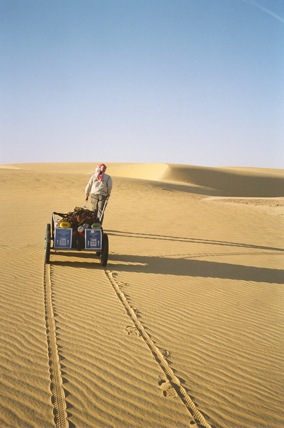
It is a slippery concept, exploration, especially in a world that many, wrongly, believe is fully explored. But what does ‘fully explored’ mean? That it has been photographed for Google earth? That someone has flown over it in a jet plane? That it was driven over in a jeep? We confuse map making with exploration. We have great maps of places that remain unexplored. My own view is that somewhere is not explored until a human being has looked at it closely and moved over it at walking pace. I have been in desert wadis where there are no vehicle tracks. The valley is unexplored- by any definiton- and I was the first person, since the previous wet period 5000 years ago – to visit such a place. That a car passed within two kilometres of this valley but didn’t see it and stop means nothing. They might just have well not have been there.

Maybe the journey involves an interior path too. Becoming initiated into a remote tribe counts as exploration- with both and internal and external journeying out of the usual comfort zone.

Maybe the journey involves an interior path too. Becoming initiated into a remote tribe counts as exploration- with both and internal and external journeying out of the usual comfort zone.

The other form exploration in the modern world takes, is to do an old route in a new way, or to link up several old routes. To do it using less gear and in a less complicated way counts as exploration- why? Because this is a more intimate way of experiencing the landscape. You find out new things about yourself. You necessarily leave the comfort zone. In the challenge, say, of towing a sledge solo to the North Pole in winter, you discover, because you are the first to summount this challenge, a whole range of new solutions. That is the discovery element of this exploration.

Discovery without challenge- for example buzzing around Antarctica on snowmobiles looking for dinosaur bones- though fun is more science than exploration. When there is no challenge, physical or psychological, the results obtained don’t ‘change’ the discoverer. He hasn’t ‘earned them’ in the way an explorer has. I think we are drowning in information these days we haven’t earned.

Captain Kirk, of course, summed it up rather well, “To boldly go where no man has gone before!”

You can read more about Robert at his hilarious and enjoyable blog at www. theexplorerschool.com!

New book!

October 16th, 2008 admin No comments

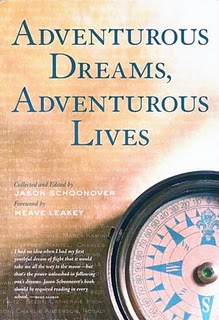
I´ve been honoured to be one of these individuals mentioned below: (Book can be ordered at http://www.amazon.com/Adventurous-Dreams-Lives-Jason-Schoonover/dp/1894765915) In Adventurous Dreams, Adventurous Lives, 120 outstanding individuals representing a who s who of international exploration recall the indelible moment in their youth when the dream that launched their remarkable lives was born. As they recount the turning points to fulfilling those dreams often overcoming enormous physical, emotional or other obstacles we learn how incredibly inspirational their lives are. Included are Meave and Louise Leakey, Buzz Aldrin, Robert Ballard, balloonists Bertrand Piccard and Brian Jones, Sir Ranulph Fiennes, Lucy discoverer Don Johanson, Jack Horner, Sue Hendrickson, Jean-Michel Cousteau, the Ra s Capt. Norman Baker, George Bass, Eugenie Clark, Richard Fisher, Trieste s Don Walsh and Nobel laureate Charles H. Townes. That 24 of these dynamic individuals are Canadian such as paleontologists Philip Currie and Eva Koppelhus; Survivorman Les Stroud; Sea Hunter Jim Delgado; National Geographic explorer-in-residence Wade Davis; veteran climber Pat Morrow; circumnavigators-by-human-power-alone Colin Angus and Julie Wafaei; photographers Pat and Rosemarie Keough; and naturalist Robert Bateman is testament to Canada s significant contribution to world exploration.

What is the reason to explore?

October 14th, 2008 admin No comments

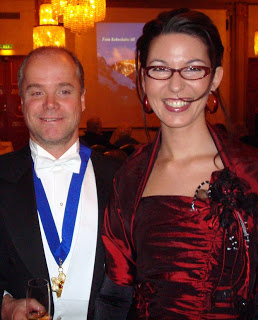
Me together with a good friend, La Baronessa Tamara, trying to figure out why anybody really explores anymore...or what one should explore....

The other night I went to the monthly lecture at Travellers Club in Stockholm. I try to go there frequently. I like the surroundings at Sällskapet, the atmosphere, the lectures, but most of all the people, the members of the Travellers Club. A great lot of people with the most extra ordinary experiences from all over the world. I also go there to get inspired and maybe find an idea to what my next Expedition will be. This time it was a young fella who lectured, a great guy, very friendly and an interesting lecture. Technically. BUT, I am so fed up the attitude of todays adventurers and so called explorers. They are always the best on earth and they only talk about themselves. Incessently. And it is always the same message:

Everything is possible!

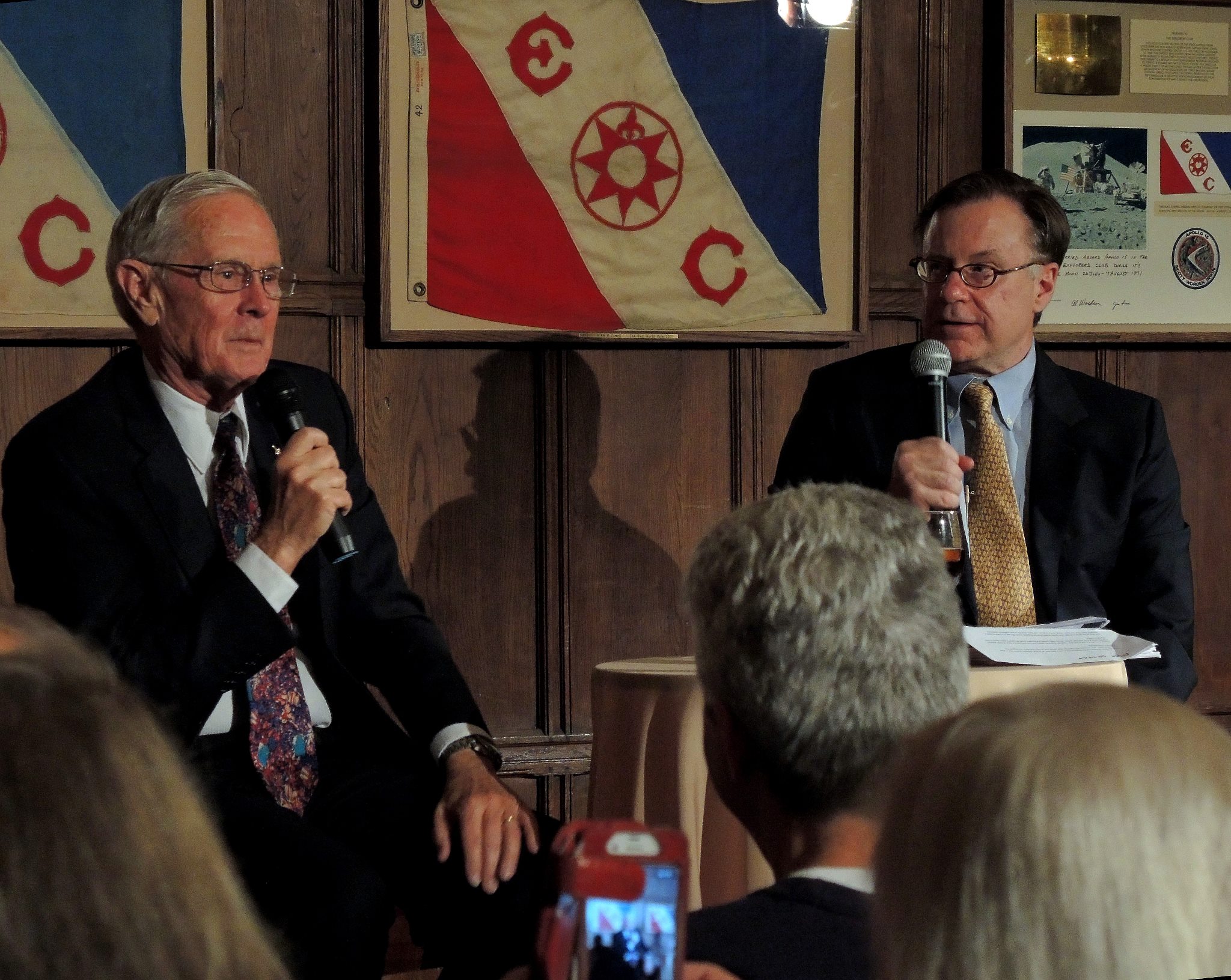
We´ve known this for the last 150 000 years, maybe even 3.2 million years back whenLucy went out for a excursion. I don´t know why it is so popular today to listen to this kind of extremely no-good-for-mankind-talk. And that lecture reminded me of the one I witnessed together with my very good friend, La Contessa here on the photo, in February. Same deal. Then I remembered I did write an article about the same issue two years ago after having had the honour to lecture at Explorers Club in New York. This is what I wrote for Utemagasinet:

”…and then the mountain spoke to me, saying: ´Have faith in me, Ed, and you will reach your final 8,000-meter peak.´ And look, there I am on the mountain top!”

This is, more or less, how the famous American mountaineer Ed Viesturs closed his lecture at the Explorers Club´s 102nd Annual Dinner at the Waldorf Astoria in New York. Before him, a young guy named Andy Skurka, elected Man of the Year by Backpacker Magazine, had recounted the story of how he crossed the U.S. by foot from west to east in record time.

”Nothing is impossible! Anyone can do it!” he summarized, displaying a photo of himself posing in the sunset; his gaze fixed beyond the horizon, his muscles flexed and back held straight. An extremely traditional, male image of Adventure and Expeditions. I think I saw Buzz Aldrin, astronaut and second man on the moon, smirk. Woman kosmonaut Valentina Tereshkova simply left when the so-called adventurers entered the stage. Passionately, she had told her own story, filled with fear and amazement at the incomprehensions of life while she, as the first woman ever, rampaged round the moon 48 times.

The Annual Dinner carried the theme ”What´s Left to Explore”. And how this should be brought to an audience. I think very few of the 1,100 spectators enjoyed the adventurers´ talks. One of our neighbours at the table, the editor of a wellknown American outdoor magazine, said:

”Every day, as I receive letters and articles from people making expeditions and wanting to sell their material, I ask myself: ”Hasn´t Adventure come further than this? Is it still just white males with icicles in their beards dishing out the same old silly story?”

The reason why I´m bringing up this very important subject, is that every week I get a number of e-mails from men and women, young and old, who want to take off on an expedition or adventure. The majority want to know three things: ”What kind of equipment should I use?”, ”How do I get sponsors?” and ”How do I get the media interested in me, so I can make a living selling articles and lecturing?”

There is only one answer: Our view of Adventure and Expeditions must be renewed. Firstly, there has to be an interesting story. The times are gone when a spectator finds it interesting to listen to the hackneyed theme of ”anything is possible”; a story centered around dirty underwear, heroic struggle and white men with icicles in their beards who have managed to reach the North Pole, using a shopping cart and an oar as their only means of transport. Secondly, we need more women narrators. We need a female perspective. Men have to start thinking like women. I think this is crucial to whether the public will continue being interested in expeditions at all.

There are still considerable differences in how a story can be told. For example, I was searching the internet for stories about Swedish expeditions in the Himalayas. A couple of men report as follows:

“It´s been tough and troublesome. Our backpacks weigh about 15 kilos, but all has turned out well. Today we struggled for six hours. Tomorrow we will continue, and then we will use our final camp at 7,500 meters. We will rise at about 12 o´clock local time, put our tents up and melt snow for water. We won´t sleep much, but we are feeling all right.”

Incredibly boring for everyone except the storyteller´s closest relatives or someone else in the know. To be compared with another account from an expedition on the same mountain, at the same time, written by a woman in the same situation:

“Why am I never satisfied? I´m thinking I should have exercised more. Actually, I´ve been exercising at least five days a week. I think I should have been more mentally prepared. Actually, I´ve been preparing for five years. I don´t think I´m a good enough climber. But that´s the way I am in everyday life as well. I could be better at cooking, decorating, fashion, my job. I could be a better wife, friend, and so on. Maybe I need the inherent power of dissatisfaction to be able to hold on and not give up my dream of climbing an 8,000-meter peak. Because it has been necessary – but now I´m going to give it a try.”

Wonderfully thrilling and dramaturgical! The fact that the men reached the top and not the woman, is utterly unimportant. What is interesting is her story. This is how tomorrow´s adventurers on expedition must think to survive. Even better is to tell a story of someone else but yourself. Which is what I did in New York. When I took the stage after Ed Viesturs, the first thing I talked about was how ridiculous all the clever white males with icicles in their beards are. I continued by informing the audience about the Siberians and their everyday life, which makes a contemporary expedition look like a school outing by comparison. The response was fairly good – a ten-minute standing ovation.