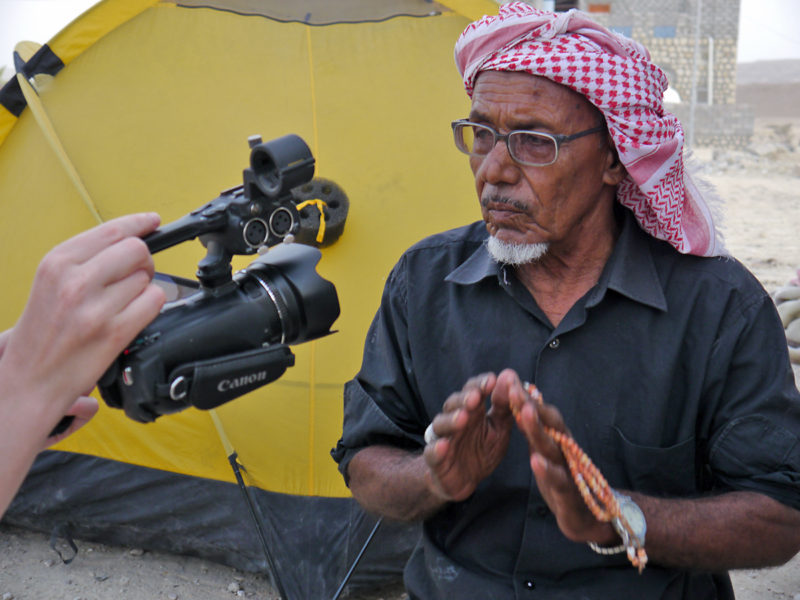
Guest writer #9: Robert Twigger on the subject: What is Exploration?

March 12th, 2010 mikael No comments
Explorers are in fact the lineal descendants of those hunter gatherers who went in search of new game and plant rich areas. They were curious, flexible minded and courageous. Courageous because they were going outside the comfort zone of the tribe.

Explorers are in fact the lineal descendants of those hunter gatherers who went in search of new game and plant rich areas. They were curious, flexible minded and courageous. Courageous because they were going outside the comfort zone of the tribe.

Guest writer number 9 is a British explorer named Robert Twigger and a very British one. His philosophical text below is funny, very interesting, gives a perspective and really touches the subject exploration. He is a writer and explorer who in
2009-2010 was the first person to walk across the great Sand Sea of the
Eastern Sahara. He has a website www.
roberttwigger.com and his latest book is
Dr Ragab’s Universal Language.

What is Exploration?

It is quite simple to say who an explorer was in the past- he was someone who went where others had not been and brought back information. But in fact this is a modern definition, the scientific definition so to speak. In fact, if you look at explorers from Marco Polo to Richard Burton they were people who ‘tried to get places’. No more articulate than that really. They wanted to get to a new place by a new route, a shorter one usually. Their motives were usually economic. Or territorial- claiming land for their own country.

We forget all that now and teach in school that explorers were like modern scientists but in funny clothes. The fact that modern scientists, with aeroplanes and helicopters and skidoos and special clothing can go where any of these old explorers, who suffered such hardships, went, makes the scientists imagine they are cut from similar cloth. Not a bit of it.

The old explorers brought back news, information about things they found, rocks, plants, lost cities- but all this was by the by. They simply wanted to go somewhere no one had been before or get somewhere by a new route, a route no one else had used before. Or no one from their culture has used before.

Explorers are in fact the lineal descendants of those hunter gatherers who went in search of new game and plant rich areas. They were curious, flexible minded and courageous. Courageous because they were going outside the comfort zone of the tribe.

There is survival value in going outside the comfort zone- whether it is psychological or physical. This, is, in fact, what explorers do. They explore regions beyond the culture’s comfort zone. They may or may not bring back their discoveries in a form that is currently called ‘scientific’.

I used to find it odd that Buzz Aldrin shut in his space suit and tiny rocket capsule and Ranulph Fiennes making the first polar circumnavigation of the planet could both be labeled explorers. Yet they are: both have gone outside the comfort zone of the culture.

Maybe the journey involves an interior path too. Becoming initiated into a remote tribe counts as exploration- with both and internal and external journeying out of the usual comfort zone.

It is a slippery concept, exploration, especially in a world that many, wrongly, believe is fully explored. But what does ‘fully explored’ mean? That it has been photographed for Google earth? That someone has flown over it in a jet plane? That it was driven over in a jeep? We confuse map making with exploration. We have great maps of places that remain unexplored. My own view is that somewhere is not explored until a human being has looked at it closely and moved over it at walking pace. I have been in desert wadis where there are no vehicle tracks. The valley is unexplored- by any definiton- and I was the first person, since the previous wet period 5000 years ago – to visit such a place. That a car passed within two kilometres of this valley but didn’t see it and stop means nothing. They might just have well not have been there.

Maybe the journey involves an interior path too. Becoming initiated into a remote tribe counts as exploration- with both and internal and external journeying out of the usual comfort zone.

Maybe the journey involves an interior path too. Becoming initiated into a remote tribe counts as exploration- with both and internal and external journeying out of the usual comfort zone.

The other form exploration in the modern world takes, is to do an old route in a new way, or to link up several old routes. To do it using less gear and in a less complicated way counts as exploration- why? Because this is a more intimate way of experiencing the landscape. You find out new things about yourself. You necessarily leave the comfort zone. In the challenge, say, of towing a sledge solo to the North Pole in winter, you discover, because you are the first to summount this challenge, a whole range of new solutions. That is the discovery element of this exploration.

Discovery without challenge- for example buzzing around Antarctica on snowmobiles looking for dinosaur bones- though fun is more science than exploration. When there is no challenge, physical or psychological, the results obtained don’t ‘change’ the discoverer. He hasn’t ‘earned them’ in the way an explorer has. I think we are drowning in information these days we haven’t earned.

Captain Kirk, of course, summed it up rather well, “To boldly go where no man has gone before!”

You can read more about Robert at his hilarious and enjoyable blog at www. theexplorerschool.com!

What is exploration?

March 8th, 2010 mikael No comments
Why do we explore? Is there still white spots to be discovered on the global maps?

Why do we explore? Is there still white spots to be discovered on the global maps?

Lately I have had a lot of emails regarding, why do we explore? Is there anything left to explore? And who is an explorer? It has been a hotly debated issue. It is the second most read report I have written. I am also in favor of a new view on Exploration. Therefore I will republish this article below here as well, after receiving plenty of attention from Great Britain after this piece:

The other night I went to the monthly lecture at Travellers Club in Stockholm. I try to go there frequently. I like the surroundings at Sällskapet, the atmosphere, the lectures, but most of all the people, the members of the Travellers Club. A great lot of people with the most extra ordinary experiences from all over the world. I also go there to get inspired and maybe find an idea to what my next Expedition will be. This time it was a young fella who lectured, a great guy, very friendly and an interesting lecture. Technically. BUT, I am so fed up the attitude of todays adventurers and so called explorers. They are always the best on earth and they only talk about themselves. Incessently. And it is always the same message:

Everything is possible!

We´ve known this for the last 150 000 years, maybe even 3.2 million years back whenLucy went out for a excursion. I don´t know why it is so popular today to listen to this kind of extremely no-good-for-mankind-talk. And that lecture reminded me of the one in February 2008. Same deal. Then I remembered I did write an article about the same issue two years ago after having had the honour to lecture at Explorers Club in New York. This is what I wrote for Utemagasinet:

”…and then the mountain spoke to me, saying: ´Have faith in me, Ed, and you will reach your final 8,000-meter peak.´ And look, there I am on the mountain top!”

This is, more or less, how the famous American mountaineer Ed Viesturs closed his lecture at the Explorers Club´s 102nd Annual Dinner at the Waldorf Astoria in New York. Before him, a young guy named Andy Skurka, elected Man of the Year by Backpacker Magazine, had recounted the story of how he crossed the U.S. by foot from west to east in record time.

”Nothing is impossible! Anyone can do it!” he summarized, displaying a photo of himself posing in the sunset; his gaze fixed beyond the horizon, his muscles flexed and back held straight. An extremely traditional, male image of Adventure and Expeditions. I think I saw Buzz Aldrin, astronaut and second man on the moon, smirk. Woman kosmonaut Valentina Tereshkova simply left when the so-called adventurers entered the stage. Passionately, she had told her own story, filled with fear and amazement at the incomprehensions of life while she, as the first woman ever, rampaged round the moon 48 times.

The Annual Dinner carried the theme ”What´s Left to Explore”. And how this should be brought to an audience. I think very few of the 1,100 spectators enjoyed the adventurers´ talks. One of our neighbours at the table, the editor of a wellknown American outdoor magazine, said:

Papua New Guinea felt like one of the last places on earth I have visited, where there might at least be some white spots of discovery to be made. On the knowledge front.....

Papua New Guinea felt like one of the last places on earth I have visited, where there might at least be some white spots of discovery to be made. On the knowledge front.....

”Every day, as I receive letters and articles from people making expeditions and wanting to sell their material, I ask myself: ”Hasn´t Adventure come further than this? Is it still just white males with icicles in their beards dishing out the same old silly story?”

The reason why I´m bringing up this very important subject, is that every week I get a number of e-mails from men and women, young and old, who want to take off on an expedition or adventure. The majority want to know three things: ”What kind of equipment should I use?”, ”How do I get sponsors?” and ”How do I get the media interested in me, so I can make a living selling articles and lecturing?”

There is only one answer: Our view of Adventure and Expeditions must be renewed. Firstly, there has to be an interesting story. The times are gone when a spectator finds it interesting to listen to the hackneyed theme of ”anything is possible”; a story centered around dirty underwear, heroic struggle and white men with icicles in their beards who have managed to reach the North Pole, using a shopping cart and an oar as their only means of transport. Secondly, we need more women narrators. We need a female perspective. Men have to start thinking like women. I think this is crucial to whether the public will continue being interested in expeditions at all.

There are still considerable differences in how a story can be told. For example, I was searching the internet for stories about Swedish expeditions in the Himalayas. A couple of men report as follows:

“It´s been tough and troublesome. Our backpacks weigh about 15 kilos, but all has turned out well. Today we struggled for six hours. Tomorrow we will continue, and then we will use our final camp at 7,500 meters. We will rise at about 12 o´clock local time, put our tents up and melt snow for water. We won´t sleep much, but we are feeling all right.”

Incredibly boring for everyone except the storyteller´s closest relatives or someone else in the know. To be compared with another account from an expedition on the same mountain, at the same time, written by a woman in the same situation:

“Why am I never satisfied? I´m thinking I should have exercised more. Actually, I´ve been exercising at least five days a week. I think I should have been more mentally prepared. Actually, I´ve been preparing for five years. I don´t think I´m a good enough climber. But that´s the way I am in everyday life as well. I could be better at cooking, decorating, fashion, my job. I could be a better wife, friend, and so on. Maybe I need the inherent power of dissatisfaction to be able to hold on and not give up my dream of climbing an 8,000-meter peak. Because it has been necessary – but now I´m going to give it a try.”

Wonderfully thrilling and dramaturgical! The fact that the men reached the top and not the woman, is utterly unimportant. What is interesting is her story. This is how tomorrow´s adventurers on expedition must think to survive. Even better is to tell a story of someone else but yourself. Which is what I did in New York. When I took the stage after Ed Viesturs, the first thing I talked about was how ridiculous all the clever white males with icicles in their beards are. I continued by informing the audience about the Siberians and their everyday life, which makes a contemporary expedition look like a school outing by comparison. The response was fairly good – a ten-minute standing ovation.

Please continue to discuss the subject here!

Please continue the denate on the meaning of exploration and how we should look at it in the future!

Please continue the debate on the meaning of exploration and how we should look at it in the future!

“I” Witness Report from the earth quake in Chile!

March 5th, 2010 mikael No comments


"Had the earthquake really been that big? Or was I just imagining it?" Both those questions could easily be ignored when I saw the scenery outside. There were 1-2cm pieces of rubble everywhere, and many large windows of banks had exploded into small pieces laying below. I live in a modern neighborhood so I could see none of the destruction hitting older houses in other parts of Santiago and the country. After checking that the tallest building in Latin-American was still standing I went back. It was still very dark although traffic lights worked. Like many others I stopped next to a car that had it's radio on and could hear that the epicenter had been further south, and that six people had been reported killed.

"Had the earthquake really been that big? Or was I just imagining it?" Both those questions could easily be ignored when I saw the scenery outside. There were 1-2cm pieces of rubble everywhere, and many large windows of banks had exploded into small pieces laying below. I live in a modern neighborhood so I could see none of the destruction hitting older houses in other parts of Santiago and the country. After checking that the tallest building in Latin-American was still standing I went back. It was still very dark although traffic lights worked. Like many others I stopped next to a car that had it's radio on and could hear that the epicenter had been further south, and that six people had been reported killed.

Guest writer number 8 is an old client of mine, a good friend today,  who I met as a tour leader, Christian Jansson, who lives and works for Ericsson in Santiago de Chile. He wrote this thrilling report to his friends just after the earth quake!

Hi everybody,

Here’s an extra travel email, I want everybody to know I’m ok, and also say thanks to all that have worried. Maybe you are also interested in how it felt.

I woke up in the middle of the night, wondering why. From looking at the lit-up screen of my mobile I knew it was 03:34 and I was thinking there are strange sounds from the outside: humming, buzzing, dogs barking, and other sounds I couldn’t identify. Then the shaking and the noise started. First a little bit more than usual, but moments later it got strong. “Shit this is the one”, I remember thinking as I walked to the door frame of my bedroom. It became very loud: the sounds of things hitting the floors, walls cracking, furniture moving around, and I don’t know what. Hearing things falling made me think this is strong. Hearing concrete cracking made me think this is bad. In the darkness I went into the guest room and with one arm managed to keep my laptops from leaving the desk, while with the other holding on to the doorframe. Normally ”a strong one” refers to a 6-7 on the Richter, like living very close to a subway track where one can feel vibrations, plants shake their leaves, and water in glasses move. The Sunday shake is better compared to sitting in a sailboat when extra big waves hit and one unsuccessfully tries to keep all plates on the table, while holding on to whatever. With the loudness of a discoteque. And without seeing almost anything. It felt like the shake would never end. I remember thinking “ok, now I know what the big one feels like, it can stop now, please”. But it just kept shaking. I have no idea if the shake lasted 45 seconds or three minutes, but suddenly it was silent and calm. And pitch dark.

At Ericsson Chile we must attend a safety course so I knew the recommendation after a big shake is to leave the building, in case it got damaged and a second shake brings it down. I couldn’t immediately find a flashlight so I put in my contacts helped by the screenlight of the mobile, dressed, grabbed my passport (not sure why). I then quickly inspected the apartment  (many things on the floor, drawers pulled out, the refrigerator had moved 15cm into the kitchen door) and walked down the nine stairs to the street. All electricity was gone except in the building entrance, so the walking down was a mix of seeing siluettes of people, feeling with hands and feet where to go, and avoiding bumping into persons entering the stairway from lower floors. There were many people outside. Some wrapped in blankets, some in pajamas, couples and families hugging each other. All very quiet. To have something to do I decided to walk around the neighborhood. “Had the earthquake really been that big? Or was I just imagining it?” Both those questions could easily be ignored when I saw the scenery outside. There were 1-2cm pieces of rubble everywhere, and many large windows of banks had exploded into small pieces laying below. I live in a modern neighborhood so I could see none of the destruction hitting older houses in other parts of Santiago and the country. After checking that the tallest building in Latin-American was still standing I went back. It was still very dark although traffic lights worked. Like many others I stopped next to a car that had it’s radio on and could hear that the epicenter had been further south, and that six people had been reported killed.

Ahu Tongariki, located 5000 km:s from the mainland, silently watched the quake....

Ahu Tongariki, located 5000 km:s from the mainland, silently watched the quake....

Back at my building, inspired from not seeing any fallen houses, I walked up the sixteen stairs to the top of the building where the swimmingpool is. The darkness made the stars shine brightly and I could see that the only lights in the city were likely powered by local generators. Then came the big aftershock. I sat down on the roof, not too close to the building edge and could see how the pool water was moving furiously from one end to the other like in a filled teacup held by someone walking with a bad balance (as I’m writing these words from my livingroom couch I can feel another shake start, maybe a five, now it is calm again). When the aftershock subdued I returned to my apartment and after again failing to call my family in Sweden (to let them know I was ok) I turned on the mobile radio to follow the live reporting from around the country. The electricity returned at maybe eight in the morning and I could watch the catastrophe-reporting from CNN. At this time I was also able to communicate with colleagues to learn everyone and their families were alright.

Later in the day I met with friends and walked around the city, had lunch and then we made dinner in my apartment. Things were back to normal, but suddenly when we were drinking whisky on the balcony (the beverage for moments like these) everything went dark again, or rather my apartment went black. Everywhere else there was light. Probably something with the fusebox, I need to wait for an electrician tomorrow. But I have bought a long extension cord and plugged it into a socket in the stairway so at least I can power the refrigerator/freezer and charge my laptop and write this. Hope you enjoyed the read.

Saludos.

/Christian

On a totally different topic though, look at this, friends who are doing a great job of connecting cultures!

A vital female perspective on adventure

March 1st, 2010 mikael 1 comment

Paula Constant gives a very interesting perspective of exploring, from a female perspective. Vital and needed.

Paula Constant gives a very interesting perspective of exploring, from a female perspective. Vital and needed.

Guest writer number 7 is another impressive explorer whom I have gotten to know through my Expedition planning to come in the future, Paula Constant, from Australia. She is quite a powerful personality as well with strong views and a big heart. And she has been great help in pretty much everything, especially the emotional aspect of failing to do what you planned to do. And we have talked quite a lot about the differences between the sexes when it comes to exploring, so I asked her to write a piece about that. She has an impressive record and back in 2004, with no previous expedition experience, Paula began walking from Trafalgar Square with a backpack.  Since then, she has walked over 12000 km through eight countries, including nearly 8000km through the Sahara with her own camel train.  Married when she left Trafalgar Square, Paula’s husband left the expedition a year later, when the couple were just 1000km into their desert trek.  Paula carried on with two Arabic, nomadic guides, and went on to gain sponsorship and go over halfway across the Sahara in a bid to make a West to East crossing of the desert when she was stopped by civil war in Niger in 2007.  She is the author of two books – Slow Journey South, recounting her European walk; and Sahara, detailing the desert journey.  No female adventurer has walked so far through the Sahara alone but for local guides.

I never set out to become a ‘female adventurer’.  Actually, 5 years ago, if you had asked me exactly what a ‘female adventurer’ was, I’d have been relatively unable to answer.  I could probably name a few mountaineers who happened to be women; because I planned on walking, Ffyona Campbell also sprang to mind.  But I would have wondered why anyone actually needed to state that the adventurer was female.  What on earth does gender have to do with anything? I would have thought.

Perhaps this has its roots in my own background – growing up in rural Australia, jumping on horses and skis with as much energy as the next bloke, and always in competition and company with men, it had never really occurred to me that as a woman, my experience should or could be any different to them.  When I read the tales of adventurers of old, the only reason I saw for there being no women on the honour rolls was simply that most great exploration occurred before the Women’s Liberation movement really happened, and so it was just not feasible.  But to be honest – I never really thought about it.  Occasionally I would hear about women who were pioneers in one way or another, and I always knew we were absolutely capable of anything; I simply saw that now, the opportunities were open for us to pursue them, where before, they were not.

When I set out walking from Trafalgar Square in 2004, however, I wasn’t planning on doing anything solo.  I was married, so despite planning on heading into Muslim Northern Africa and through the Sahara with camels, it never occurred to me that I would be doing any of it solo.  It was something of a shock to find myself alone.  My marriage broke up after 6000km, and only several weeks into a 7000km desert trek.  Suddenly I was running a camp of two Arabic men and four camels, with no man beside me.

But apart from the emotional distress of a marriage breakdown, the reality was in many ways a relief.  To finally be in control of my own walk, and team, was wonderful – what I felt born to do. It was I who had spent years reading and dreaming about the region, and who felt a real connection to the place and cultures within it; this walk had always been particularly my dream.

But it most definitely was a world of men.  Week upon week of living not only immersed in another culture, but confined to the company of two men I barely knew, and neither of whom spoke my own language, was exhausting – both in those first 6 months, then when I returned for a further 8.  Was it harder than if I were a man?

"When I set out walking from Trafalgar Square in 2004, however, I wasn’t planning on doing anything solo.  I was married, so despite planning on heading into Muslim Northern Africa and through the Sahara with camels, it never occurred to me that I would be doing any of it solo.  It was something of a shock to find myself alone.  My marriage broke up after 6000km, and only several weeks into a 7000km desert trek.  Suddenly I was running a camp of two Arabic men and four camels, with no man beside me."

"When I set out walking from Trafalgar Square in 2004, however, I wasn’t planning on doing anything solo. I was married, so despite planning on heading into Muslim Northern Africa and through the Sahara with camels, it never occurred to me that I would be doing any of it solo. It was something of a shock to find myself alone. My marriage broke up after 6000km, and only several weeks into a 7000km desert trek. Suddenly I was running a camp of two Arabic men and four camels, with no man beside me."

No.  I don’t actually think so.  Travel – and especially the kind of travel expeditioners’ and adventurers do – relies chiefly on the ability of the individual to work with others.  Whilst we must lead, we must do so with empathy, humour, humility, and determination.  I had to run an expedition whilst also learning on the job; despite being the centre of attention at every nomadic tent, I must always be patient, friendly, and conversational with the women – even though all I may have wanted to do  was throw myself down by the men and talk camels and grazing.

But what an opportunity!  How many men are invited into the women’s’ tent?  An entire world virtually hidden from men was immediately open to me – but as a white woman, I had the privilege of being welcomed by the men also, mainly out of curiosity.  Perhaps even better, when it came to choosing guides, men of a certain caliber would see me in the same light as a member of their family – which meant they would lay down their life rather than see me hurt or insulted in any way.  I felt a profound gratitude and respect for such men, and found that if I conducted myself with honour, that I would meet with exactly that in return.  Only very rarely did I find behavior to the contrary.

When those situations arose, they were tiresome, and sometimes depressing.  One of the things I dealt with as a woman in a desert, Muslim environment, was being offered marriage almost daily – from pretty much every nomad I met, if they were single.  There is no offense taken in these situations – one simply declines politely, and with respect.  But I made it very clear to the men I hired that once in camp, we were family, and I was not remotely interested in marriage or any other liaison.  On a couple of occasions the guides, through ignorance or malice, made the mistake of pushing the issue, or treating me as a slave rather than an employer.  This is where it is tough as a woman; and where one treads very carefully.  Polite but firm is the starting point; sack the guide and get another if they don’t get the message; and if that is non-viable (for example when you are very isolated) be tough if you need to be.  But what I learned as the most important thing was never to lose my cool, never to show vulnerability, and to treat most scenarios with a great deal of humour.

I suspect this is the simple rule for women.  It just isn’t ok to plead weakness, to throw up your hands in despair and ask someone else to solve a problem for you.  If you have chosen to get out there in a man’s world – then you have to play by the same rules, even if you think at times it is twice as hard.  Remember, you have many advantages – women, I believe, have a natural ability to empathise and comprehend subtleties in behavior.  Where we struggle is to communicate calmly, assertively, and with authority, when things get tough and we feel boxed in. Flying off the handle, or behaving irrationally or tearfully because we feel misunderstood and bullied, helps not a jot.  Lifting out of that is what leadership is about; no less for a man than a woman.

The most common question I field from journalists is how I felt out in the desert ‘as a woman’.  The answer is fairly simple – I was out there as an adventurer, and team leader.  I felt as any leader would have done in a situation where I had to react to changing circumstances daily, often under duress.  It was hard and lonely, and at times I felt I got it wrong.  But being a woman was not something that stuck in my head as a hardship.  We all fight personal demons out in the field, no matter what our background or gender.  We all struggle with being the leader we know we should be, and performing in an honourable, courageous way in tough conditions.  At times being a woman was an advantage – and at times very tiresome.  But I suspect the same could be said of any man.

I have met men and women who journey as much for the personal journey as the external one.  I have read quite a few times recently that women do this more than men, but I would dispute that.  I think women can be just as goal oriented – in fact, sometimes, even more so – than a man.  I just think that women are happy to describe their personal journey in more detail than many men, partly because their emotional life is ever present – well, it is for me, anyway.  What intrigues me is that most men are as aware of the emotional as women – they just don’t tend to write about it in the same detail.  Yet, in my discussions with men who may appear on the surface to be the archetypal hairy adventurer, scratch the surface and there is an overwhelming need and desire to talk about how they felt out there.  It is no coincidence that throughout the history of exploration, personal feelings, group dynamics and emotional turbulence have dominated the diaries, successes, and failures of explorers both male and female.  Being in such tough circumstances brings out the best and worst in us all.   Knowing ourselves is perhaps the greatest challenge in adventure, and the only way we truly begin to succeed.

Some of the hardest times on my walk were moments when all I wanted was to sit down with a group of girlfriends and talk about how I felt, something that is rather difficult at times for nomads.  On one such occasion I was resting and watching the sunfall, at the end of a particularly tough day on a very tough stretch.  I’d been out for twenty days, supplies were running low, the heat was intense during the day, and we we’d had to walk over thirty km each day to make wells.  As I watched, the sun dropped, and the sweet cool desert breeze washed over me like a miracle, just as the first stars shone through the gloaming.

My guide – a wonderful old man who had never gone even beyond the regional boundaries of his grazing area, and prior to me had never met a white woman – smiled softly, and said in Arabic:  “the desert night is the nomad’s reward for surviving another day.”

He tapped straight into how I was feeling, and we sat in silence and watched the night grow.  Finally we ate together, and tumbled into our beds.  I never forgot those words – because in what he said I knew that he had done it tough too, and put my experience on the same level as his own.  As a person, a leader, and a woman, I could have asked no greater compliment, and the simple line conveyed a beautiful truth: whether man, woman, Christian, Muslim, Arab or Australian, on expeditions we are made equals by our ability to conduct ourselves with strength humility and patience under the toughest of conditions.  Do so, and you render questions of gender irrelevant.

Fail to do so, and it matters not what you are.

Read more about Paula here!

I wrote an article about the issue here and another female explorer added her views to it!

Paula began walking from Trafalgar Square with a backpack.  Since then, she has walked over 12000 km through eight countries, including nearly 8000km through the Sahara with her own camel train.  Married when she left Trafalgar Square, Paula's husband left the expedition a year later, when the couple were just 1000km into their desert trek.  Paula carried on with two Arabic, nomadic guides, and went on to gain sponsorship and go over halfway across the Sahara in a bid to make a West to East crossing of the desert when she was stopped by civil war in Niger in 2007.  She is the author of two books - Slow Journey South, recounting her European walk; and Sahara, detailing the desert journey.  No female adventurer has walked so far through the Sahara alone but for local guides.

Paula began walking from Trafalgar Square with a backpack. Since then, she has walked over 12000 km through eight countries, including nearly 8000km through the Sahara with her own camel train. Married when she left Trafalgar Square, Paula's husband left the expedition a year later, when the couple were just 1000km into their desert trek. Paula carried on with two Arabic, nomadic guides, and went on to gain sponsorship and go over halfway across the Sahara in a bid to make a West to East crossing of the desert when she was stopped by civil war in Niger in 2007. She is the author of two books - Slow Journey South, recounting her European walk; and Sahara, detailing the desert journey. No female adventurer has walked so far through the Sahara alone but for local guides.

10 tips to connect and understand other cultures

February 22nd, 2010 mikael 2 comments
Antalya has 9 million visitors per year, which is amazing. Still you do get ripped off too much when wanting to sit down at a café or eat food. Or maybe this is the reason....

Antalya has 9 million visitors per year, which is amazing. Still you do get ripped off too often when wanting to sit down at a café or eat food. Unnecessary.

Right now I am in Antalya at an International Symposium for Travel Writers, great set of people, great contacs for the future, and during a lecture a few days ago I was asked to talk about connecting cultures. So I wrote these ten tips as a base for my lecture. As below: (I thought maybe, in this stress to get things together for another lecture, I´d like to share it with you readers.)

  1. You need to travel, visit other countries, smell them, feel them.
  2. But don´t travel with your own country men, find ways to travel to meet local people on their terms, motorized vehicles do not help.
  3. Remember you are a guest, if you don´t like what you see, go home.
  4. My old friend from Cyprus, Kemal Darbaz, turned up and made life very enjoyable in Antalya! He´s got the best olive oil on earth!

    My old friend from Cyprus, Kemal Darbaz, turned up and made life very enjoyable in Antalya! He´s got the best olive oil on earth!

    When you don´t understand, ask and try to see things from their perspective.

  5. Listen more than talk. But be curios.
  6. Humour and don´t take yourself to seriously.
  7. Don´t judge, have an open mind, what you see might not be the truth.
  8. Communication, Try to learn the language, if not try to communicate.
  9. Inform your self. Read and research a lot, but keep an open mind, read authors from that country. Remember objectivness doesn´t exist.
  10. Write, document and talk about your experiences, we need to inform others. Ignorance is dangerous.

Turkish Biggest Daily English Newspaper, Todays Zamam, published this article yesterday.

x_MG_0971

Interviewed at Göremes Open Air Museum in Cappadocia. Interest, media wise have been surprisingly high, during the Turkish visit. All due to my friend Dogan Tilics work.

Honorary ambassador of Cappadocia

February 18th, 2010 mikael 2 comments
Cappadocia - one of the Wild Wonders of The World!

Cappadocia - one of the Wild Wonders of The World!

I remember every place I set up camp 16 years ago when I cycled from Ankara to Antalya via Kayseri and Cappadocia on my New Zealand to Cairo trip. Most camps where pitched on the backside of a restaurant since Turkish food easily belong to the best and tastiest on the globe. It was a really demanding crossing because the headwinds were so tough so I couldn´t move more than 5-6 km:s per hour. It took ages to get to Antalya. This time it was easier. I took the bus, invited by the Cappadocian Tourist Organisation, to asses its possibilities to draw more tourists world wide. All arranged as usual by one of my best friends, Dogan Tilic, one of the nicest human beings I have ever met. And I met him 16 years ago not far from the Black Sea Cost.

First early in the morning when I started my climb up a very long steep hill. he and his extended family went to the beach and on the way back, they passed me once again, still climbing, but the car was full, 10 people in a small WW Bubble, so they couldn´t stop. They were all hungry. However when I reached the top, they passed me once again on the way down and stopped. It was the first time I met Dogan. His mother had taken pity on me and wanted to feed and rest me for a few days in a summer house they had. And ever since that day we have been in regular contact and I have been several times to Turkey, lecturing at different Universities, even writing articles for Birgun. Dogan is today one of Turkeys most influential journalists. But, most of all, he is a genuinely good human being. He has been in prison, tortured for his political views, during the 70´s, but his life is still plagued by laughter and joy and not bitterness, he is uncorruptible in every way and he is a story teller in the Yasar Kemal tradition. And the most amazing things happen every time we meet!

Dogan Tilic, around 50 in age, an amazing human being with an extraordinary net of contacts all over Europe. His claim to fame is being photographed together with Fidel Castro.

Dogan Tilic, around 50 in age, an amazing human being with an extraordinary net of contacts all over Europe. His claim to fame is being photographed together with Fidel Castro. This is, however, his son Toprak...

After leaving Oman with sadness, it was great to end up in Turkey with Dogan and his family in Ankara. There are such an inspirational couple, he and his great wife Helga and they have such a healthy perspective on everything. Plus, of course, Dogan have an eastern touch to everything he says and agrees with the quote of the Arab World:

“In the East, if you have patience, everything will eventually come true.”

Life does becomes easier to a certain degree if one thinks like this…..but, one thing is for sure, Turkey is in many ways the perfect bridge between the West and Arab East and that was one of the reasons we came here.  The other to lecture and be part of a big conference on tourism in Antalya with journalist from all over the world. And, surprisingly enough, the news of the Expedition Arabia had spread to Turkey and I have spent a fair amount of time getting interviewed by media all over the place and what thrills me with Turkey, is also that they, compared to many Muslim states, genuinely listen to what you have to say and are ready to discuss Islam at length without getting stuck into set phrases and beliefs. This is another reason Turkey is perfect for the cultural bridge. If the expedition ever will happen….

I have received hundreds of emails from people all over the world which thinks it is a pity the expedition is off. I appreciate that a lot. Even though I have abandoned the Expedition until things happen, who knows if they will, I will still keep working on keeping the project alive and continue to do research.  And this area of the world, just ain´t easy. Another Swede, Christian Bodegren, just gave up his dream. He feels like a failure, I told him not to. He has at least put his dream in motion, most people never do. One always tries to find faults about oneself when things doesn´t go the way as expected. Same here. But not this time. I have really done my best. Another friend, Paula Constant, tried to do Christians trip the other way around and failed, thought it was not due to that she was a woman. Paula, it is just this part of the world. It is difficult and complicated with a lot of red tape. And that is why so many people have problems understanding this part of the world, when it closes borders and complicates unnecessarily for nothing to gain. Building borders, not bridges, doesn´t make a better world.

The mayor of Cappadocia, Hasan Unver, proclaims me Honorary Ambassador of Cappadocia!

The mayor of Cappadocia, Hasan Unver, proclaims me Honorary Ambassador of Cappadocia!

I will write a long article about Cappadocia next week after the conference, but I just want to say that I met some great people there and one of Turkish best known photograpers, Baris Koca, joined us and made the visit even more pleasant. Most surprising of all, was that i was made Honorary Ambassador for Cappadocia! And that is an extra-ordinary honor and let me just say, i will do my best to high light this extra-ordinary place to the rest of the world. So do see this slide show from the visit! 5 of the pictures belong to Baris.

I just sent out another newsletter for February, read here!

And, if you have more time to spare, read my report at http://www.wideworldblogs.com/explorer-blog/

GUEST WRITER #6 Arita Baaijens on Female Leadership in the Desert

February 15th, 2010 mikael 1 comment
Arita Baaijens, one of the worlds foremost camel travellers!

Arita Baaijens, one of the worlds foremost camel travellers! Photo by Joanna P Pinneo

Guest writer number 6, Arita Baaijens, has been very helpful when it comes to advice on all topics regarding the desert. Once I asked her, since she speaks Arabic and is as much Bedu as the Bedu themselves, are you Moslem? Arita got slightly upset and answered: I am a free soul! Indeed she is! She is also a biologist, author, photographer and a Fellow of the Royal Geographical Society. Twenty years ago she gave up her job as an environmentalist, bought camels and made a solo crossing across the Western Desert of Egypt. Today she has made over 25 expeditions (3-6 months at a time) with her own caravan of camels all over Egypt and the Sudan. She travelled the Forty Days Road twice with trade caravans of camels. In the eastern desert of Sudan she and archaeologist Krzyzstof Pluskota discovered a hidden valley with hundreds of petroglyphs depicting cows. She just came back from Darfur (Sudan), Egypt and Mauritania. Although she knows everything about camels, she intends to travel on horseback from Siberia to Afghanistan. Her most recent book Desert Songs, a woman explorer in Egypt and Sudan (AUC Press, 2008) won an award in the Netherlands.

Female leadership in the desert!

Venus and Mars in the desert

During the past twenty years I’ve spend most winter seasons exploring the desert of Egypt and Sudan on camel. Sometimes friends kept me company during a leg of the journey, which was great. Camels are wonderful animals, but a conversation with them can be boring because they are only interested in food. So it was fun to have a friend around, although, to be honest, with some of them the fun didn’t last very long. A week at the most. After that the top-dog type of guys – never seen a desert, let alone knew a thing about camels – would point out how I could and should organize my caravan in a much better and more efficient way.

“This is the limit,” one of them shouted with a face turned purple. I was repairing a broken saddle without consulting him. A terrible insult, according to him. “Well, do you know how to do it?” I asked genuinely surprised. “No, but you don’t have to rub into my face.”

"Needless to say that I had the time of my life in Mauritania, where I met a lot of bold, bright and strong women. The Mauritanian caravan model functions, these role models taught me, because next to every strong woman stands a gentle man."

"Needless to say that I had the time of my life in Mauritania, where I met a lot of bold, bright and strong women. The Mauritanian caravan model functions, these role models taught me, because next to every strong woman stands a gentle man."

Another friend was annoyed because I made him feel insecure whenever he walked with the camels. Why? Picture the following scene: my friend climbs steep hill after steep hill with heavily laden camels and after two hills I, of course, tell him to circumnavigate those hills. Something he would have done automatically if he would have been the one to carry the load. Anyway, my friend was not amused and our never ending arguments threatened the relationship. So in the end I decided to give it a try and shut up in order to let him learn from mistakes. It worked. Until one of the camels seriously injured herself because of a stupid and unnecessary mistake my friend make. ‘No more soft approach,’ I decided there and then.
My top-dogs friends had a problem with female leadership, I decided. But as the list of incidents grew doubt crept in. ’Maybe it is me,’ I thought. After all, I was the only constant factor in all those stories. A man in my position would never question his leadership style, but being a female, I wondered what I could do to avoid future fights. I searched for female role models in the desert and hoped they could teach me a few tricks. But alas, female caravaners were hard to come by. All the local desert guides where male and they couldn’t care less about the feelings of their staff. On the contrary. A guide, or chabir, does not accept any criticism during a dangerous desert crossing. Which makes perfect sense. A guide is responsible for the lives of people and animals in the caravan and conflicts create tension and confusion, which in turn may affect his judgement.
Imagine my joy and disbelief when about five years ago I came across a thesis about trade in west Africa. The historian who wrote it claimed and proved that women in the region played an active role in caravan trade. As a merchant, investor and even as a caravaner.

Recently I travelled to Mauritania and met two female caravaners, both well into their seventies now. I also met the sons and daughters of a locally well known woman who had worked as a trader and a caravaner. One of her sons, now a grandfather, rubbed his knees and shins with a painful grimace when he talked about the long journeys with his mother. The whole family went together, parents and children, and they were on the road for several months. The children walked or sat on top of salt loads, hour after painful hour. The caravan would only come to a stop after sunset. And after such an exhausting day the mother still had to cook. Women were also responsible for selling goods at foreign markets. The profit was used to buy local products they could sell back home.

"When I explained to a few young women that their Dutch sisters, in order to keep their marriage intact, pretend that their husband is the boss, the girls laughed and laughed. They just couldn’t believe what I said. In Mauritania, they giggled, it is the other way around. Men like strong women. Indeed, if a spouse bosses his wife around she knows something is wrong. Very wrong. When a husband acts out of character he usually fancies another woman."

"When I explained to a few young women that their Dutch sisters, in order to keep their marriage intact, pretend that their husband is the boss, the girls laughed and laughed. They just couldn’t believe what I said. In Mauritania, they giggled, it is the other way around. Men like strong women. Indeed, if a spouse bosses his wife around she knows something is wrong. Very wrong. When a husband acts out of character he usually fancies another woman."

When I asked men and women about the daily routine in a trade caravan, nothing indicated that women had an inferior position. “Men and women worked together,” an old man commented. Many others confirmed this. In I learned that in Mauritania women have always had a very strong position in society and within the family. Women are also well educated. When I explained to a few young women that their Dutch sisters, in order to keep their marriage intact, pretend that their husband is the boss, the girls laughed and laughed. They just couldn’t believe what I said. In Mauritania, they giggled, it is the other way around. Men like strong women. Indeed, if a spouse bosses his wife around she knows something is wrong. Very wrong. When a husband acts out of character he usually fancies another woman.

Needless to say that I had the time of my life in Mauritania, where I met a lot of bold, bright and strong women. The Mauritanian caravan model functions, these role models taught me, because next to every strong woman stands a gentle man.

You can read more about the fantastic personality at http://www.aritabaaijens.nl and http://www.linkedin.com/in/aritabaaijens

The death of an Expedition, part two

February 10th, 2010 mikael 8 comments
In the news in Oman.....the media has been very helpful to promote my vision. This time Muscat Daily.

In the news in Oman.....the media has been very helpful to promote my vision. This time Muscat Daily. Click on photo to read.

“It is written in the stars, your journey is meant to be!”

A decision has been made!

I have decided to go back to Sweden right now. I feel empty. I won´t get any further at this moment and it seems like I have put all eggs in one basket. Maybe a serious mistake. I just can´t afford to stay in the Gulf anymore and I am forced to relocate to Sweden and kind of start life from scratch again. Build up an economic strong base again. And continue my wait there. And hope that the saga is written in a positive way in the stars. I have heard that phrase so much since I first arrived in Oman.

“It is written in the stars, your journey is meant to be!”

This time I have been a week in Oman, met most of my great friends, and I have had one lecture for the ESO at Crowne Plaza, too early to say how it all went, met a potential backer and finally been able to get a message sent through to the power, which I have worked for since I first came here.

When I arrived to Oman first time in January 2009, I felt like a president. I stayed in luxury hotels, was shipped around in limos, met with the wealthy and powerful and most important, it seemed like everyone I met loved my vision of building a bridge from the Arab World into the West (and the other way around) through an Expedition by camel. The positive atmosphere was electrifying! And I just loved everything which had to do with the country. The people, the Bedu culture underlying everything, the heat, the desert, the food and the dignity that people behaved with. I often get emails from people that think I am naive and say:

“You always love a new country you come to and say it is the best on earth!”

After the lecture at ESO at Crowne Plaza. From left, Marcus Rydbo, Lamees Daar, president of ESO and married to His Higness Sayyid Tarik bin Shabib Al-Said next to me.A great couple who makes a mjor difference on many levels for Oman!

After the lecture at ESO at Crowne Plaza. From left, Marcus Rydbo, Gejrangers GK, Lamees Daar, president of ESO and married to His Higness Sayyid Tarik bin Shabib Al-Said who is next to me. A great couple who makes a major difference on many levels for Oman!

I still feel very strongly for Oman, but I have been here, I think, at least 7 times during a year and the issue have been setting up an expedition, get the needed funds and start working on finding camels and two Bedus too join me. And, to tell you the truth, even though I feel I have done everything in my power, I have invested everything I have, I have had many people like great friends like Talib Omar and Wael Lawati to back the Expedition and promote it, when I think about it, when it comes to the Expedition and getting it on its feet, I am basically at the same stage as a year ago.

What mistakes have I done?

Most likely that I bought all the enthusiasm I received initially as a sign that things would happen fast and easy and fully didn´t realize that things take time in this part of the world. They, the Omanis, really want to know you before they believe in you. I can understand and appreciate that. But it takes time, money and stamina of world class strength. Maybe I didn´t sell my vision good enough. Well, we still don´t know this. But right now, I just feel empty. Like I have walked into a wall. I am totally free of any energy right now. It has been a hard expedition in itself. Coming to Oman with hopes to do my little bit to make life more understandable and peaceful through education and information.

Do I regret anything?

Nothing, absolutely nothing. This time of trying to get an Expedition on its feet has been with the best in my life and I have really already found what I was looking for on a personal level. And most of all, I have learned a lot about this part of the world and fallen in love with it. And I have met some extremely good new friends and I am sure Oman will be a part of my future in one way or the other. But right now, there´s nothing more I can do than wait and see and that is best to do in Sweden. But I do love Oman, see this little slideshow of this spectacular country!

So this is the death of the expedition?

Not at all. Just run out of steam, funds and ideas. I am just at loss of words right now. And I am off to Turkey for a few lectures and a conference on tourism. As my very good friend, whom I will visit, Dogan Tilic says:

“In the East you don´t have to work for anything, it will come to you if you just have the patience to wait.”

Initially it was all like a dream with possibilities in every corner, now it is just a mental void.....the question is, what will happen next?...

Initially it was all like a dream with possibilities in every corner, now it is just a mental void.....the question is, what will happen next?...


Being an immigrant and once again in Oman

February 8th, 2010 mikael 2 comments
Bainu with his wife Sharol and ten months old son having a break and a laugh.

Bainu with his wife Sharol and ten months old son having a break and a laugh

Back in Oman, right now in the Indian enclave of Wattaya. There´s a smell of curry over the area, but it is calm and sparsely populated. We are staying with two friends, Bainu and his wife Sharol.

“We are worried. We have left everything behind in India and we have given our hearts to Oman” , Bainu Tomas said whilst we were eating breakfast together in his flat in Wattaya, “But this omanization just puts us in a limbo, not knowing what to do or expect. We accept it, but it is still kind of a shock that it will be implemented so fast. That is why my my wife is still working as a teacher, even though with a newly born child, we would need her at home here.”

Bainu came 6 years ago from the state of Kerala, like many other Indian immigrants working in Oman, on an invitation from the government. Oman needed foreign workers to be able to construct a foundation of a country. Just like their neighbors in Saudi-Arabia, Abu Dhabi and Dubai. In Dubai two-thirds of its population is made up by immigrants who are there to keep the country alive. In Oman they´re less, but the country still needs them. But Sultan Qaboos, the beloved ruler, wants Omanis in every position of the society, something I can understand, since I often wonder, what will happen if the poorly treated immigrants in Dubai would revolt against their masters? There is no doubt, that Oman is understanding the issue of keeping its Arab soul better than some of its neighbors. But, the question is, are they ready to run the country by themselves?

Muttrah by night - climate this time of the year is fantastic!

Muttrah by night - climate this time of the year is fantastic!

Since being involved myself in the tourist industry I have seen there´s still a lot of work and acclimatization before Oman can be run by its own people, because the service level amongst them is still low and prices heavily over flated. They still need their ex-pats and immigrants from all over the world. And being a traveller, one always feels like an immigrant, an outsider, so I do well understand them and nothing upsets me like the stories that come out from for example Dubai how badly treated some of the immigrants from Pakistan, Bangladesh and India are. But Bainu has been happy during his time here.

“Well, I belong to the educated immigrants who come here, not the laborers, and for this reason life has been good” , he said and smiled as always.

Bainu is religious and spends a fair amount of time in his local church all made up of Indians from Kerala, and he is therefore very easy going and gentle, and doesn´t judge anyone unfairly or complain about his own situation. But he does says he worries. He isn´t ready to return to India yet. Wages are not on the same level there. And he says that when they first came here, they could even save money and send back, but nowadays, even they almost work 6 days a week, long hours, both of them, they just about make it. But they´re doing well, the Tomas Family, there are other immigrants who are suffering. Please read this article about the situation in Dubai. Oman is different. And it feels good being back!

Abdullah - the driver which quit his job for the day to take us on a tour of Muttrah!

Abdullah - the driver which quit his job for the day to take us on a tour of Muttrah!

Since we stayed outside the more well to do parts of the time, we decided to take the small minibuses to travel around Muscat, when our friends didn´t come and pick us up, and this is really the way to see another, much more interesting part of Muscat and Oman. It is lively, demanding and you get a perspective how things are if you are not well to do in Oman. Everything takes more time and is more demanding. But you meet a lot of great people. One of them was Abdullah, who owns his own mini-taxi and when we met him and said we loved his country, who quit is job and instead took us on a tour of the city. We arrived back at our flat at 2 a.m. People are extraordinary friendly here.

But the reason we have come here this time is two very important lectures which will define the direction of the Expedition. Hold on, you will know in a few days…..this is the most important of all visits i have done to Oman. Judgement day.

Abu Dhabi – the richest city in the world

February 3rd, 2010 mikael No comments

Downtown Abu Dhabi - the richest city in the world

Downtown Abu Dhabi - the richest city in the world

Just a short note from Abu Dhabi International Airport, located just outside the richest city in the world!

After landing late at Abu Dhabi International Airport after an exhausting trip from first Williamstown in Massachusetts in a car – it took seven hours to reach Philadelphia, and from there two hours flying to Chicago and than an additional 16 hours to Abu Dhabi- I figured the city would be similar, if not as expansive, as Dubai. A city free of an Arab soul and a kind of fantasy city of spectacular man made structures. And Abu Dhabi is considered to be the richest city in the world. But I realized already on the way into Cristal Hotel, who are hosting us, that Abu Dhabi was more like a mixture of Oman and Dubai, somewhere in between. It is much more modest. We are invited to the city since their biggest newspaper published an article about the Expedition. (Read more here!)

No matter what you think, one does get impressed by all these man made structures on soemthing which used to be a hamlet in a desert!

No matter what you think, one does get impressed by all these man made structures on soemthing which used to be a hamlet in a desert!

It feels good being back in the Gulf-Arab World. Climate is as good as it could be, not to hot, not too cold, just perfect and life isn´t as fast, demanding and predictable. And this my 9th visit to this part of the world might turn out the most decisive ever when it comes to the Arabian Expedition. I am heading for Oman for two very important lectures and meeting some sponsors who really fit into what the Expedition needs to build these important bridges between the east and west. But, I am not there yet and I have just returned from a bit of a stroll through the heart of Abu Dhabi and my first reflexion is that is much more lively than both Oman and Dubai. And most people you meet are Asian immigrants, mainly resting in the parks, talking and socializing, this Friday, which is the day of rest in the Muslim world. They´re mainly Pakistanis, Indians and Filipinos. Which isn´t odd, considering that almost 75% of the total population of  around 2 million inhabitants are immigrants. And many of them are worried right now, due to the economic problems in Dubai. The taxi driver from the airport told us that the traffic congestions have doubled since December, when Dubai hit the economic wall, and that immigrants from Dubai where trying their luck in Abu Dhabi now. They are desperate to survive. Once I get to Oman, I will write a report on an immigrant family who worries a lot what will happen to them.  They have asked me to come and stay with them. In the meantime, do read this very sad article about immigrants in Dubai! The situation could be similar in Abu Dhabi. Suddenly, whilst writing here in Abu Dhabi, I just feel I do prefer Oman to these two emirates, since the Omanis are in majority in their country and you deal with them every day and in every way.

75% of the Emirate is composed of immigrants from primely Pakistan, India, Phillipines.

75% of the Emirate is composed of immigrants from primely Pakistan, India, Phillipines.

But, if the expedition doesn´t get the backing we want from Oman, I would easily consider Abu Dhabi to be an alternative. It has a sound Arab base, you see emiratees everywhere and they have kind of a very good mixture between the Arab and the Western world. And after having a couple of meetings here, there´s definitely a lot of interest from this little Emirate!

Keep in touch to see how it all goes…..plane to Oman just arrived!

By the way, the article about the Expedition in the National came with an editorial, read here!