Archive

Posts Tagged ‘siberia’

GUEST WRITER #6 Arita Baaijens on Female Leadership in the Desert

February 15th, 2010 mikael 1 comment
Arita Baaijens, one of the worlds foremost camel travellers!

Arita Baaijens, one of the worlds foremost camel travellers! Photo by Joanna P Pinneo

Guest writer number 6, Arita Baaijens, has been very helpful when it comes to advice on all topics regarding the desert. Once I asked her, since she speaks Arabic and is as much Bedu as the Bedu themselves, are you Moslem? Arita got slightly upset and answered: I am a free soul! Indeed she is! She is also a biologist, author, photographer and a Fellow of the Royal Geographical Society. Twenty years ago she gave up her job as an environmentalist, bought camels and made a solo crossing across the Western Desert of Egypt. Today she has made over 25 expeditions (3-6 months at a time) with her own caravan of camels all over Egypt and the Sudan. She travelled the Forty Days Road twice with trade caravans of camels. In the eastern desert of Sudan she and archaeologist Krzyzstof Pluskota discovered a hidden valley with hundreds of petroglyphs depicting cows. She just came back from Darfur (Sudan), Egypt and Mauritania. Although she knows everything about camels, she intends to travel on horseback from Siberia to Afghanistan. Her most recent book Desert Songs, a woman explorer in Egypt and Sudan (AUC Press, 2008) won an award in the Netherlands.

Female leadership in the desert!

Venus and Mars in the desert

During the past twenty years I’ve spend most winter seasons exploring the desert of Egypt and Sudan on camel. Sometimes friends kept me company during a leg of the journey, which was great. Camels are wonderful animals, but a conversation with them can be boring because they are only interested in food. So it was fun to have a friend around, although, to be honest, with some of them the fun didn’t last very long. A week at the most. After that the top-dog type of guys – never seen a desert, let alone knew a thing about camels – would point out how I could and should organize my caravan in a much better and more efficient way.

“This is the limit,” one of them shouted with a face turned purple. I was repairing a broken saddle without consulting him. A terrible insult, according to him. “Well, do you know how to do it?” I asked genuinely surprised. “No, but you don’t have to rub into my face.”

"Needless to say that I had the time of my life in Mauritania, where I met a lot of bold, bright and strong women. The Mauritanian caravan model functions, these role models taught me, because next to every strong woman stands a gentle man."

"Needless to say that I had the time of my life in Mauritania, where I met a lot of bold, bright and strong women. The Mauritanian caravan model functions, these role models taught me, because next to every strong woman stands a gentle man."

Another friend was annoyed because I made him feel insecure whenever he walked with the camels. Why? Picture the following scene: my friend climbs steep hill after steep hill with heavily laden camels and after two hills I, of course, tell him to circumnavigate those hills. Something he would have done automatically if he would have been the one to carry the load. Anyway, my friend was not amused and our never ending arguments threatened the relationship. So in the end I decided to give it a try and shut up in order to let him learn from mistakes. It worked. Until one of the camels seriously injured herself because of a stupid and unnecessary mistake my friend make. ‘No more soft approach,’ I decided there and then.
My top-dogs friends had a problem with female leadership, I decided. But as the list of incidents grew doubt crept in. ’Maybe it is me,’ I thought. After all, I was the only constant factor in all those stories. A man in my position would never question his leadership style, but being a female, I wondered what I could do to avoid future fights. I searched for female role models in the desert and hoped they could teach me a few tricks. But alas, female caravaners were hard to come by. All the local desert guides where male and they couldn’t care less about the feelings of their staff. On the contrary. A guide, or chabir, does not accept any criticism during a dangerous desert crossing. Which makes perfect sense. A guide is responsible for the lives of people and animals in the caravan and conflicts create tension and confusion, which in turn may affect his judgement.
Imagine my joy and disbelief when about five years ago I came across a thesis about trade in west Africa. The historian who wrote it claimed and proved that women in the region played an active role in caravan trade. As a merchant, investor and even as a caravaner.

Recently I travelled to Mauritania and met two female caravaners, both well into their seventies now. I also met the sons and daughters of a locally well known woman who had worked as a trader and a caravaner. One of her sons, now a grandfather, rubbed his knees and shins with a painful grimace when he talked about the long journeys with his mother. The whole family went together, parents and children, and they were on the road for several months. The children walked or sat on top of salt loads, hour after painful hour. The caravan would only come to a stop after sunset. And after such an exhausting day the mother still had to cook. Women were also responsible for selling goods at foreign markets. The profit was used to buy local products they could sell back home.

"When I explained to a few young women that their Dutch sisters, in order to keep their marriage intact, pretend that their husband is the boss, the girls laughed and laughed. They just couldn’t believe what I said. In Mauritania, they giggled, it is the other way around. Men like strong women. Indeed, if a spouse bosses his wife around she knows something is wrong. Very wrong. When a husband acts out of character he usually fancies another woman."

"When I explained to a few young women that their Dutch sisters, in order to keep their marriage intact, pretend that their husband is the boss, the girls laughed and laughed. They just couldn’t believe what I said. In Mauritania, they giggled, it is the other way around. Men like strong women. Indeed, if a spouse bosses his wife around she knows something is wrong. Very wrong. When a husband acts out of character he usually fancies another woman."

When I asked men and women about the daily routine in a trade caravan, nothing indicated that women had an inferior position. “Men and women worked together,” an old man commented. Many others confirmed this. In I learned that in Mauritania women have always had a very strong position in society and within the family. Women are also well educated. When I explained to a few young women that their Dutch sisters, in order to keep their marriage intact, pretend that their husband is the boss, the girls laughed and laughed. They just couldn’t believe what I said. In Mauritania, they giggled, it is the other way around. Men like strong women. Indeed, if a spouse bosses his wife around she knows something is wrong. Very wrong. When a husband acts out of character he usually fancies another woman.

Needless to say that I had the time of my life in Mauritania, where I met a lot of bold, bright and strong women. The Mauritanian caravan model functions, these role models taught me, because next to every strong woman stands a gentle man.

You can read more about the fantastic personality at http://www.aritabaaijens.nl and http://www.linkedin.com/in/aritabaaijens

Five tips to handle extreme cold!

January 4th, 2010 mikael 1 comment
Siberian temperatures in Minneapolis.....

Siberian temperatures in Minneapolis.....

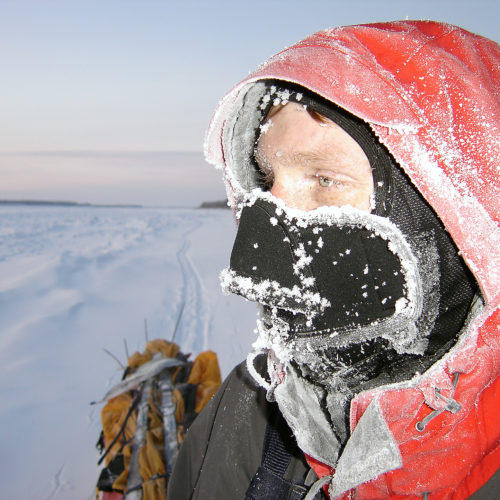
The heating just died, we are dressed up inside like we would be outdoors, I could hardly get the door to our room open a few minutes ago, it had frozen solid to the frame and when I did finally get it open, I got hit by a mean cold air I haven´t  felt since Siberia. It is -35 degrees Celsius below zero here in Minneapolis and a wind over the prairie that chills the bones worryingly. It seems like a cold wave have hit the northern most countries of the World. It is cold in Siberia, Northern Europe, North Asia and North America. And since I have endured a freezing cold far worse than this, well, I guess this temperature would be considered a heat wave in Siberia, I thought I´d would leave 5 solid tips to those of you who fear the cold and still want to stay outdoors!

1. A good hat is more important than anything! 75% of the body heat goes through your head. So basically, you use the head cover to regulate your body heat. And it should be a head cover which also covers the ears and the neck. But if you heed tip number two, that will be done by a hood….

2. The layer system of dressing. Instead of putting on one big, thick jacket, build up a system of layers. Like the layers of an onion. Next to your body, a thin line of underwear, followed by a thin layer of trousers and shirt and than depending on the cold, add on either a gore tex jacket/fleece jacket and if very cold and you are not doing any serious exercise, a down jacket. And as an accessory on the jacket, there should be a hood, which works as an extra cover for your head and will protect neck and ears.

The layering system and a good hat makes a major difference in handling the cold!

The layering system and a good hat makes a major difference in handling the cold!

3. Boots/footwear. A mistake many people do is to believe that one needs a full covered boot not to freeze, but even here in the existing cold of Minnesota, mainly due to that I don´t have any winter gear, I just wear trainers with thick soles. It is the thickness of the sole which regulate the main heat of the foot and isolates from the cold. I don´t feel cold at all. That is, if I don´t stand still, which I never do, and nobody should in extreme cold.

4. Move around, don´t stand still! The idea is not to sweat nor freeze, so one just have to find a level which is comfortable. Because if you are working out to hard, sweating, this is as dangerous as not moving at all. Once you stop, which one eventually has to do, you will freeze solid.

5. Fill yourself with lots of carbohydrates and fat! This is the most positive thing when dealing with the cold, you just need a lot of body energy and heat and fat food and carbohydrates will give you this! So even if you are only staying outdoors for a few hours, eat a really fat breakfast dominated by good carbohydrates!

A good hamburger at the House of Coates will make such a difference when it comes to getting enough energy to keep extreme cold at bay!

A good hamburger at the House of Coates will make such a difference when it comes to getting enough energy to keep extreme cold at bay!

Three tips how to make your Expedition a success

December 15th, 2009 mikael No comments

Rain is pouring down in the Sultanate. Chaos everywhere, people are dying in tragic accidents when wadis get flooded and in Al Ghubra, the immigrant area where we live, people keep their kids indoors not to drown….it amazes me, because the downpours as they are called are very moderate. We would even call them drizzles back home….In any case, it has made me think about an issue which once up on a time, made me start an Expedition school (Started 1998, ended 2006), namely:

Your tent is your home, your fortress.....

Your tent is your home, your fortress.....

Why do  so many people fail in their hope to reach the goal they´ve set out at accomplishing in their Expeditions?

The reason I set this Expedition School up, was that I realized of those over 100 Expeditions that people asked me for advice, all of them first timers, 90% failed to reach their goal, half of them didn´t make it over three months. The main reason, which is the essential ingredient for the success of an Expedition, were these:

1. How to put up a camp and live in a tent. The two most important things on an Expedition, is to sleep and eat well. Therefore, before leaving on an Expedition/adventure/travel where you live outdoors, you need to spend a lot of time living outdoors in a tent, until the day you sleep well, feel secure and now where to pitch the tent. This is your home, your life, your tent is where you recuperate. Make it comfortable, your fortress against worries and the place of peace. Choose good equipment. I am much more for weight, than slimming it all down to discomfort. But, before leaving, lots of sleeping outdoors.

The knowledge how to cook and good food is vital for success!

The knowledge how to cook and good food is vital for success!

2. Learn how to cook good food! You need energy and rest to be able to make the right decisions. So get a good stove, preferable petrol since that works everywhere and than practice doing the same meals that you do back home. There´s not much of a difference! You need variety, if possible, good nutritious meals, full of carbs and fat and tasty one!

3. Motivation and understanding why you want to this expedition! If you handle these two firsts you will make it far, because it is a simple life. You work hard, eat and sleep. It is the greatest and most peaceful of life’s. It is real freedom. But, a the end of the day, when going gets tough, you really need to know why you are doing it.

However, just go…..

3 tips how to fund an Expedition

November 25th, 2009 mikael No comments
This is our proposed route and if borders close due to the war in Yemen, the blue, which doesn´appeal at all.

This is our proposed route and if borders close due to the war in Yemen, the blue, which doesn´appeal at all.

Eid al-Adha , The Festival of Sacrifice, is coming up for all our worlds Muslims, 1.2 billion in total, representing  28% of the worlds population. It marks the end of the pilgrimage to Mecca. In Oman it also means that everybody is taking ten days off work, everything is closed, our work is brought to a total stand still and a lot of locals have rushed to all the malls in Muscat to buy presents. My friend Kamil calls it the Muslim Christmas. He and his family will fly for a short holiday to Bahrain, three days of additional shopping. It is a time you spend together with your family. I will write a blog report about it, once Eid is over. We look forward to it very much. Suddenly something big is happening in town! No matter what, we will still leave Muscat and head for Salalah to meet one of my Bedu friends from the Al-Mahra tribe, Mussalem Bin Hassan and at the same time check our upcoming route through the country.

Since I arrived to Oman I have received a fair amount of requests from people who´d like to join the Expedition, which is an honor, from some really good names with in exploration and adventure and I have received an uncounted number of emails from people, all young men, if I can help them find sponsors or how to go about. And I think throughout these 24 years of travelling, and 1000s of emails, this is the most common question I have received. So, inspired by a Facebook friend, Alistair Humphreys, I have spent a fair amount of my thoughts today, whilst sitting in long queues of traffic, dodging shoppers crossing the road, thinking about the issue. So here we go,  3 tips and thoughts on the subject!

1. Do you really need it? I know many “wannabes” and first timers want sponsors because they think it looks cool, professional and impressive having a lot of logos on yourself and your gear. Travelling like I do, with cultures as the main issue, one doesn´t want to look like a formula one guy. I can understand that climbers, north and south pole skiers…I mean where meeting people and cultures are less important…and so on want to keep a high profile and market their sponsors, but otherwise there are other ways to market your potential sponsors. I have a feeling that potential sponsors in the West understands this, that it is not good to get over exposure, but in this part of the world, it hasn´t hit home yet.

Two of our main sponsors in Siberia......

Two of our main sponsors in Siberia......

So my point is, if you have the funds, it is a better choice. Less work, less stress and you run everything the way you want. However, I want to add, I have always had a great partnership with my sponsors and many of them are very good friends today and they have never, ever, had opinions how I use their brand or expose it. However, I have heard other opinions, especially if you involve broadcasting media. (Check the site at www.siberia.nu and the link to partners to see what sponsors I had on the Siberian trip.) I know that Christian Bodegren, who is trying to pass the Sahara Desert, is funding his expedition by himself. I respect that a lot for a first timer.

And, if you haven´t done a serious Expedition before, do one, and than try for sponsors for the second one. Potential sponsors wants to see a track record of what you have done. So better choice is to work and save money!

2. You really have to figure out, what does a potential sponsor want out of it? What can you offer them, which all the others cannot? For example I have a friend who is in charge of Canons sponsorship department and he gets 300 requests for sponsorship per day. He offers sponsorship to ten causes a year, meaning less than 1% of all who asks and almost all of them are well known already. I don´t want to make it look hopeless, just telling you how hard it is. My only advice is, try a new perspective, if you are not famous.

3. Target only the ones which fit your vision and find ones that you will become a pal with. Some people do anything for money, forgetting that the future will judge you by who you cooperated with. After awhile, if you take anything, your vision gets clouded in being looked upon as purely a moneymaker. Many of them in exploration I am afraid. I personally really enjoy working with sponsors. I think it is because I love dealing with people and almost all of them are very good friends to me today, with whom I socialize. Like the legendary Olle Widell at the former Outside Scandinavia. He believed in me from the beginning and sponsored me through many expeditions. I would never deal with a sponsor if I don´t have a personal relationship with them. So find the ones who fit your vision and it will be a great partnership for both!

By the way, have a look at this! (Yeah, I know, it doesn´t have anything to do with sponsorship!)

Satellite equipment sponsored by Tomas and Tina at Explorers Web on the Siberian expedition, they´re two of my best friends today.

Satellite equipment sponsored by Tomas and Tina at Explorers Web on the Siberian expedition, they´re two of my best friends today.

The need for debate on Expedition Arabia

November 4th, 2009 mikael 22 comments
Walking through Maasiland in the year of 2000, not donning local gear as usual, but called Olorogwa whether I liked it or not....

Walking through Maasiland in the year of 2000, not donning local gear as usual, but called Olorogwa whether I liked it or not....

One of the main visions of the Arabian Expedition is to build a bridge of understanding between the West and the Muslim East and within the Arab countries themselves. No matter how one look upon things, this is one of the major problems that the world is facing today. There´s an enormous need for information, education and clear debate on both sides. One of our major hopes regarding this upcoming Expedition, of which 50% is Arab, Salim and Nasr, and the rest made up of me and Pamela, who is Asian-American, is to communicate via the Internet every third day, where debate will be one of the most important issues. We need to communicate. If this is possible, to create a forum for debate just like we wish, we don´t know yet.

The reason I bring this very exiting and important issue up in this report is due to this email that I received yesterday:

Know that the Bani Hasan tribe has been undertaking camel treks out of Yemen across Africa for centuries – guess that’s already been “explored” (without GPS receivers and sat-phones).

I’ve lived in Yemen for a while now and you are like every dick head tourist I’ve seen coming through here, donning local clothes and a jambiya (you know the locals laugh at foreigners doing that, right?), giving yourself a local name (priceless) and blogging about the place like you discovered it.

However, you stand apart in your unfailing ability to aggrandise yourself for doing what is otherwise standard adventure tourism. You’re no more of an explorer than the 1000th Yemeni traveling through Sweden can claim he is exploring stockholm.

Why not explore the mind of the self-important ethnocentric tourist? You’ve got a head start.

amelahodalt (this person did leave his or hers email, but no name)

Me an etnocentric dick? Possibly....

Me an ethnocentric dick? Possibly....

During my 25 years of exploration, I have never, ever received an email as offensive and full of bitterness, jealousy and hatred as this one. I am sorry to, once again, find out that so many people feel bad in this world of ours and use so much of their joy to live to pour out their hate and bitterness for something they disagree with. I have received tons of letters, emails, phone calls throughout the years and I have been stopped in the street many times by people who disagree with what I do, who I am and how I see life. Of course, I wish everybody would love me, but that is definitely not the case! But I accept all kinds of critique. It is part of any life where you have personal opinions.

However, to be able to have a debate about anything in life, opinions have to be free and many. Within a limit. Offensive emails like this one, based on hatred, jealousy and bitterness, leads nowhere. But there are, after all no smoke without fire, and some of these issues this person highlights comes up a lot in my sphere, what is an explorer and what is true exploration, so I will start a debate by answering this persons accusations. Feel relatively free to come with opinions, but since I moderate everything, because I on and off get these type of emails, I will not allow more emails like this one, which is free of any reason, good research and thought.

About the Beni Hassan tribe, like the more well-known Beni Hilal tribe, and other Arabs who have traveled both ways, to and from Mecca, this is true, but there´s absolutely no written records that a full east to west trip has been done without a prolonged break. Especially not in modern times. However, one of the main ideas with the Expedition, is to highlight the Arabs as great travellers and their amazing journeys. One of them is the well-known Ibn Battuta. And that is why 50% of the members are Arab, so that they can become modern day Ibn Battutas and give the Arab world a voice from the exploration point.

Reality today, in the modern era of exploration,is that this is how most Bedu travel with their camels today...even the famous Al-Mahra tribe.

Reality today, in the modern era of exploration,is that this is how most Bedu travel with their camels today...even the famous Al-Mahra tribe.

When it comes to satellite phones and GPS, it shows that you have no idea about my past history of exploration, feel free to read this. I have never, ever used a GPS and never will. However when it comes to satellite phones, I did have it on the Siberian Expedition and will have bring one on the upcoming Expedition. This is due to the need to communicate via Internet. Plus that authorities nowadays won´t let you into the country without one. It is considered another measure of security. But, I will never, ever, use the satellite phone to call for help or assistance. It hasn´t happened and it never will.

When it comes to donning local dress, I agree fully with you. This is the first time in my life, that I have put on local dress, and I agree with your assessment. The reason is as follows: I was given it as a gift from Pamela and our two friends Mohammed and Hussein, to wear for one day. From which all photos are taken. I felt very uncomfortable, but realized that there were many in the souk who actually felt honored and liked it that I wore there local Sanaani dress. But that was the only time. But, it could well happen again in the future. Once again, I wish you would have done your home work better. This is the thing with blind hate, jealousy and bitterness, it works over reason and research. Better to do something with your own life in stead. Enjoy it. Do it in a way you think is appropriate. Write about it. Because communication is the most important issue for a stable future for the globe.

Together with Hussein...yes, we are all laughing!

Together with Hussein...yes, we are all laughing!

The giving of the name Ahmed Al-Hamdani was the same evening. It was Hussein and Mohammed who gave it to me. As a sign of their respect. For what I don´t know. However, many western tourists, adventure travelers and explorers have been given names whether they like it or not. Two well known ones are Wyman Bury and Wilfried Thesiger. I have been given local names, whether I like it or not, meeting other people, tribes, like the maasai. I was throughout my Expedition there called Olorogwa, which means the fiery one. Local names are always given by local people as a sign of respect and appreciation. Maybe that is why you have never experienced this.

When it comes to my love of writing, well, I will always write as I have just discovered a place! For me, I do discover all the time and for me it is a new discovery. It is about loving life. I really love life! And whether you like it or not, I have a following of readers globally who wants me to write the way I do. And its people. If you don´t like my writing, why bother reading it?

That last paragraph reeks of jealousy. I won´t even comment it.

To sum it all up, I see you love Yemen and the Yemenis, which I do as well and you have come across a lot of tourists and travelers that you don´t like. I am sorry to hear that. Why don´t you start a blog and write about your feelings? Find a solution to your anger?

Communication in minus 45 in Siberia......

Communication in minus 45 in Siberia......

Yemen was one of the highlights of my life in many ways. See the slide show from there!

Since Pamela and myself together with Salim and Nasr will face the upcoming debate together, Pamela, who is an academic look upon the email like this and will leave her comment as a comment! Start the debate!

Explorer encourages others to “lead from the saddle”

October 14th, 2009 admin No comments


Equestrian Exploration Program Developed Leading Explorer Oversees Historic Effort
Mikael Strandberg isn’t very tall but his name carries a lot of weight in the international exploration community.

He started his professional career as an explorer two decades ago by bicycling 27,500 kilometres from Patagonia to Alaska, via the infamous Darien Gap jungle. Then he pedaled another 90,000 kilometres from New Zealand to Cairo.
After that he parked the bike and explored Latin America on horseback, which won him admittance into the Long Riders’ Guild, the world’s first international association of equestrian explorers. When he hung up his saddle, he spent a year living among the Masai in Kenya.

Then in 2004 Strandberg made an astonishing winter crossing through Siberia. During this five month sledge journey, mainly done in utter darkness, he experienced a terrifying cold with average temperatures around -50°F, day and night. This trip through the coldest inhabited place on earth caused the King of Sweden to award his intrepid subject a silver medal for courage.
Strandberg has produced three internationally renowned television documentaries, written six books, lectured around the world and been deemed “the best contemporary explorer in the world” by the Explorers Club in London.
Now he’s preparing to begin the Great Desert Expedition – a camel journey that will take him from Oman to Morocco.

But before departing on that adventure, the Swedish Long Rider will tackle a unique educational challenge. He has agreed to assume responsibility for developing a new Equestrian Exploration Department for the Long Riders’ Guild Academic Foundation.

“With Mongolia having become the fortieth country to field Long Riders and join the Guild, there is ample evidence to demonstrate that interest in equestrian exploration is exploding,” said Basha O’Reilly, one of the Guild’s Founding Members. “Earlier this year an impassioned debate was held regarding the fact that a London-based geographic society hadn’t fielded a single expedition in more than a decade. While other organizations vote themselves into obscurity, the Guild has sponsored, mentored or encouraged more than a hundred equestrian expeditions on every continent except Antarctica in less than ten years.”

Yet while enthusiasm runs high, O’Reilly reported, leaders of the equestrian exploration movement remain concerned that this mounted renaissance must adhere to the highest principled standards. As Director of Exploration for the Guild, Strandberg will help the LRGAF promote and develop ethical, safe and responsible equestrian exploration and long distance travel.

“This is an honour that I accept with dignity. I am looking forward to using my experience in organizing different types of expeditions so as to encourage and educate would-be Long Riders around the world,” Strandberg said.

Skeptics may argue that Strandberg and his fellow Long Riders stand little chance of encouraging a generation to take to the saddle and explore Earth. Yet history demonstrates that one person’s passion for exploration and education can indeed change the course of events. This occurred in the fifteenth century when Prince Henry of Portugal established the world’s first school for explorers. At Sagres, on the southwestern tip of Europe, he brought together geographers, cartographers, instrument-makers, astronomers, and mathematicians. The institute was designed to teach navigation, to collect geographical data, invent seafaring equipment and to sponsor expeditions.
The sturdy Swedish explorer is a modern day graduate of that school of thought who has already shared his expertise with the first team of Afghan mountain climbers and a Scandinavian camel expedition crossing the Sahara, not to mention dozens of young adventurers eager for more generalized advice. Strandberg now believes he can help inspire others to explore the world as their forefathers did.

“Although Prince Henry never sailed on any of his expeditions, he is credited with instigating the Age of Discovery. Unlike Henry, who inspired but did not travel, we modern Long Riders’ Guild are determined to lead from the saddle.”

In Strandberg’s case, this means a camel saddle, not an equestrian one.
Though the intrepid Swede has more than twenty years of experience surviving in dangerous places, overcoming tropical diseases, etc., he is about to venture deep into a remote part of the Muslim world on a desert expedition which will certainly require him to deal with cultural and religious challenges, as well as the everyday dangers of trying to survive a trip that would cause Ibn Battuta to have second thoughts.

“I’ve just returned from studying Arabic and Islam in Yemen. The wonderful experiences I enjoyed there have convinced me that this trip will allow me to build a bridge of exploration which runs between the Islamic world and the West,” the enthusiastic explorer explained.

While the Long Riders’ Guild is famous for having protected the ancient art of equestrian travel from going extinct, the organization has spent the last two years quietly working to create a new camel travel division as well. The world’s leading camel travel experts, such as Arita Baaijens who travelled across the Sahara with her dromedary camels and John Hare who journeyed across the Gobi with Bactrian camels, have agreed to lend their academic support to this unique educational effort.

Because of the length and significance of Strandberg’s journey, the Guild has honoured him by presenting the explorer with the first LRG flag to accompany a camel expedition.

Insh’Allah, we’re going to make exploration history of an unexpected and unprecedented nature,” Strandberg said.

When asked to explain what prompted the equestrian organization to include Strandberg and his camels, Basha O’Reilly of the Guild replied, “What we envision is an organization that grows out of the original Long Riders’ Guild, and goes on to publish books, sponsor new research, and provide funds and equipment to Long Riders. This is a new type of exploration foundation, one that preserves mankind’s ancient methods of travelling safely and successfully with horses, and now camels. Regardless of what he is riding, Mikael is a perfect example of this blending of mounted courage.”

To learn more about Sweden’s most celebrated explorer and Long Rider, please visit Mikael’s exploration blog –

For an interview with Mikael Strandberg regarding his career as an explorer –

Read article in Horsetalk! and in ExplorersWebNews! and in Voices for horses!

The Arabian Vision, Amazing Meetings

September 14th, 2009 admin 3 comments

It just came as a matter of fact. The vision.

Ever since returning home from the Siberian Expedition I have had no idea at all what my next Expediton would be. Or what to do with life. That is my life. To do Expeditions and hopefully build bridges of understanding between cultures. When returning home from Siberia in May 2005, life first when to the highest peak professionally in life, than it went all the way down in the gutter privately. Such is life at times. I ain´t complaining. It could always be worse. Suddenly, during a trip as a guide to the Galapagos I was asked by a great guy, Håkan, if I possibly could bring some shareholders of a company he was part of as a leading profile, to Oman. And guide them around this amazing country. I said:
“I would be delighted to do just that, but I need more information.”
At which Håkan answered:
“Came to this meeting of ours next week in Stockholm, the VD is introducing our concept to our shareholders.”
So I went there, mid-December last year, 2008, and when the very amicable and humble, but extremely knowledgeable and sharp VD, Magnus, showed a map over the area, where they had a succesful business, I happened to notice a long word at its top hand right corner. It said;
“Rub Al-Khali.”
Suddenly I remembered a hidden dream of mine! The giant Desert Expedition! Biggest of them all! At that moment I remembered reading Wilfried Thesigers book, probably the best desert travler book ever written -Arabian Sands- regarding deserts and, of course, I said yes, please let me take your clients to this great country. However I didn´t know a lot about Oman, but it was decided I would go there for an inspection tour within a month. Which I did.
On the flight over, I took a break in reading about the country, brought out a flight magazine and happened to end up with a map of the world in front of me and what did I see, if not the perfect Expedition by camel, from Oman and the easternmost tip of Arabia to Mauretania or Morrocco and the westernmost tip of Arabia. Just like that! And I have always dreamt about doing an Expedition in the Arab World, somehow to try to build a bridge between these, as it seems according to media, opposite sides of civilisation and suddenly i just realised…THIS IS IT! We have an Expedition, opposite to my cold expedition in Siberia, now I had the hottest and I had a strecth which has never been done before in one go and, most important, a chance to build a bridge of understanding between these opposites and educate each other! But, the question was, how to get it going? I realised on the plane over that I needed the Expedition to be funded half by the West and half by the East.
After a week touring this amazing country called Oman, which I fell in love with immediately, both the nature and its people, I went to the airport to catch a plane and go to Salalah, where two local Bedus would bring me in to this the most beautiful of deserts on earth, Rub Al-Khali. I sat down in front of an Omani shouting orders on the phone, a man used to power, no doubt, and than he started reading a book from The Explorers Club, in which I had written a chapter!
“Woow!” I thought whilst getting on the plane. “Another coincidence!”
Turns out the guy has the seat next to me. He is one of my best friends today, Talib, and I sold him the vision on the one hour plane trip. In Rub Al-Khali, I fell in love with camels, Bedus and realised I was ready for a big Desert Expedition! With Talibs help and contacts I have been able to get very far in my planning and possabilities to put the expedition on its feet!
And from than on, I have just run into an array of personalities and amazing people who understands the vision, the possibilties and the need for such an expedition, and right now, back home again in a grey Stockholm, after ten weeks in Yemen, life looks better than ever!
Yemen even changed my life more than I thought possible, killed the awful memories of the time in the gutter and more than ever, I realise the importance of doing this Expedition. It can change how we look upon life today. That big.
Please see this film/pilot regarding the expedition!
And, do not miss this slideshow from my visit in this greatest of countries called Yemen!
And, if you haven´t read the reports from the Expedition, please go here!
The picture? taken with the group I guided in Yemen, when they were riding camels in Sharqiya Sands.

Chewing kat – the national past time of Yemen

August 1st, 2009 admin No comments

“You see, it shouldn´t be called chewing kat” , my new good friend Kyle said, “It should be called storing kat, which is the Arabic meaning of the word.”

Selling kat on the way to the kat session....one bag costs about 750 rials, which is the equvalent to 3.5 dollars

Selling kat on the way to the kat session....one bag costs about 750 rials, which is the equvalent to 3.5 dollars

The chewing, or storing, of kat is a controversial issue not only in Yemen, but also in the surrounding countries. There´s a loud opposition against kat (read about kat on wikipedia at http://en.wikipedia.org/wiki/Khat) because it is said to have a big negative effect on Yemen’s economy. It is not an exportable product, it uses an considerable amount of the countries natural resources, lots of manpower and most of all, apparently almost 40% of the countries water resources. It is also said that it creates a lot of problems within the family, like for example alcohol, since it strains the family economy (a small bag of a one session chew is 750 rials, which is a lot of money for the locals, about 3.5 dollars) and it damages family bonds since the men are always gone chewing kat with male friends. All this is of course the same effects that any consumption of alcohol and such stimulants that we humans seem to need worldwide.

An avid kat chewer at the session....

An avid kat chewer at the session....

Anyway, chewing kat is after all the national past time in Yemen, and has the same social consequences as vodka in Russia, that it is through a kat session or a vodka party that you get the real insights into the country and its workings. It is said. So I joined Bob Burrowes , political expert of Yemen from the University of  Washington, who´s spent more than 7 years all together in this diverse country that he visited the first time 1976.

“I hope you will find that there are some very positive aspects of the kat sessions” , this veteran of thousands of kat sessions told me whilst we walked through the spectacular old city of Sanaa heading first for lunch together with another big Yemeni ex-pat personality, Kyle, “Whatever one´s position regarding kat, its presence is undeniably and impossible to ignore.”

The famous Bob Burrowes to the right, next to as famous Abdul-Ghani and Kamil

The famous Bob Burrowes to the right, next to as famous Abdul-Ghani and Kamil

These two veterans are two of the major personalities I have come across during my visit here.In Yemen, even the white people are interesting, which says a lot about the country. Kyle for example, has lived here for many years, speaks fluent Arabic and have been married to three Yemeni ladies and is a storyteller of sorts. One of these jagged personalities, dented by life, driven by curiosity and good humor, that one has the privileged to come across on and off on the global arena as a traveller. He first took us to a great restaurant, then we ended up at the kat session with a mix of expats and Yemenis. We spent almost 8 hours storing kat. Because that is what you do, store kat in one of the cheeks until it would like to bust. But you don´t spit this green substance out until the session is over. So in this case, we are talking almost 8 hours of storing. I have to say it is one of the most relaxing and enjoyable moments I have had in a long time, sitting in a group talking about the most amazing things of life. And you do learn a lot of Yemen during such a expanded session.

Me and Kyle and a couple of friends at the session...it was my first, but Bob he has the expat record of 58 kat sessions in a row!

Me and Kyle and a couple of friends at the session...it was my first, but Bob he has the expat record of 58 kat sessions in a row!

“We Yemenis are not an aggressive people, we like to talk, see how it is here, a kat session is an important way to socialize and solve problems” , Kamal told me in perfect english, “Therefore as you see on the streets of Sanaa, people take life is easy, even though the reputation of instability is racing across the country. But I don not feel worried. We will talk ourselves out of this problem and I think a federal initiative, to give all regions more autonomy is the solution. The only problem as I see it is the terrible corruption in the country.”

The restaurant serving the best salta and kebabs according to Kyle....I believe him...we stopped here for a great lunch!

The restaurant serving the best salta and kebabs according to Kyle....I believe him...we stopped here for a great lunch!

Since my days in Siberia , I have long ago realized some basic facts about the human mind and its quest to be a being. There´s no doubt that we are a homo conversencis, a being who needs to continuously communicate and socialize to feel content with life. Some of the happiest people I have come across during 23 years of traveling are people who continuously communicate with each other. And a kat session is very much like that. It is a very important social function and we humans need this gatherings, even though they put a heavy toll on other things in society. Life is a about finding an equilibrium, not just painting life in white or black. So far, my first kat session wasn´t only a success when it came to getting profound insights into the Yemeni life, hearing some amazing stories from Mali by a true story teller or a perspective of being Yemeni in Finland, it was a very basic way for human beings to interact and talk leading to a much less aggressive approach to life. Everything has a backside to it, it is just that things take time to understand and develop so if demanding and slightly negative people went to a kat session instead of moaning about the negative aspect of life, we would have a better and more fair understanding of the world. Especially the Yemeni one.

Do not miss this slide show from this great country!

It was such a long kat session that we passed in darkness return through the old city home to the school....

It was such a long kat session that we passed in darkness return through the old city home to the school....

Arab terms, Arab time – the issue of women

March 28th, 2009 admin No comments
This is a very strenuous time, I hardly get more than a few hours of sleep every night, plagued by thoughts of the past plus worries trying to get the puzzle together. It feels almost impossible to achieve just that. But, at the end, there will be an Expedition!

I have forgotten during these four years of inactivity all the enormous work involved getting an Expedition on its feet. And I am working on two at the same time, plus I have a third in the back of my head. Biggest worry of course is how to get the funding. Will potential sponsors understand the need of such an Expedition? Especially in these times of global economical worries? I have done a quick calculation on the costs and they´re more than double compared to the Siberia journey. Gee, I say….

But there´s also a lot of joy. Like slowly seeing the puzzle becoming a picture is fascinating and in some ways I think, putting together an Expedition, is like having a child born. But, I think most of all, the biggest joy, is all the people who are getting involved. Potential sponsors, regional experts, friends of the same trade and global big wigs. And, the growing interest amongst readers of my blog and fans who´ve followed me for many years. Unfortunately, or fortunately maybe, because one needs critics to stay objective, along with a growing interest you also get the back side of it, peoples jealousy and aggressive emails about your plans. I have been called a lot of things lately, everything from pro-Arab to an enemy of women. A frequent question is, how can you do an Expedition in an area of the world where women are treated like secondary human beings? What about the Honour Killings still going on, even in Western countries where you have Moslem populations? All these mails originate from Sweden…

Let me first of all assure you that I really love and appreciate women. Maybe too much, because it does make life more complicated in many instances, especially whilst needing to concentrate on getting the plans for he Expeditions together… I adore women. Secondly, yes I am pro-Arab in the sence that I think the way they live and think is of great importance to the future and to the well-being of our globe. And, to be able to understand the Arab world, like all things in life, to be able to fullfill my dream and wish, to build a bridge of understanding between their world and the west -well, even in between Arab countries a bridge is needed- the only way to understand the Arab world, is of course, one cannot hope to understand Arabia through the prism of western modernism. I have to understand it on Arab terms, in Arab time. And even though I have some experiences from the Moslem and Arab world (not the same thing, because for example, Indonesia is the biggest Moslem country -population wise-in the world), how can I give judgement, except happiness and joy which is always needed, until I really have experienced Arabia from within and understand all the intricancies involved? If there´s one thing in life I dislike, it is people giving judgement without knowing. This ignorance is, as I see it, one of the major obstacles to a much more peaceful world.

What then do I personally think about Honour killings and the subject of women in the Arab world?

I will give you a complete answer once I return from the two Expeditions, when have a full picture, until then I just want to say, and this applies to all countries, cultures, tribes and walks of life on the globe, for me it is impossible to understand why women and men get treated differently. Once everybody understands that when everybody has the same value, possibilities and wages, society has developed a grand step forward, but, being a Swede, where we are supposed to have equality, there´s still…which is almost impossible to understand…..a difference in pay for the same work. How can this be?

My only concern, a very big one, for my upcoming Expeditions, is how am I going to get in touch with the Arab women? And how am I going to describe their thoughts and lives? This worries me a lot.

A major reason to choose a life as an explorer

March 21st, 2009 admin No comments

It is of course a very privileged life to be an explorer, to have in your mind that everything is possible and fulfil dreams most people never even get close to realising. Not even in mind or thought.

For me, proper exploration today has to do with connecting cultures, opening up horizons in other peoples mind, with the help of a camera, written words with the all mighty pen and by simple and genuine travel, e.g. not using a motorised vehicle. If an explorer turns up in a motorised vehicle, he or she has closed a door before it is even on the way to open up another horizon. By that way you build a new wall, not a bridge over the existing one. A true explorer shows other human beings first of all, this is the way, for example, that the great people along the Kolyma River in Siberia live. Exploration is about building bridges between people, not that ridiculous male theme, I am strongest and I can do this and that. Very tiring indeed.

Another important issue of today’s exploration, is to try through science to open up other peoples eyes about the realities we live in. And help to put together this eternal puzzle, concerning the meaning of life, our globe and why are we here.

Hmmm, lost a bit of my train of thought there….what I want to write, is to tell you readers, that one of the most fulfilling aspects of having chosen this life, is all the great people you come across, not only whilst travelling, but people doing what you are doing, exploring!

Two of my best friends, even though I have so far never met them in person, is CuChullaine and Basha O´Reilly. (See photo)These are some of the most intelligent, warm hearted and generous people I have ever come across. Everything they do is to make this a better world to live in. Two grand personalities and human beings who run one of the most prestigious Societies in the world, The Long Riders Guild. I have communicated with them a lot the last two years and they have in many ways done my life a lot of good. Some of the most inspiring people I have ever come across and CuChullaine has also written one of the best books I have ever read. They´re ready for one of the most compelling challenges in history really, a four year global ride! See http://www.theworldride.org/

They are exactly what a world full of copies need, two original thinkers and genuine human beings! I am honoured in many ways to be part in their team of advisers.

Basha as asked me to quote her, because she has a very important job to do and need help:

“Because you have travelled from the Pampas of Patagonia to the frozen tundra of Siberia, we are urging all of your friends throughout the world to check the master breeds list on the World Ride website. If their horse’s breed is not represented, I would ask them to print off the DNA form, complete it and send it to The Long Riders’ Guild with some mane or tail hairs. In this way, everybody who contributes will become part of the largest collection of equine DNA in history. Horse owners are rushing to represent their favourite breed, including White River horses from Mongolia, Manga Largas from Brazil and Marawaris from India. Yet there are still hundreds left unaccounted for, and we particularly anxious to obtain DNA from the fabled horses of Yakutia.”

Mikael, here’s the link to the Breeds page: www.theworldride.org/breeds/breeds.htm