It felt like my ribs were cracking from the inside.
Not a clean pain, not something you can shake off with a joke. This was pressure, like someone had stuffed my chest with wet wool and tightened a belt around it. I was breathing the way you breathe after a 100-meter sprint with a heavy backpack. Fast. Loud. Desperate.
I leaned forward on my walking poles and tried to look up without moving my head too much.
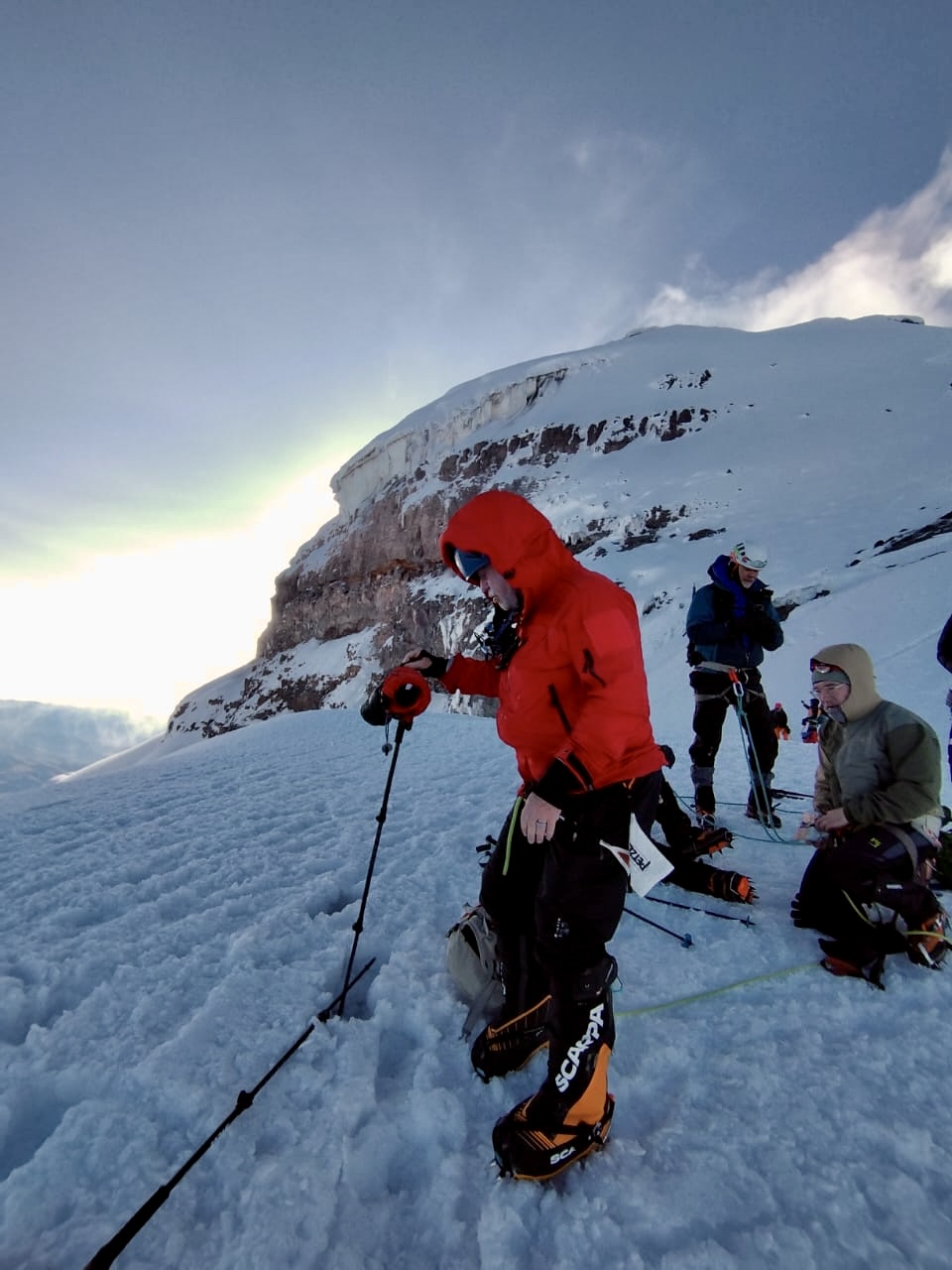
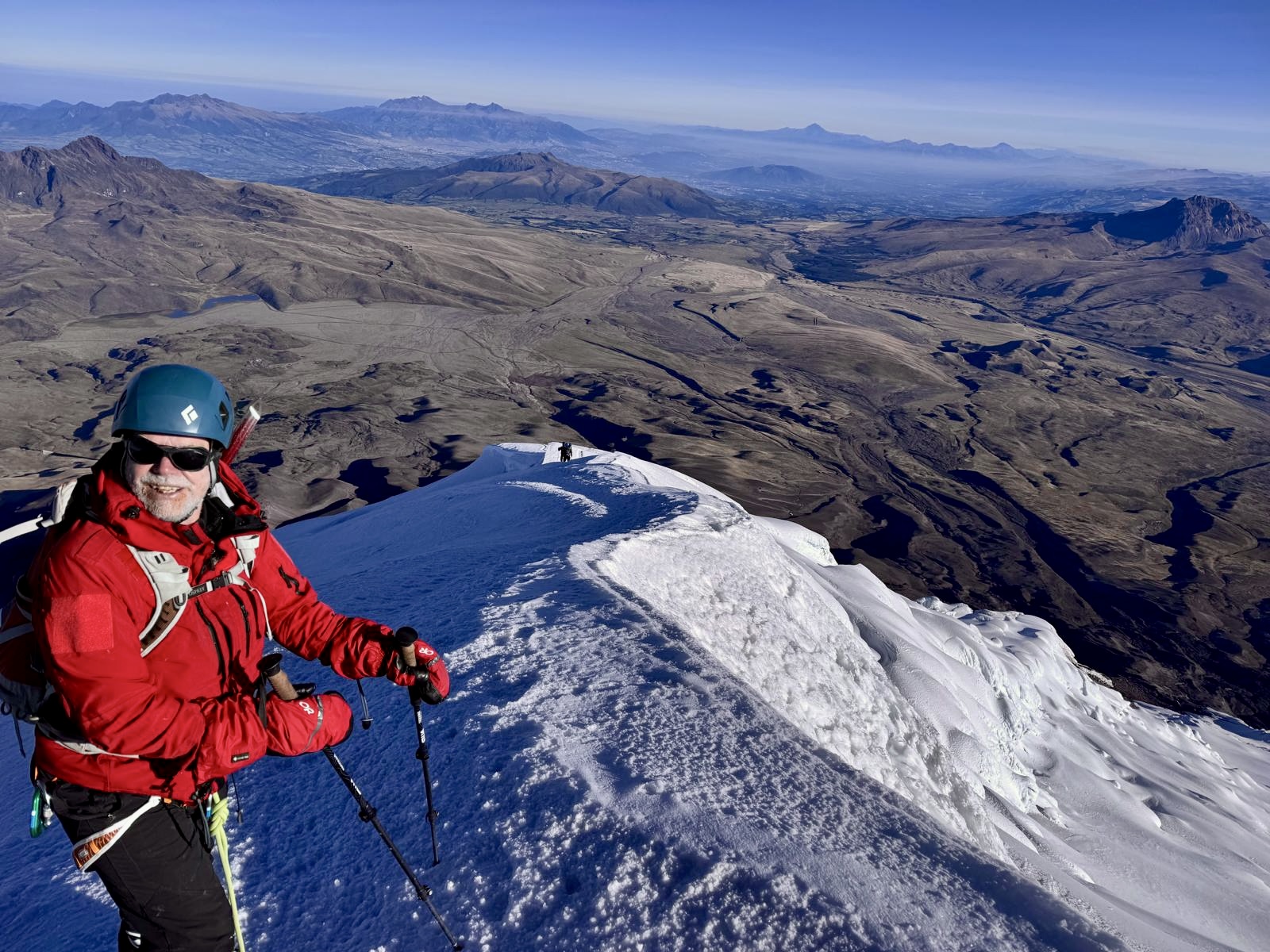
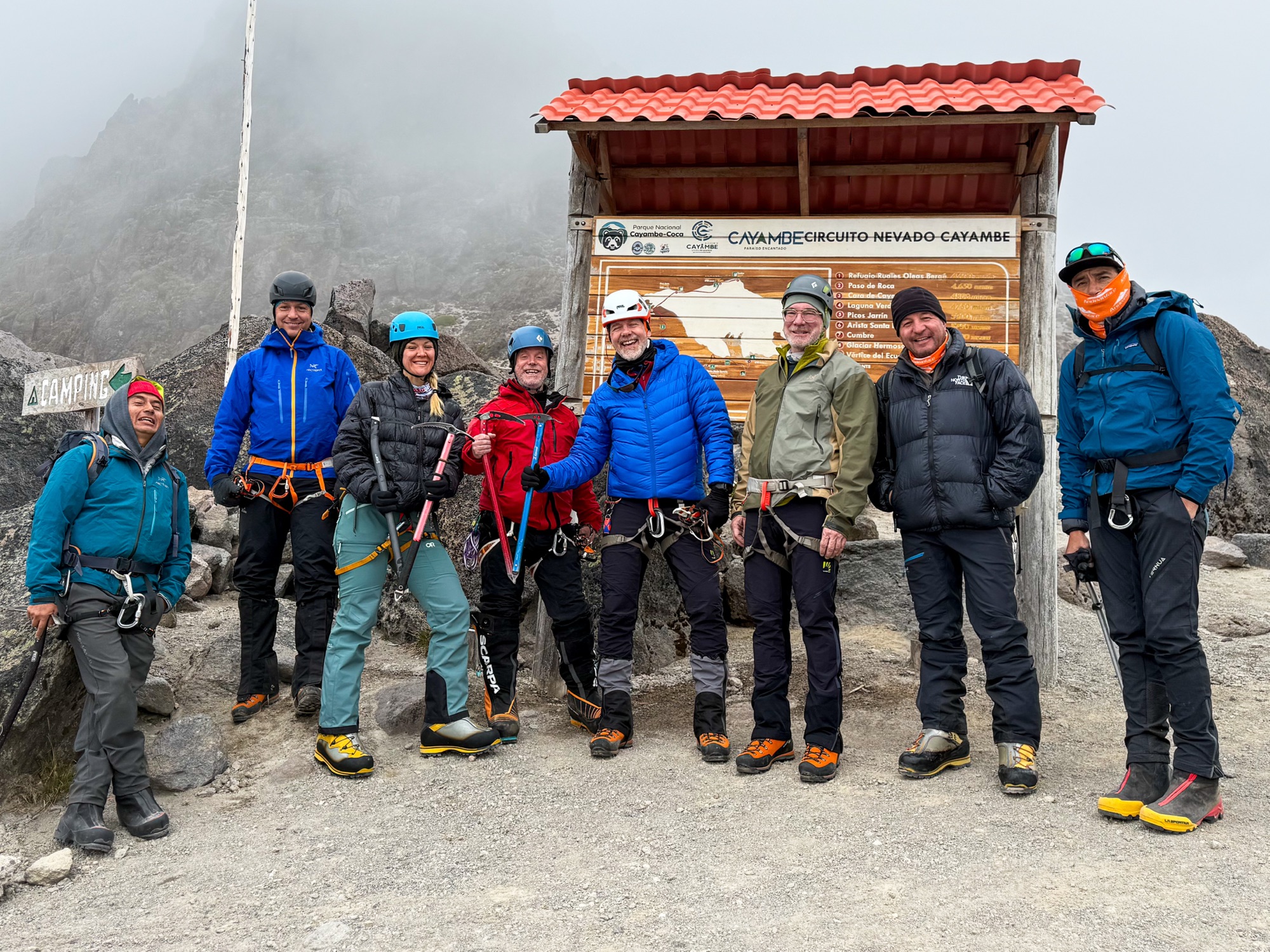
Ahead of us, the route curved around a crevasse. The rest of the team were small figures, headlamps, slow steps—skirting the edge to reach where Hannah, Maurizio and I had stopped. We were at around 5,600 meters on Cayambe (5,790 m). Only 190 meters of vertical left to the summit, but the summit was hidden, as if the mountain didn’t want to show itself to people who hadn’t earned the right to see it.
Romel, our head guide, came up to me and his face changed when he saw mine.
He didn’t do drama. He didn’t raise his voice. He just looked at the others and then back at me.
They can’t continue.
Dave, Norm and Mikael were on the ground. Mikael on all fours, trying to pull air into his lungs like a man drinking through a straw. Dave’s eyes had that distant look you get when your body is already writing its own plan and you’re only there to witness it.
This is it for us, Dave said.
There was a moment of complete silence.
Not heroic. Not cinematic. Just reality dropping down around us like a curtain.
I looked up toward the hidden summit. It seemed impossibly far away.
Maurizio had already told Hannah and me something we didn’t want to hear: we would never make the turnaround time of eight hours. We’d started at midnight, in full darkness. We were too slow. That’s the rule. The rule doesn’t change because you want something badly.
But I still wanted to continue.
I wanted Hannah to reach the summit.
She had been the strongest of us that day, by far. She’d earned a summit. Even though two days earlier, on Pichincha, she’d been down and out—stomach problems, that hollow weakness that comes when altitude gets inside your blood and your head.
On Cayambe she looked solid. Strong. Focused. Calm.
Maurizio had taken shortcuts since we left the rocky area below the glacier—not the polite zigzags, but straight up. It’s the kind of line that saves time on paper and takes years off your life in the dark. Hannah followed him easily. I followed too, but every step felt like a sentence.
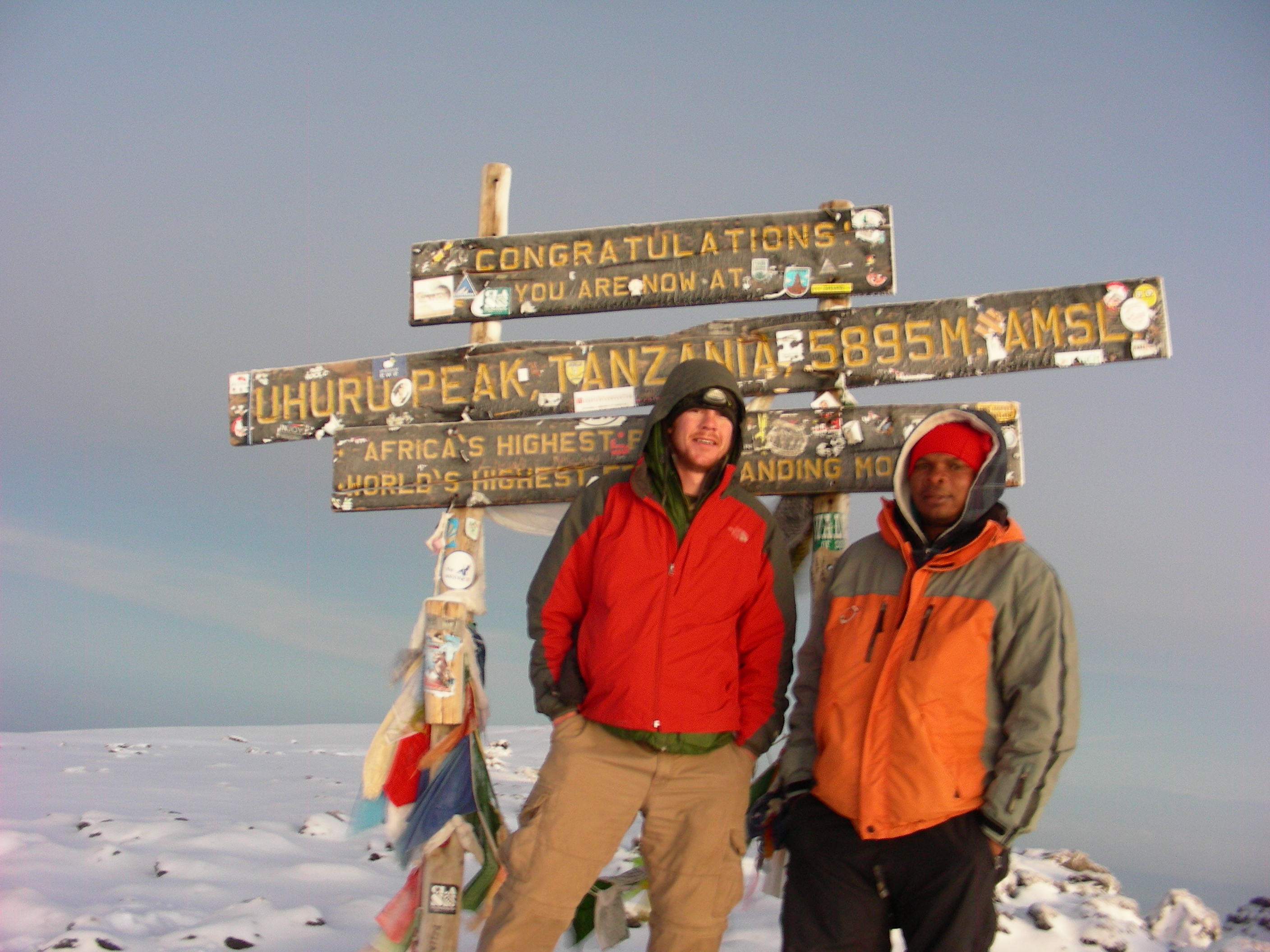
My backpack was heavy. Extra food, extra clothes, extra water—the old habit from other mountains, other trips, where you carry “just in case.” Like Kilimanjaro, where you have days to walk into the altitude, to let your body slowly learn the new language of thin air.
But Ecuador isn’t like that.
In Ecuador you get driven up, fast. You sleep high. You start high. You climb high. You don’t get enough time to negotiate with your lungs. You get served the bill immediately, whether you like the menu or not.
That was Norm, Dave and Mikael on their knees. A tough, kind group of men, reduced to a very simple human truth: we need air, and there isn’t enough.
Do you guys mind if we carry on and see how far we can get, I asked.
Dave replied immediately.
Go for it.
That was Dave. That was the whole team, really.
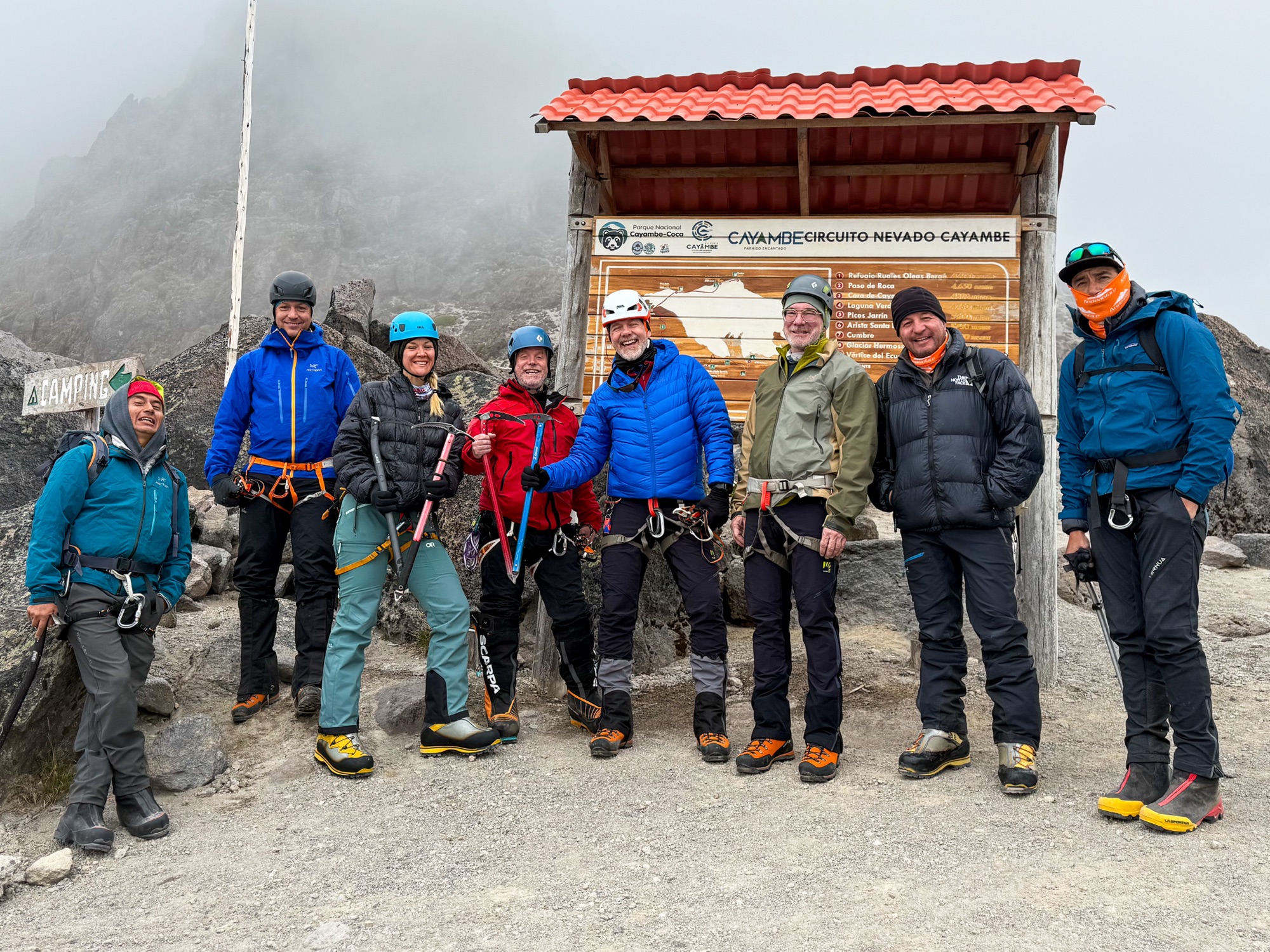
From day one they had shown the best sides of people. Helpful. Encouraging. Funny. Full of stories. Laughter even when the lungs are working overtime. The kind of team you don’t get every time.
And while I was panting there, I felt disappointed with myself.
I wasn’t my normal self. I’m usually the one with energy, jokes, bad puns, teasing. Instead I felt weak. Quiet. Heavy. And I knew why.
I wasn’t only carrying a heavy backpack.
I was carrying the last four months.
Grief. Love. Lumbago. All the slow stress that sits under your skin even when you smile.
The day before, I had looked in the bathroom mirror and thought I’d aged five years since Kyrgyzstan. My eyes were narrow, almost snowblind. I noticed Hannah had seen it too. Not judgment. Concern. And that kind of concern can cut deeper than criticism.
Maybe she didn’t want me anymore.
Even though we’d had such a brilliant start, finding each other again, I still felt vulnerable. The mountain amplifies everything. It takes a small fear and makes it loud. It takes a quiet doubt and lets it echo.
So in my head, the summit became more than a summit.
It became proof. It became a gift. It became something I could give her when she was strong and the day was still good.
Because mountains change.
Tomorrow could be different. That is the rule. When the going is good, go.
I stood up. I watched Maurizio point out the line above. And we started walking.
It felt like Mike Tyson hit my chest. My legs were lead. I was over-breathing, and every time I tried to slow down the world tilted slightly. But we kept a steady pace upward while the rest of the team turned around and headed back to the refuge.
And then a thought came, clear and sharp.
This is not right.
We are here as a team.
I stopped and asked Hannah what she felt. She agreed. Maurizio repeated the truth: we would never make the summit within the turnaround time.
So we turned around.
The walk down to the refuge was hard for me. Not the normal hard, the good hard. This was empty hard. I had lost all energy and I felt I’d overdone it. Every cough hit the ribs like a hammer. I kept thinking, how on earth will I recover for Chimborazo—the big one, the dream one—and suddenly Chimborazo felt impossible.
Cayambe was the real deal.
No people. No soft trail. No lines of headlamps. Just the brutal mountain, sharp and beautiful at the same time, like a knife that also happens to be art.
But we were not acclimatized.
Norm, Dave and Mikael had arrived, done Pichincha, and felt fine. Then Cayambe turned around and showed us the difference between “fine” and “ready.”
On the way down, somewhere between the snow and the rock, I realized we had to drop Chimborazo. We didn’t have enough time to acclimatize to enjoy it—or even to have a fair chance at the summit.
So I suggested Cotopaxi.
The group agreed.
Cotopaxi (5,897 m) is, in my eyes, the most beautiful of the volcanoes. Perfect shape. Unreal surroundings. The kind of mountain that looks like a child drew it with one confident line. And because it’s beautiful, it’s full of visitors. People come for the views, the photos, the feeling of standing near something famous.
They also come to climb it.
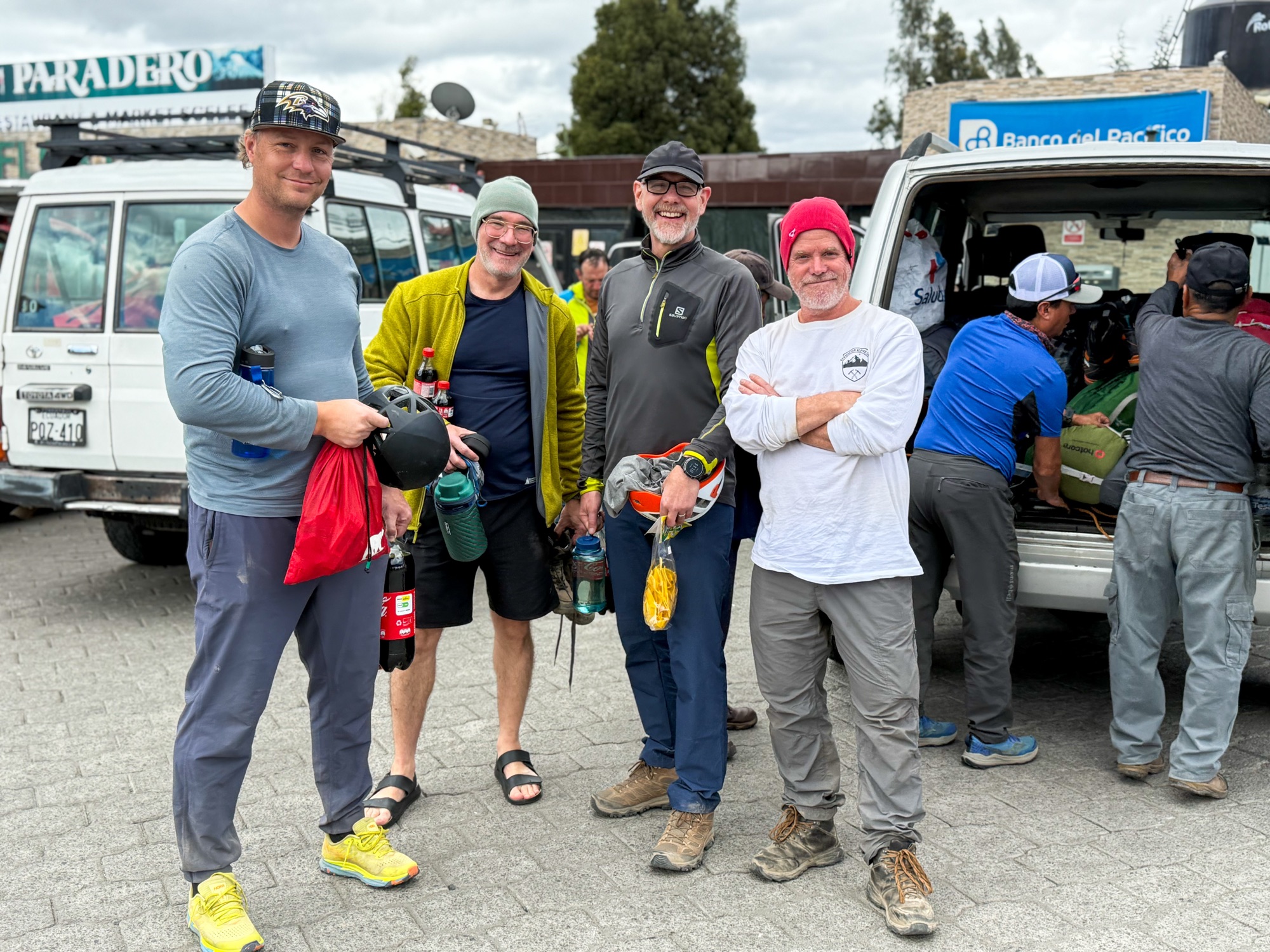
We went back down for two needed nights of rest. I was exhausted. My coughing was rough on my ribs. But I wasn’t the only one coughing. Norm too. Hannah too. Dave had felt nauseated on Cayambe and eaten almost nothing. Mikael had headaches. Same story, different handwriting: poor acclimatization.
And still, there was something else in this trip that mattered.
Norm, together with Jessica, had set up something bigger than summits. We were climbing in support of Daniëlle Children’s Fund—work that supports children and strengthens child protection and family-based care in Ecuador. We had the fortune to visit and meet people connected to that world, and it gave me perspective. It reminded me that suffering isn’t only the kind you choose at midnight on a glacier. Some people wake up inside it every day without signing up for it.
On the drive toward Cotopaxi, my mind was churning like a carousel.
Dark thoughts. Light thoughts.
It would be shameful if I didn’t make it, I kept thinking. No matter how tired I felt. I knew what I needed: food, sleep, a calm start, and the hope that all the training would show up when it mattered.
I spoke with Romel. I wanted to redo the rope teams.
Hannah was strong and motivated. She would go with Maurizio.
Mikael and Dave had become close friends. They would go with Romel.
And the two old ones—Norm and me—would go with Diego. Norm and I look at life in the same way. We’d most likely be a little behind, steady and stubborn.
That was my plan.
But in the mountains, plans are paper. Reality is weather and blood and oxygen. Anything can happen.
And it did.
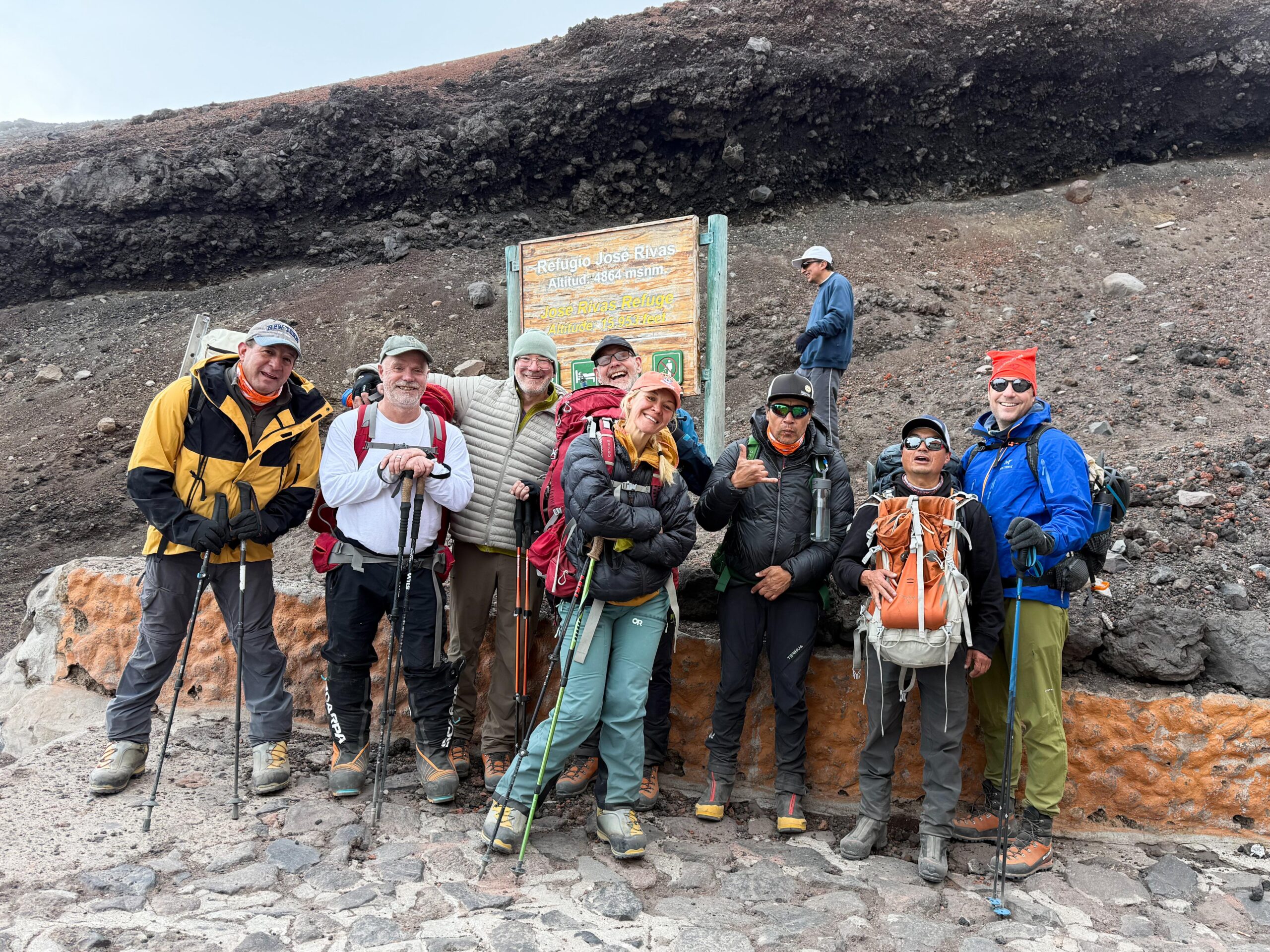
The refuge on Cotopaxi was full of climbers from all over the world. Warm, busy, alive. We slept well. At 23:00 we were woken up. We had one hour to get ready.
My backpack was half the weight compared to Cayambe.
And that alone felt like mercy.
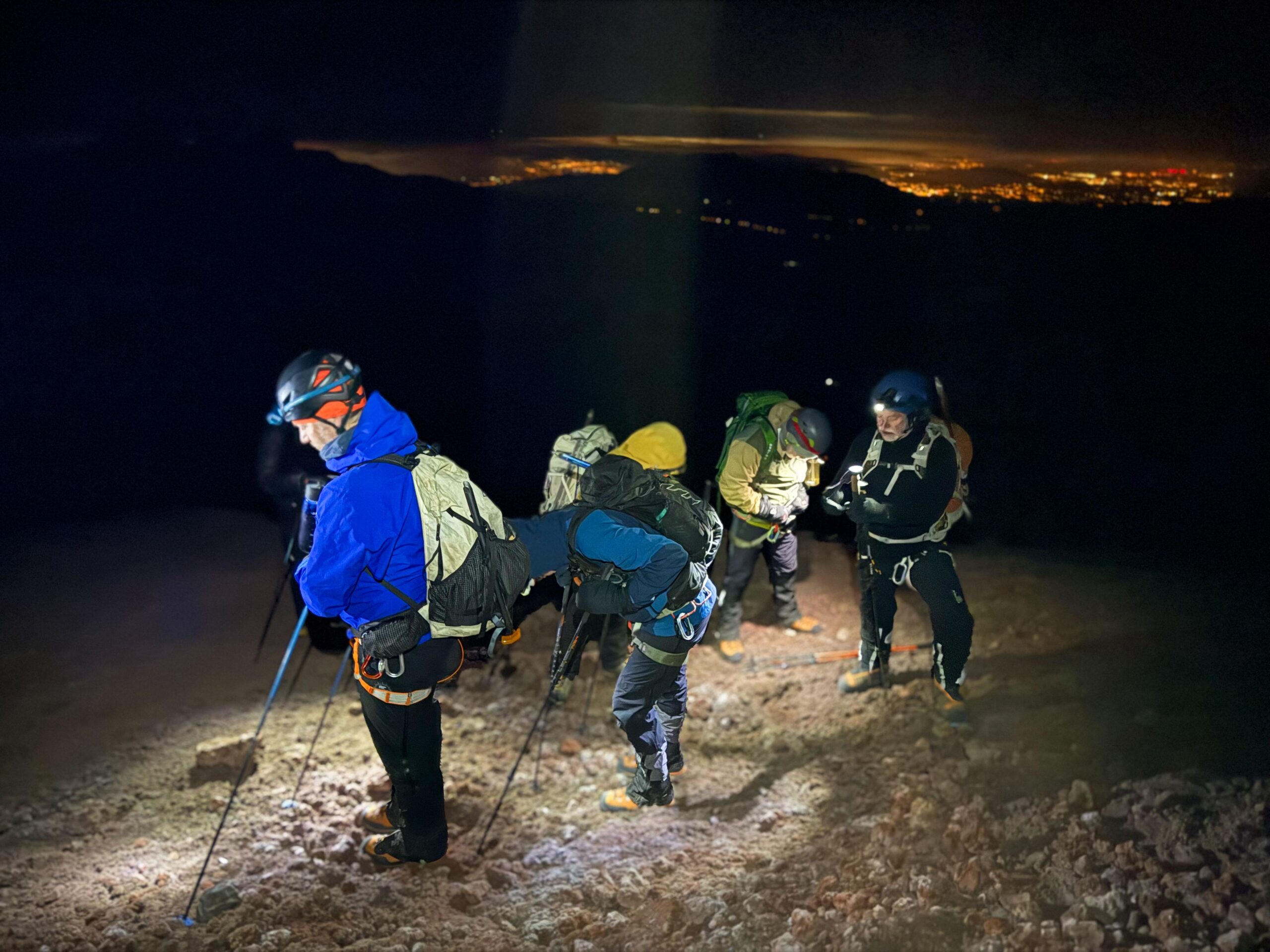
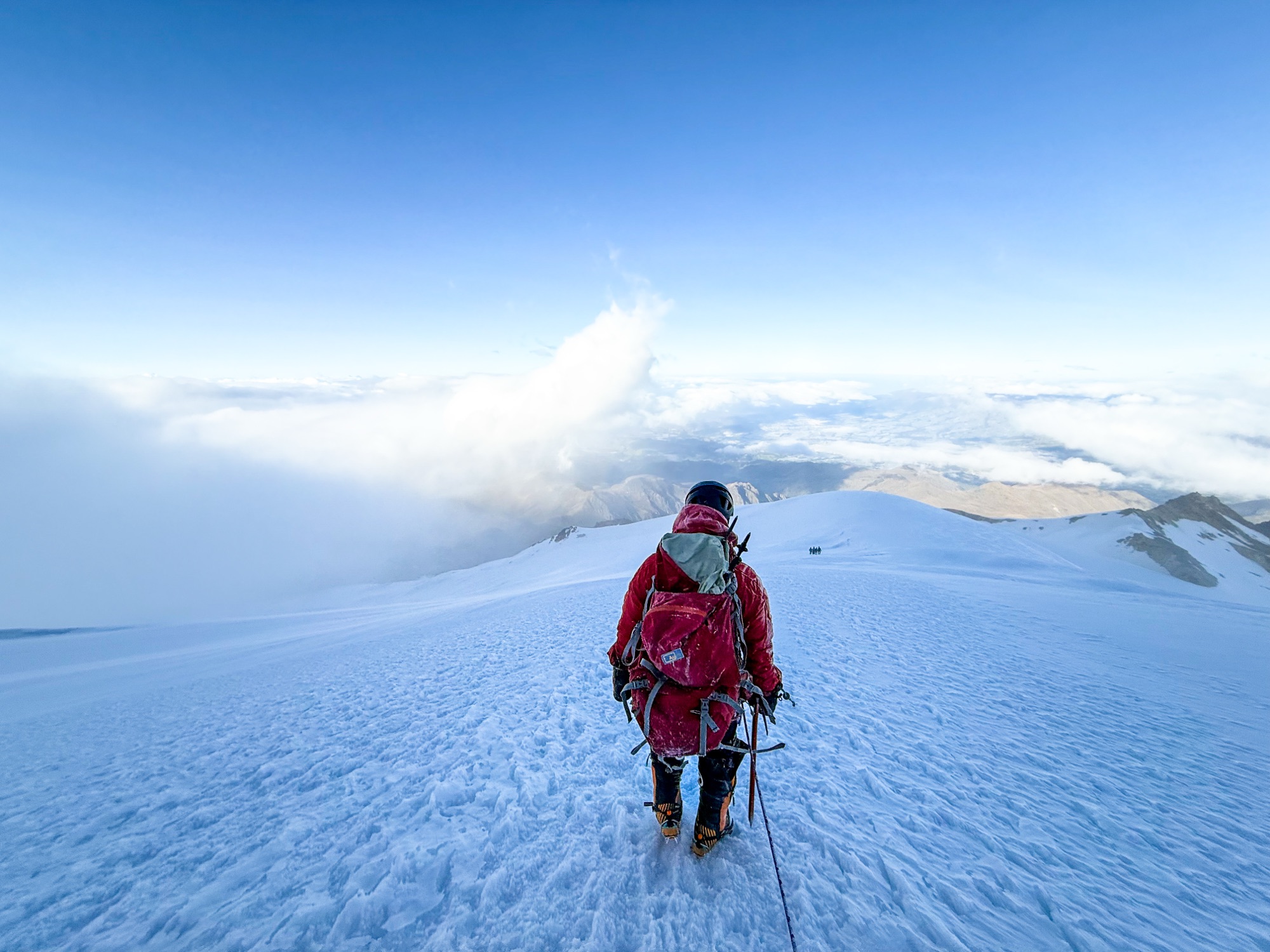
We left after most other climbers. The path was well walked, like a permanent highway in the dark. I love these midnight walks. The city lights far down in the valley. The long snake of headlamps. The way it’s easier to focus on one step at a time when you can’t see too far ahead.
Quite quickly we found our pace.
Hannah and Maurizio moved faster through the sandy, rocky start, zigzagging upward. Not long before it was time to rope up and put on crampons, I saw Hannah leaning forward toward the mountain.
I feel dizzy, she said. I need to rest a bit. I see double. Like three moons, not one.
Even if you’ve been in the mountains all your life, those words make the air change around you.
Dizziness can be “normal suffering,” yes. But double vision is a different language. The kind you listen to.
We all felt she would recover. She was strong. She was tough. She would catch up easily.
She never did.
When we reached the snow, roped up, and put on crampons, Romel spoke to Maurizio over the radio. They had turned around and gone back to base.
I felt a small shock in my chest. Not pain—just disbelief.
It was the right decision.
Later, in daylight, it became clear what it had been: severe altitude stress and exertional hypoxia—the body running too hot in too thin air—compounded by recent illness, dehydration or electrolyte depletion, cold, stop-start rhythm, steep effort, and sleep debt. The kind of problem that sits in the grey zone between normal suffering and true altitude illness. Close enough that you don’t bargain. You turn around.
In the dark, during a break, Mikael threw up most of the food he had forced down. Because climbing is also overeating. You eat when you don’t want to, because your body is burning fuel like a furnace.
Dave looked good.
Norm and I were fine, just tired in the honest way age makes you tired: you can still go, but you don’t pretend you’re twenty anymore.
Cotopaxi was easier than Cayambe in every way. The trail was wide and straightforward. The rope felt more like respect than necessity on such a well-travelled line. But you don’t get sloppy in the mountains. You respect the glacier even when it feels friendly.
The sun came up around six.
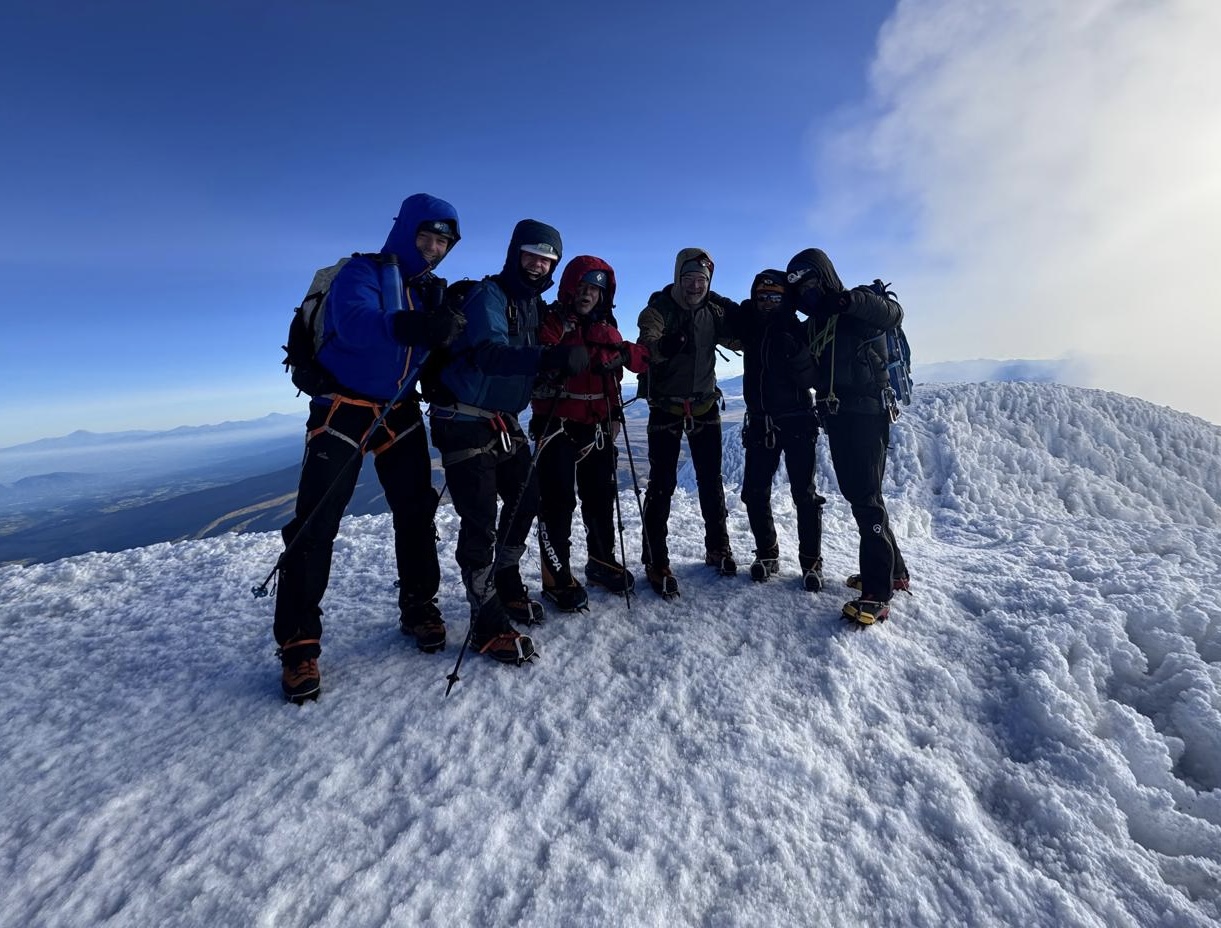
Mikael and Dave, together with Romel, reached the summit about twenty minutes before me and Norm. I stepped onto the top and felt the wind cut through my clothes. The view was spectacular—Ecuador spread out below like a map made of light and shadow—but I felt cold and I wanted to go down. I wanted to see how Hannah was doing.
Because summits are never the whole story.
I knew she would be disappointed. But this is expeditions. Bad days appear whether you want them to or not.
The walk down offered some of the best mountain scenery on earth—volcanoes dotting the horizon like sleeping giants. The kind of landscape that makes you feel small in a good way.
Was I happy?
I think I was just tired.
Worried for Hannah. Still carrying Cayambe in my lungs.
But when we reached the refuge, I saw that she had recovered. She had cried in the arms of Dave and Mikael—not because she’s weak, but because she’s human—and because disappointment in the mountains can be sharp. Then she lifted her head again. She had done a huge effort. Just like the rest of us.
And suddenly the biggest victory of this trip became clear.
It wasn’t Cotopaxi.
It wasn’t even the summit.
It was the team.
The camaraderie. The kindness. The way people carried each other when the air got thin and the world got simple.
That is the thing I will remember.
Not the number on the GPS.
The people behind it.
Next: Aconcagua.
If you want to support the climb and the cause
We climbed in support of Daniëlle Children’s Fund and their work for children and child protection in Ecuador.
Main page:
https://kensingtonalpineclub.com/
More about the fundraiser: https://rangefoundation.com/kensington-alpine-club-for-danielle-childrens-fund/
Daniëlle Children’s Fund:
https://daniellechildrensfund.org.ec/?lang=en
AND
Hannahs blog about the trip https://hannahpiercecarlson.wordpress.com/blog-2/