Archive

Posts Tagged ‘patagonia’

Explorer encourages others to “lead from the saddle”

October 14th, 2009 admin No comments


Equestrian Exploration Program Developed Leading Explorer Oversees Historic Effort
Mikael Strandberg isn’t very tall but his name carries a lot of weight in the international exploration community.

He started his professional career as an explorer two decades ago by bicycling 27,500 kilometres from Patagonia to Alaska, via the infamous Darien Gap jungle. Then he pedaled another 90,000 kilometres from New Zealand to Cairo.
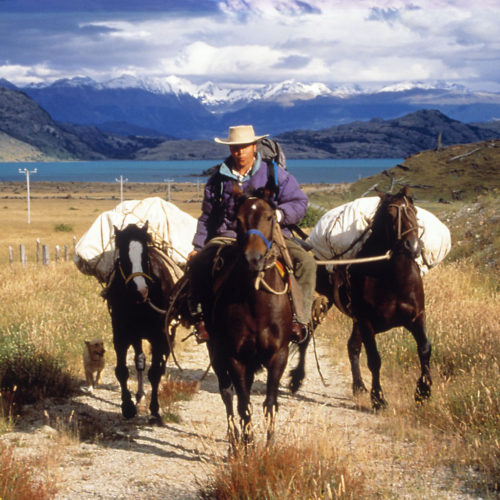
After that he parked the bike and explored Latin America on horseback, which won him admittance into the Long Riders’ Guild, the world’s first international association of equestrian explorers. When he hung up his saddle, he spent a year living among the Masai in Kenya.

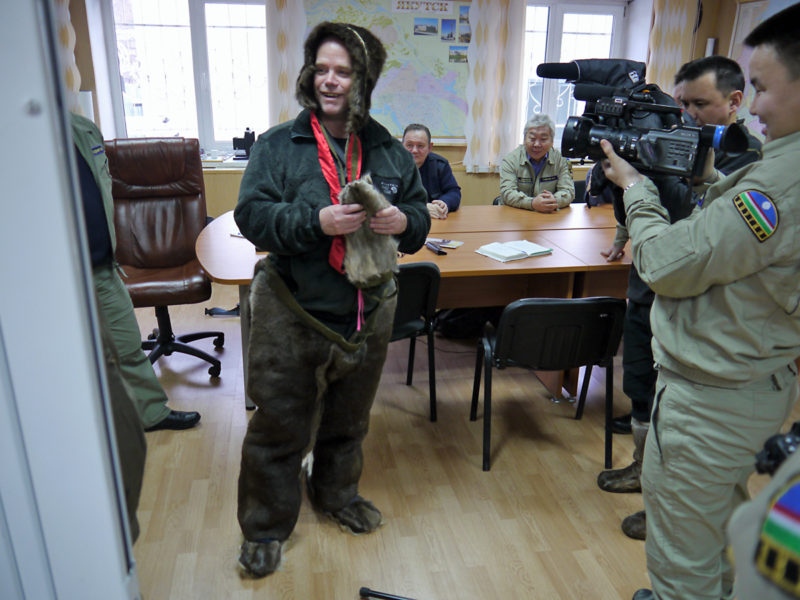
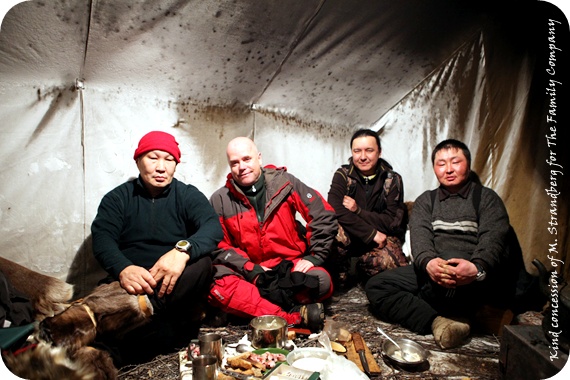
Then in 2004 Strandberg made an astonishing winter crossing through Siberia. During this five month sledge journey, mainly done in utter darkness, he experienced a terrifying cold with average temperatures around -50°F, day and night. This trip through the coldest inhabited place on earth caused the King of Sweden to award his intrepid subject a silver medal for courage.
Strandberg has produced three internationally renowned television documentaries, written six books, lectured around the world and been deemed “the best contemporary explorer in the world” by the Explorers Club in London.
Now he’s preparing to begin the Great Desert Expedition – a camel journey that will take him from Oman to Morocco.

But before departing on that adventure, the Swedish Long Rider will tackle a unique educational challenge. He has agreed to assume responsibility for developing a new Equestrian Exploration Department for the Long Riders’ Guild Academic Foundation.

“With Mongolia having become the fortieth country to field Long Riders and join the Guild, there is ample evidence to demonstrate that interest in equestrian exploration is exploding,” said Basha O’Reilly, one of the Guild’s Founding Members. “Earlier this year an impassioned debate was held regarding the fact that a London-based geographic society hadn’t fielded a single expedition in more than a decade. While other organizations vote themselves into obscurity, the Guild has sponsored, mentored or encouraged more than a hundred equestrian expeditions on every continent except Antarctica in less than ten years.”

Yet while enthusiasm runs high, O’Reilly reported, leaders of the equestrian exploration movement remain concerned that this mounted renaissance must adhere to the highest principled standards. As Director of Exploration for the Guild, Strandberg will help the LRGAF promote and develop ethical, safe and responsible equestrian exploration and long distance travel.

“This is an honour that I accept with dignity. I am looking forward to using my experience in organizing different types of expeditions so as to encourage and educate would-be Long Riders around the world,” Strandberg said.

Skeptics may argue that Strandberg and his fellow Long Riders stand little chance of encouraging a generation to take to the saddle and explore Earth. Yet history demonstrates that one person’s passion for exploration and education can indeed change the course of events. This occurred in the fifteenth century when Prince Henry of Portugal established the world’s first school for explorers. At Sagres, on the southwestern tip of Europe, he brought together geographers, cartographers, instrument-makers, astronomers, and mathematicians. The institute was designed to teach navigation, to collect geographical data, invent seafaring equipment and to sponsor expeditions.
The sturdy Swedish explorer is a modern day graduate of that school of thought who has already shared his expertise with the first team of Afghan mountain climbers and a Scandinavian camel expedition crossing the Sahara, not to mention dozens of young adventurers eager for more generalized advice. Strandberg now believes he can help inspire others to explore the world as their forefathers did.

“Although Prince Henry never sailed on any of his expeditions, he is credited with instigating the Age of Discovery. Unlike Henry, who inspired but did not travel, we modern Long Riders’ Guild are determined to lead from the saddle.”

In Strandberg’s case, this means a camel saddle, not an equestrian one.
Though the intrepid Swede has more than twenty years of experience surviving in dangerous places, overcoming tropical diseases, etc., he is about to venture deep into a remote part of the Muslim world on a desert expedition which will certainly require him to deal with cultural and religious challenges, as well as the everyday dangers of trying to survive a trip that would cause Ibn Battuta to have second thoughts.

“I’ve just returned from studying Arabic and Islam in Yemen. The wonderful experiences I enjoyed there have convinced me that this trip will allow me to build a bridge of exploration which runs between the Islamic world and the West,” the enthusiastic explorer explained.

While the Long Riders’ Guild is famous for having protected the ancient art of equestrian travel from going extinct, the organization has spent the last two years quietly working to create a new camel travel division as well. The world’s leading camel travel experts, such as Arita Baaijens who travelled across the Sahara with her dromedary camels and John Hare who journeyed across the Gobi with Bactrian camels, have agreed to lend their academic support to this unique educational effort.

Because of the length and significance of Strandberg’s journey, the Guild has honoured him by presenting the explorer with the first LRG flag to accompany a camel expedition.

Insh’Allah, we’re going to make exploration history of an unexpected and unprecedented nature,” Strandberg said.

When asked to explain what prompted the equestrian organization to include Strandberg and his camels, Basha O’Reilly of the Guild replied, “What we envision is an organization that grows out of the original Long Riders’ Guild, and goes on to publish books, sponsor new research, and provide funds and equipment to Long Riders. This is a new type of exploration foundation, one that preserves mankind’s ancient methods of travelling safely and successfully with horses, and now camels. Regardless of what he is riding, Mikael is a perfect example of this blending of mounted courage.”

To learn more about Sweden’s most celebrated explorer and Long Rider, please visit Mikael’s exploration blog –

For an interview with Mikael Strandberg regarding his career as an explorer –

Read article in Horsetalk! and in ExplorersWebNews! and in Voices for horses!

On the subject of travel photography….

September 28th, 2009 admin No comments

I receive a lot of emails right now about my photos from Yemen.

Justin wrote:

Magnificent! Well done you. Am hideously envious. Keep up the qat – are you seeing Tim Mackintosh Smith the travel writer??
Salaams
Justin

And Saad Sabrah from Sana´a wrote:
Many thanks Mikael..
Very nice pictures. Yet a lot of work to be done to improve Yemen’s economy with out spoiling such a rich culture …
I noticed a few naming mistakes on some of the pictures.. I have attached a few of your pictures after saving them with the correct names for your kind reference..
Regards,
Saad Sabrah

Marianne Ahrne wrote:

I had no idea that you were a world-class photographer as well. Your photos are world class and they really makes me wanna go to Yemen. How long are you staying for?

Lots of praise and, of course, that makes life easier. However, do see the Yemeni photos here!

And I get a fair amount of questions if I have any more slide shows from my travels to show. And I do…..but it was in Yemen were I finally got back to my old passionate photography, which have been on holiday for three years. However, why not have a look at these series of slide shows: (Have in mind though they´re quite crappy in comparison.)

And why not finish off with a little slide show from The Kolyma Expedition in Siberia?

Go here!

PS. Photo from the Maasai Expedition from the year 2000. the year I actually had hair. And a big stomach. DS

A major reason to choose a life as an explorer

March 21st, 2009 admin No comments

It is of course a very privileged life to be an explorer, to have in your mind that everything is possible and fulfil dreams most people never even get close to realising. Not even in mind or thought.

For me, proper exploration today has to do with connecting cultures, opening up horizons in other peoples mind, with the help of a camera, written words with the all mighty pen and by simple and genuine travel, e.g. not using a motorised vehicle. If an explorer turns up in a motorised vehicle, he or she has closed a door before it is even on the way to open up another horizon. By that way you build a new wall, not a bridge over the existing one. A true explorer shows other human beings first of all, this is the way, for example, that the great people along the Kolyma River in Siberia live. Exploration is about building bridges between people, not that ridiculous male theme, I am strongest and I can do this and that. Very tiring indeed.

Another important issue of today’s exploration, is to try through science to open up other peoples eyes about the realities we live in. And help to put together this eternal puzzle, concerning the meaning of life, our globe and why are we here.

Hmmm, lost a bit of my train of thought there….what I want to write, is to tell you readers, that one of the most fulfilling aspects of having chosen this life, is all the great people you come across, not only whilst travelling, but people doing what you are doing, exploring!

Two of my best friends, even though I have so far never met them in person, is CuChullaine and Basha O´Reilly. (See photo)These are some of the most intelligent, warm hearted and generous people I have ever come across. Everything they do is to make this a better world to live in. Two grand personalities and human beings who run one of the most prestigious Societies in the world, The Long Riders Guild. I have communicated with them a lot the last two years and they have in many ways done my life a lot of good. Some of the most inspiring people I have ever come across and CuChullaine has also written one of the best books I have ever read. They´re ready for one of the most compelling challenges in history really, a four year global ride! See http://www.theworldride.org/

They are exactly what a world full of copies need, two original thinkers and genuine human beings! I am honoured in many ways to be part in their team of advisers.

Basha as asked me to quote her, because she has a very important job to do and need help:

“Because you have travelled from the Pampas of Patagonia to the frozen tundra of Siberia, we are urging all of your friends throughout the world to check the master breeds list on the World Ride website. If their horse’s breed is not represented, I would ask them to print off the DNA form, complete it and send it to The Long Riders’ Guild with some mane or tail hairs. In this way, everybody who contributes will become part of the largest collection of equine DNA in history. Horse owners are rushing to represent their favourite breed, including White River horses from Mongolia, Manga Largas from Brazil and Marawaris from India. Yet there are still hundreds left unaccounted for, and we particularly anxious to obtain DNA from the fabled horses of Yakutia.”

Mikael, here’s the link to the Breeds page: www.theworldride.org/breeds/breeds.htm

I think it will be very hard for any future projects to compete with your Kolyma expedition

January 30th, 2009 admin No comments

“I think it will be hard for any future projects to compete with your Kolyma Expedition” , wrote Shane in an email I wrote her regarding assistance to find people with knowledge of camel travel. The planning for the next major expedition has begun.
Shane knows. She has had to do with more Expeditions than probably any other human being on earth. I agree, of course. When I reached Ambarchik Bay in April 2005, I felt like I had done the Expedition of a life time. It turned out bigger than I dreamt about once upon a time as a kid. In this email to my friend Shane, I also asked her to evaluate my new Expedition, by camel through Arabia. Meaning the Arabian Peninsula. Her answer was:
“I think it will be hard for any future projects to compete with your Kolyma Expedition”.
At the same time I recieved an email from one of my best friends, Ollie Steeds, one of the globes most adventurous blokes, and amongst a lot of positive wordings, he wrote a warning:

“Your plan sounds epic but I can see huge problems being allowed to travel through saudi and yemen is still incredibly unstable and potentially dangerous – even if you are travelling as and with the bedu.”
Now, this is where you mentally start to prepare for all the obstacles waiting, because it is alway the same story, every unique Expedition is full of obstacles mainly in the shape of bureaucracy, and of course, some physical hardships. But I know, from 25 years experience, especially in the situation I am facing and going through today, I have only one chance to turn things around, especially for myself, I just need to make an Expedition on the same scale as the Kolyma Expedition. Even though the Arabian Peninsula offers a very challenging and very difficult environment, it will not be on the same scale as the Kolyma. So, what then does a real explorer do? First of all, he asks himself, what is it that I want to do, more important than anything else?
Well, what I want to do, the foundation of the Expedition, the main reason, is to build a bridge between the Moslem East and the Western World. It is probably the most important mission I have ever had. I want the Arabs to tell their own story. Just as the Russians, Even, Evenk and Chukchi during the Kolyma Expedition. I want to put a face on the Arabs for the west, so that we can kill all this animosity which occurs at the moment. I want to make a film, a book, lectures and an Expedition to show the rest, very ignorant at times, of the world, this great part with some of the most fantastic people on the globe – Arabs and Arabia.
Secondly, you bring out the maps. Today on the Internet. Now, when you look up Arabia on the net and on the same time, check a map of the worlds deserts, we do get a different picture. And a different expedition. Woow! Now, when I as a professional explorer look at this new Expedition and evaluate it, the Kolyma Expedition looks like a warm up.
By the way, looking at the same map, I realise that I have actually passed through some of them on the ole push bike. The Thar Desert, Iranian Desert, The Sahara, The Atacama Desert, The Mojave and Sonoran Desert and also, on horse back, the Patagonian Desert. The photo is from the Sahara desert, which I crossed on a push bike in the 1989-90, the Tamanrasset Route. I did the most difficult part, the stretch between Tamanrasset in Algeria to Agadez in Niger together with two excellent chaps, Charlie, on te picture, and Mick James. I´ve lost touch with Charlie a long time ago, but I communicate with Mick on and off, who lives in Scotland. Now, what o you think about all that?

The life of a tour guide and a few reviews from clients I have had on the 6 weeks of guiding in South America

December 21st, 2008 admin No comments

Being a tour guide is very fulfulling in many ways. Most of all, when it comes to making other peoples dreams come true. It is a very demanding job, you are a 24 hours service unit, you always have to be in a good and organised mood and, most of all, you have to fulfill the dream for all people, your clients, who for years have dreamt, maybe all their lives, to visit places like Rapa Nui or the Galapagos Islands. I just love that challenge!
I really love telling stories, lecturing, inspiring people, opening their minds, building a bridge from their culture to the one we are visiting, adding to their lust to live and explore, and living very close with people for 3 weeks at a time, gives a rich experience. I learn a lot from my clients, most of them over 45 years of age, full of the wisdom of life, and they´re well educated, so they don´t take any gibberish for right or wrong, so you have to be very well prepared and know exactly what you are talking about. It is like a small Expedition in itself. It is an honor and a privilege to be a guide and I want to be the best there is, of course.
On top of just having the opportunity to educate people, I love the locals along the way. The interaction makes me happier then anything and the most difficult issue of all, is returning home to the cold and dark place called Sweden. I´ve been home for two weeks now and I feel like I have been run over by the train. I miss the smiling, passionate and energetic people of South America. If it wouldn´t be for family, friends and love, I wouldn´t return. However, I have received great reviews from my clients, which shows that a good guide need to be educated and full of passion, yes, more than anything, passion!

The lovely Larson couple who joined me to Ecuador, Peru and the Galapagos wrote:

“Hi Mikael! We just want to say thank you for your extraordinary way of guiding us during this spectacular journey! We will never forget your humble way to confront nature, people and life in itself. We have never met a captivating human being like you. You have experienced so much in your life and you told us just fragments of it. We will go to Patagonia next year, only if you will be the guide!

Marianne, on the Patagonian journey said this:

“This was the best journey I have done in my life. All thanks to your guiding. It was exiting all the time and very funny. I haven´t laughed like this in twenty years! “

The Lawrences wrote:

“You are not only an excellent guide, but a genuinely sincere and honest human being. We are sure that you will have a very rich and engaging life, no matter what path you follow. We admire your courage and enthusiasm.”

After six weeks of guiding in South America

December 7th, 2008 admin No comments


Well, I thought I would get lots of time to write, but being a guide takes all your energy. But I love it! But, see this letter below written a day ago in Rapa Nui:

It is once again time for me to return back to Sweden. This time after six fantastic weeks as a guide in South-America. At the same time, last year, also after guiding a group through Patagonia, I felt the biggest worry of my life. I had no idea at all what was waiting for me back home. And the time that followed, turned out to be some of the worst moments of my life. This time however, even though I still don´t have an idea what life has in store for me, I look forward to whatever, a lot! I have healed well during these six weeks and a genuine return to life again, it is. Well, as healed a complicated personality like me can feel…..

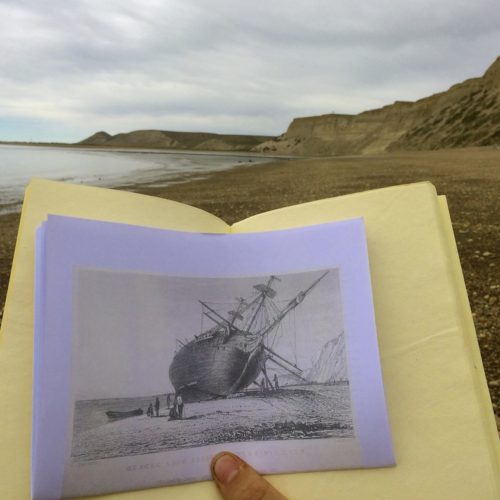
I have once again had the privilege to return to Patagonia, so during the last three weeks, I have heard the thunder from the great Iguazu Falls, I´ve seen the gigantic southern right whale starring at me from a yards distance, been to the end of the world, had some great seafood in Ushuaia, ridden over the dry Patagonian Steppe with a great group of clients, but most of all, I have had the uttermost privilege to visit Rapa Nui, or Easter Island. This very mystic island located, really, in the middle of nowhere, so far from any other land, around 4000 km from the Chilean Mainland and as far away from Tahiti. Before arriving to the island, I´ve heard quite a few positive comments about the Island, but also, far more, negative comments about Rapa Nui. Man has really changed the face of the Island, there´s hardly any trees left on this piece of volcanic rock that once, before the arrival of man, was entirely covered by a native palmforest. Personally, after having been a professional explorer for the last 25 years, I thought I had seen pretty much everything. I was wrong. I wasn´t prepared at all for Rapa Nui. It is, no doubt, a highlight of my life. There´s definitely something very special with this odd island, surrounded by this vast ocean called the Pacific. It is a tiny spot in a vast ocean of blue. It is indeed the statues, or the Moais, as they´re called who has made me full of awe. They´re put there by the local Polynesians, facing the land and its people, with its backs towards the Ocean, so free of worry that other people would arrive, but they´re still doing what they were set there to do. To inspire people, to give people the strength of their forefathers. It is called mana in the local Polynesian tongue. And, even though, we, me and my group of 16 people, have encountered and experienced some of the most spectacular scenes made by nature on this trip, the Iguazu Falls, the glaciers and icebergs of southern Patagonia, still, we all feel knocked over by the sight of the moai. Maybe because they´re man made. However, personally, the most intriguing discovery is that these Polynesians who arrived here, forget the Heyerdahl theory, about 1200 years ago from, well, maybe as far away as New Zealand on the other side of the Pacific, they did start to navigate this gigantic part of the earth, around 40 000 years ago. Now, this is far before the arrival of man to the Americas…..It has given me ideas….

One of the things on my wishlist before leaving Sweden, was that these 6 weeks in South-America would pave the way for a new Expedition, since after doing the Kolyma expedition, well, I felt, what more can I do? It felt like an end, an enormous emptiness. Well, things are once again beginning to develop….

Another thing which I have had in my thoughts, is that I´ve spent a lot of time thinking about emigration. Patagonia in itself is made up of pioneers and emigrants, people who have left their countries of birth to begin a new life. It sounds like a great prospect. Something worth trying. I am getting fed up with the foreseeable.

Finally, being and working as a guide is pure joy. It seems that I am very lucky with just having great clients all the time. They teach me so much about life and things, and for me, to share my experience of life and my travels and perspective of life, well, it is an honor.